
The best way to brew coffee at home is the one that fits how much effort you want to put in and what you like in the cup. French press gives you a rich, full-bodied mug, pour over gives you clean and bright, and a moka pot or espresso machine gives you something strong enough to stand up to milk. None of them is the “right” answer for everyone.
As an Amazon Associate, I earn from qualifying purchases and sometimes recommend products from other sellers at no extra cost to you. For more details see my disclosure policy and privacy policy.
This guide walks through every method we cover on The Coffee Chef, what each one tastes like, what kit you need in the UK, and where to go next for the full how-to. If you only read one section, make it the quick picker below.
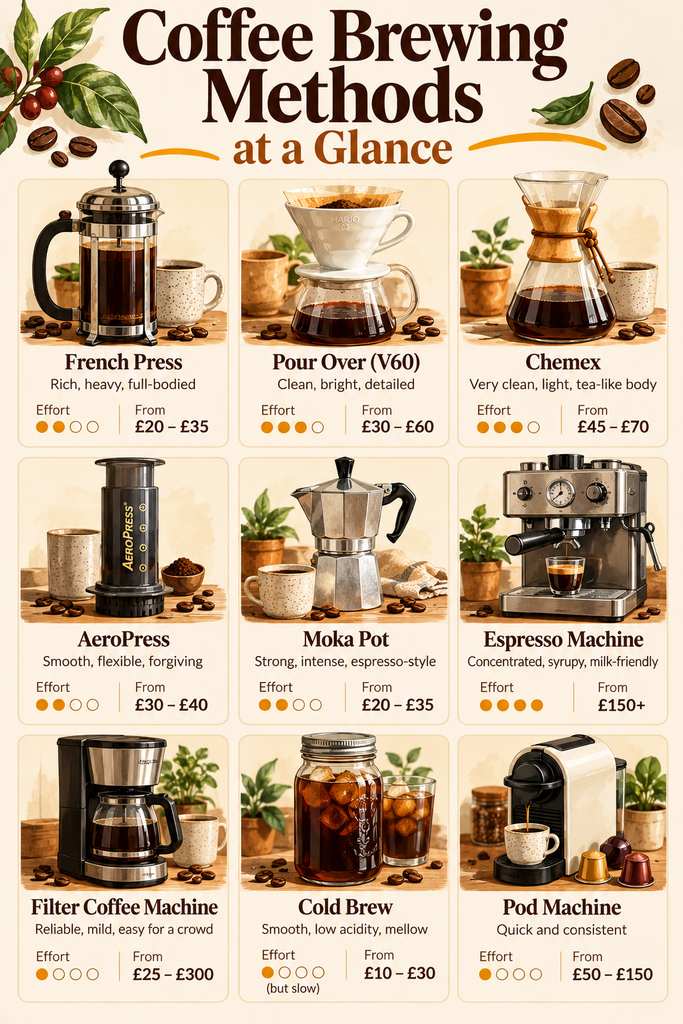
🧭 Which Brewing Method Suits You?
Start with what you want from the cup, then check the effort and cost. The prices are rough UK starting points for decent kit, not the cheapest or the most expensive version.

The Coffee Chef Planner
Daily planning, journalling, and a proper coffee tasting log with a flavour wheel — 20 pages in one printable bundle.
Shop the planner →
Brewforge
A growing edit of coffee bar gear we’d genuinely want on our own counter, added to as we find things worth having.
Shop Brewforge →| Method | Tastes like | Effort | Starter cost |
|---|---|---|---|
| French press | Rich, heavy, full-bodied | Low | £20 to £35 |
| Pour over (V60) | Clean, bright, detailed | Medium to high | £30 to £60 with a kettle and scale |
| Chemex | Very clean, light, tea-like body | Medium | £45 to £70 |
| AeroPress | Smooth, flexible, forgiving | Low to medium | £30 to £40 |
| Moka pot | Strong, intense, espresso-style | Low | £20 to £35 |
| Espresso machine | Concentrated, syrupy, milk-friendly | High | £150 and up |
| Filter coffee machine | Reliable, mild, easy for a crowd | Very low | £25 to £300 |
| Cold brew | Smooth, low acidity, mellow | Very low (but slow) | £10 to £30 |
| Pod machine | Quick and consistent | Very low | £50 to £150 |
If you want one short answer: beginners who want a good mug with no fuss should start with a French press or an AeroPress. If you drink mostly flat whites and lattes, a moka pot is the cheapest route to a strong base, and an espresso machine is the proper upgrade.
⚖️ The Four Things That Matter Whatever You Brew With
Most bad coffee comes from the same few mistakes, and none of them are about the brewer. Fix these and even a cheap French press tastes better.
Freshness. Coffee tastes best within roughly four to six weeks of the roast date, so buy whole beans from a UK roaster that prints the date on the bag. If you are starting from scratch, our guide on how to make coffee from beans covers buying and storing.
Grind size. Each method wants a different grind, from coarse for French press and cold brew to fine for espresso. Grinding too fine gives bitter, harsh coffee and too coarse gives sour, thin coffee. Our coffee grind sizes guide shows each one side by side.
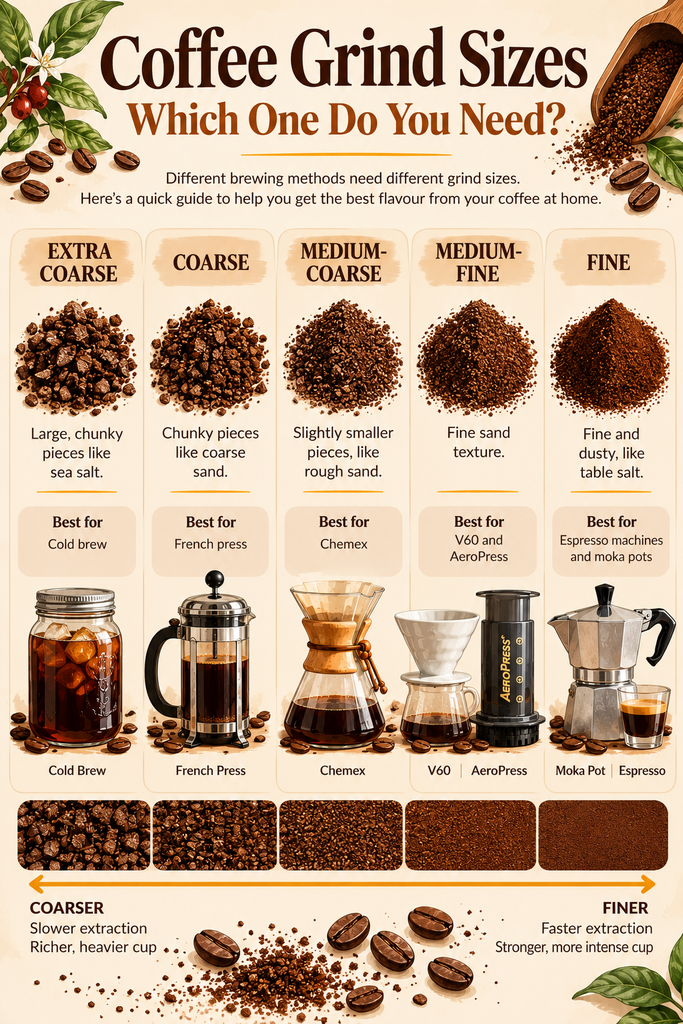
Ratio. A good starting point for filter-style brewing is 1 part coffee to 15 or 16 parts water by weight, so roughly 15g of coffee for 240ml. Weighing it beats using scoops, because beans vary in density.
Water. Aim for water just off the boil, around 92 to 96°C. In hard-water areas such as much of London and the South East, limescale and mineral content can flatten flavour and clog kit, so a jug filter is a cheap fix. In softer areas such as Scotland, Wales and the North West, you can usually brew straight from the tap.
🫖 French Press: Rich, Heavy and Hard to Get Wrong
A French press steeps coarse grounds in hot water for about four minutes, then you push a mesh filter down to separate them. Because paper never touches the coffee, the oils stay in the cup, which is why it tastes so full and heavy.
Best for: people who like bold, rounded coffee and do not want to stand over the kettle.
Quick method: use 30g of coarse coffee to 500ml of water just off the boil, stir once, put the lid on, wait four minutes, then press slowly and pour straight away so it does not keep extracting.
UK kit: the Bodum Chambord is the classic and costs around £25 to £35 for the one-litre size. Grind is the real make-or-break here, so read our guide to the best coffee grinder for French press. Not sure whether it is the right method for you? We put it head to head with pour over in French press vs pour over.
💧 Pour Over: Clean, Bright and Precise
Pour over means pouring hot water slowly over a bed of medium-fine grounds in a paper filter, so the coffee drips through into your mug or server. It rewards care. Small changes in pour speed and grind show up in the taste, which is exactly why coffee fans love it.
Best for: people who enjoy the ritual and want to taste the differences between beans.
Quick method: rinse the paper filter, add 15g of medium-fine coffee, pour a small amount of water to let it bloom for 30 seconds, then pour in slow circles up to 250ml over about two and a half to three minutes.
UK kit: a Hario V60 is the standard dripper, from around £10 for plastic to £25 for ceramic. You will also want a gooseneck kettle (stovetop versions start around £25, electric around £50) and a 0.1g scale, which you can find for £10 to £15 or spend more on a timed one. If you want the result without the pouring, our best automatic pour-over coffee maker guide covers machines that do it for you. The French press vs pour over comparison is also the quickest way to decide between the two.
⚗️ Chemex: Pour Over With a Thicker Filter
A Chemex is a pour-over brewer in a glass hourglass, with a filter around 20 to 30% thicker than a standard paper one. That thicker paper catches more oils and fine particles, so the cup is exceptionally clean and light.
Best for: people who find French press too heavy and want something that looks good on the counter.
Quick method: use a medium-coarse grind, around 1 part coffee to 16 parts water, and allow about four minutes for the whole brew. It runs slightly slower than a V60, so grind a touch coarser.
UK kit: a six-cup Chemex typically costs around £45 to £70 depending on whether the glass handle or wood collar version appeals. Our step-by-step Chemex brewing guide walks through the pour, and our deeper look at the Chemex method explains why the filter changes the taste. If you are curious about the design, there is also the history of the Chemex coffee maker. Choosing between brewers? See AeroPress vs Chemex.
🔧 AeroPress: The Flexible One
The AeroPress is a plastic plunger-style brewer that uses a small paper filter and gentle pressure. It makes clean, smooth coffee in about two minutes, and you can adjust grind, time and ratio to get anything from a light cup to a strong, espresso-style concentrate.
Best for: small kitchens, travel, offices, and anyone who likes experimenting. It is nearly impossible to break and quick to clean.
Quick method: add 15g of medium-fine coffee, pour in 200ml of water, stir for ten seconds, wait about a minute, then press steadily for 20 to 30 seconds.
UK kit: the original AeroPress is usually £30 to £35 and the travel-friendly Go is a little more. For recipes and fixes, read AeroPress tips and tricks, and see our round-up of the best AeroPress coffee maker options. If you are weighing it against Chemex, AeroPress vs Chemex is the place to start.
🇮🇹 Moka Pot: Strong Coffee on the Hob
A moka pot pushes boiling water through coffee using steam pressure, giving you a strong, intense cup that sits between filter coffee and espresso. It is not true espresso, because the pressure is far lower, but it is excellent with milk.
Best for: anyone who wants strong coffee for lattes without buying an espresso machine.
One thing to check: classic aluminium moka pots do not work on induction hobs. If you have induction, buy a stainless steel moka pot or use an induction adapter plate.
UK kit: a three-cup Bialetti Moka Express is typically £20 to £30. Our full UK guide to making coffee with a moka pot covers grind, heat and how to avoid a burnt, metallic taste.
☕ Espresso Machines and Pod Machines: Pressure Brewing
True espresso forces hot water through finely ground coffee at around nine bars of pressure in 25 to 30 seconds. It is the foundation of flat whites, lattes, cappuccinos and Americanos, and it needs a good grinder as much as a good machine. If you are new to it, start with our explainer on what espresso coffee is.
Best for: people who want café-style drinks at home and are happy to learn the process.
UK kit: entry-level machines such as the De’Longhi Dedica sit at around £150 to £200, and semi-automatic machines such as the Sage Bambino typically cost £250 to £330. Both need a decent grinder on top. Our best espresso machines for home UK guide compares the options by budget, and which coffee beans are best for espresso helps you pick the right bag.
If you would rather not weigh and tamp, pod machines are the easy route. Our Dolce Gusto vs Nespresso UK comparison breaks down running costs and drink quality for the two main systems.
🔌 Filter Coffee Machines: Easy Coffee for a Crowd
An automatic filter machine heats water and drips it over the grounds for you. The best ones hold the water in the right temperature range, which is what separates a £25 machine from a £250 one.
Best for: busy mornings, households with several coffee drinkers, and anyone who wants to press a button and walk away.
UK kit: budget machines start at about £25, while the Moccamaster KBGV Select, a long-standing favourite among UK coffee fans, usually costs £250 to £320. Our guides cover the main questions: the best coffee maker under £50 for the UK, the best thermal carafe coffee makers, Krups coffee machines, and smart coffee makers. If you like the idea of fresh grinding built in, read why buy a grind and brew coffee maker.
🧊 Cold Brew: Slow, Smooth and Low Acid
Cold brew steeps coarse grounds in cold or room-temperature water for 12 to 18 hours, then you strain it. Because there is no heat, the coffee tastes smooth, sweet and low in acidity. It makes a concentrate that keeps in the fridge for several days.
Best for: summer drinking, people who find hot coffee harsh, and anyone who likes making a batch in advance.
UK kit: a large jar and a fine sieve or paper filter will do it. For step-by-step instructions, read cold brew coffee at home, and for the right bean, see the best coffee for cold brew. If you are curious how it compares with iced coffee on caffeine, we look at cold brew vs iced coffee caffeine, and our iced coffee at home UK guide covers the hot-brewed-then-chilled route.
🔥 Percolators and Turkish Coffee: The Traditional Routes
An electric percolator cycles boiling water over the grounds repeatedly, which suits large batches and camping-style coffee but can over-extract if you leave it going. Our guides cover how to make coffee with an electric percolator and how to clean a percolator coffee pot.
Turkish coffee is boiled, unfiltered, finely powdered coffee, served with the grounds settling at the bottom of the cup. You do not need a special pot to try it, as our guide to making Turkish coffee without an ibrik shows.
🛒 The UK Brewing Kit Worth Buying First
Before you spend on a fancier brewer, spend on the kit that affects every cup. In rough order of impact:
- A burr grinder. This is the single biggest upgrade. A hand grinder such as the Hario Mini-Mill Plus costs around £35 to £45, and an entry-level electric burr grinder such as the Baratza Encore usually sits at £140 to £200. Blade grinders produce uneven particles and make coffee taste bitter and sour at once. If you brew one cup at a time, our guide to the single dose grinder is worth a read.
- A 0.1g scale. Weighing your coffee and water makes every brew repeatable, and you can buy a basic one for £10 to £15.
- A good kettle. A gooseneck kettle gives you control for pour over, and a variable-temperature one helps with lighter roasts. Any kettle works for French press and AeroPress.
- Fresh beans. Roasted-to-order UK beans beat supermarket bags by a long way.
For the rest of the coffee corner, our Brewforge collection pulls together coffee bar accessories, and the Coffee Planner has a brewing log and tasting log so you can record what worked. Most of the kit above is available from John Lewis, Lakeland, Amazon UK and independent coffee retailers, so shop around before you buy.
🔍 Fixing Coffee That Does Not Taste Right
Most problems come down to extraction, which is how much flavour has been pulled out of the grounds.
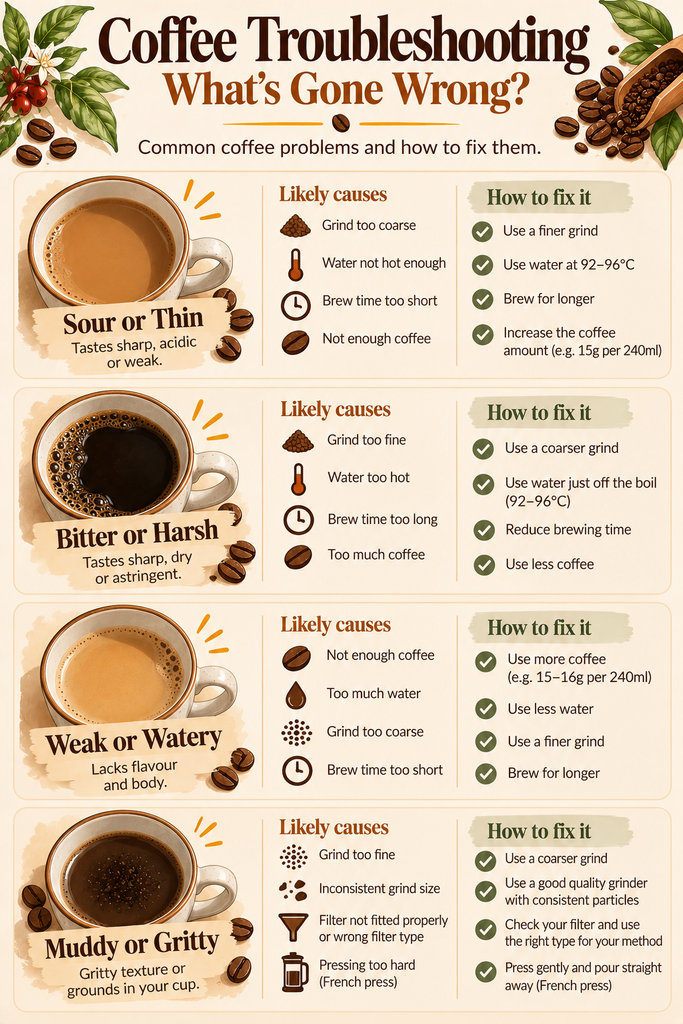
- Sour, thin or salty: under-extracted. Grind finer, use hotter water or brew for longer.
- Bitter, harsh or dry: over-extracted. Grind coarser, lower the water temperature slightly, or shorten the brew time.
- Weak: use more coffee, or check your ratio with a scale.
- Muddy or gritty: the grind is too fine for the method, or your grinder is uneven.
Change one thing at a time, and write down what you did. That is the quickest way to dial in any brewer.
❓ Brewing Methods FAQ
What is the easiest way to make good coffee at home? A French press or an AeroPress. Both are forgiving, cheap and need no special technique beyond a decent grind and a timer.
What is the best brewing method for beginners in the UK? French press is the easiest to start with, since it needs no filter papers or pouring technique. Pair it with fresh whole beans and a hand grinder and you will taste the difference straight away.
Which brewing method gives the strongest coffee? Espresso and moka pot give the most concentrated cups. For the highest caffeine in a full mug, a long steep such as French press or cold brew concentrate usually delivers more total caffeine than a single shot.
Do I need to buy an expensive grinder? You do not need an expensive one, but you do need a burr grinder rather than a blade grinder. A £35 hand burr grinder will improve your coffee more than a £200 brewer.
Is pour over better than French press? Neither is better. Pour over tastes cleaner and brighter, and French press tastes richer and heavier. Our French press vs pour over guide helps you choose.
🎯 The Short Version
Pick the method that matches the taste you like and the effort you will actually put in: French press for rich, AeroPress for flexible, pour over or Chemex for clean, moka pot or espresso for strong, and cold brew for smooth. Whichever you choose, fresh beans, a burr grinder and a set of scales will do more for your coffee than any brewer.
➕ More From The Coffee Chef
Ready to put your brew to use? Browse our café drinks to make at home for recipes, or see our coffee bar decor ideas to set up a corner that suits your kit.


