
You’ve got the machine, you’ve got the beans — now it’s time to make your coffee corner look as good as what comes out of it. Whether you’re working with a full kitchen dresser or a tiny stretch of worktop in a rented flat, there’s a coffee bar aesthetic that works for your space and your style.
As an Amazon Associate, I earn from qualifying purchases and sometimes recommend products from other sellers at no extra cost to you. For more details see my disclosure policy and privacy policy.
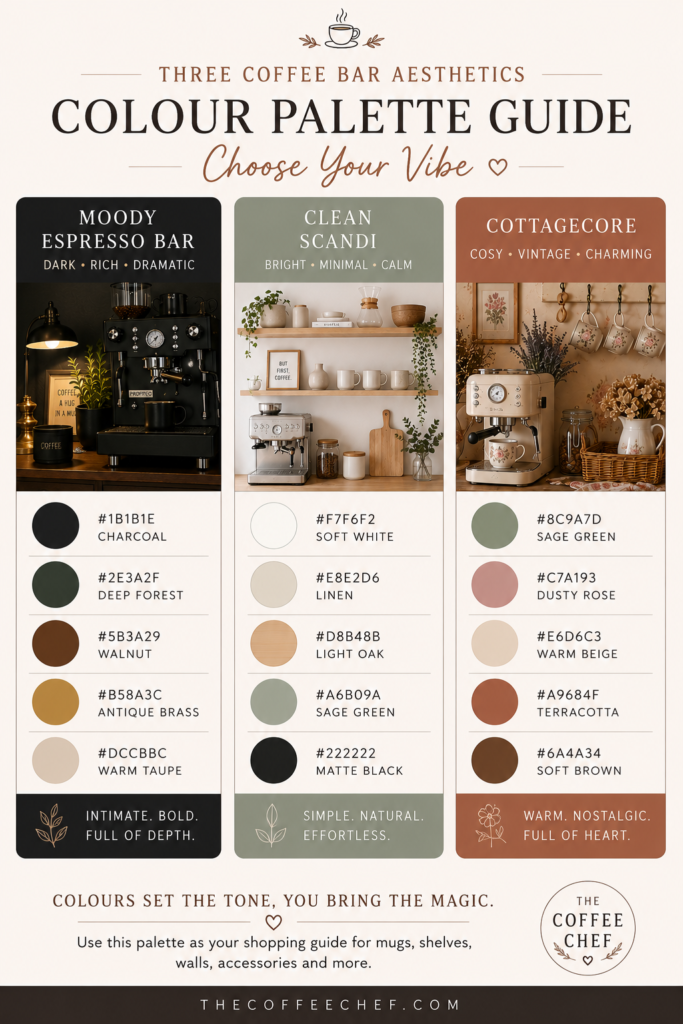
This guide walks you through three very different looks — the dramatic moody espresso bar, the bright and airy Scandi setup, and the cosy cottagecore corner — with colour palettes, key decor moves, and practical shopping tips for UK homes. Think of it as choosing your vibe first, then building everything else around it.
Before you get stuck in, it’s worth spending five minutes on our full guide to setting up a home coffee bar to nail the basics: the right spot, the core kit, and how to think about storage. Decor sits on top of a well-organised foundation — and that order matters.

The Coffee Chef Planner
Daily planning, journalling, and a proper coffee tasting log with a flavour wheel — 20 pages in one printable bundle.
Shop the planner →
Brewforge
A growing edit of coffee bar gear we’d genuinely want on our own counter, added to as we find things worth having.
Shop Brewforge →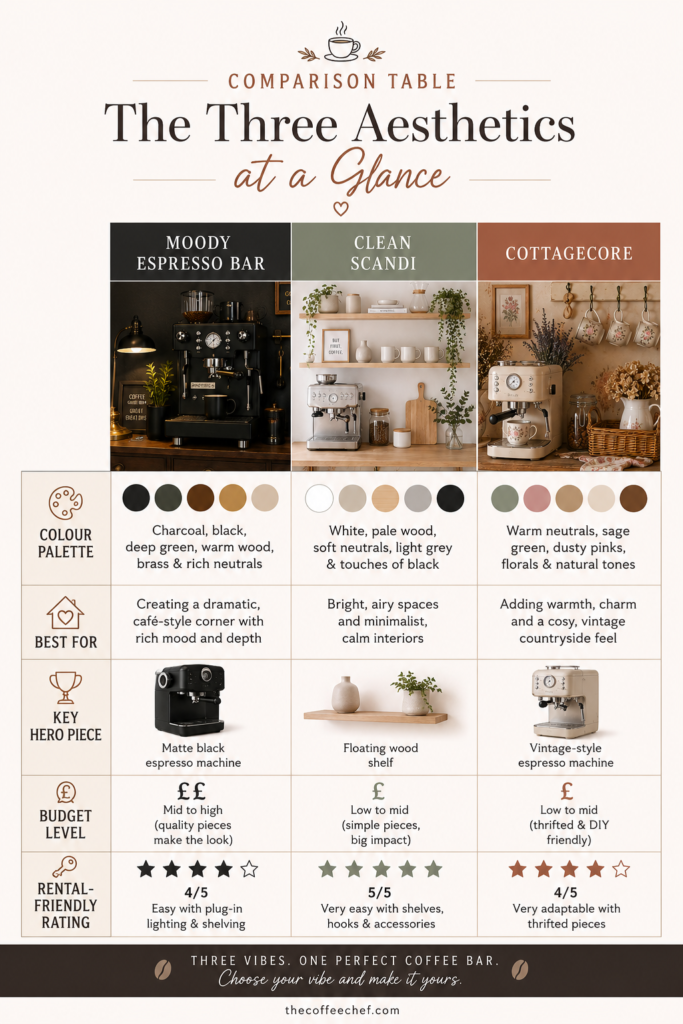
Getting the Basics Right Before You Style
Whatever aesthetic you’re going for, a few things apply across the board. Pick your spot first — a spare kitchen corner, a stretch of worktop, a sideboard in the dining room, or a slim bar cart if you’re in a rental and can’t put up shelves. Function has to come before form.
Once the location’s sorted, think about vertical space. Getting mugs and accessories off the counter and onto open shelves, a pegboard, or a rail with hooks instantly makes a coffee bar feel intentional rather than cluttered. It also creates those natural layers that photograph so well for Pinterest.
The finishing touches that make any setup feel genuinely café-like cost very little. A jar of biscuits, a small tin of chocolates, a bottle of syrup next to the machine — these tiny details signal that this space is designed for pleasure, not just utility. Now, on to the aesthetics.
The Moody Espresso Bar: Dark, Cinematic, and Utterly Pinterest-Worthy
This is the aesthetic for anyone who wants their coffee corner to feel like a tiny independent café at 10pm. Think rich woods, matte black machines, low warm lighting, and enough drama to make even instant coffee feel a bit fancy.
Colours and Materials
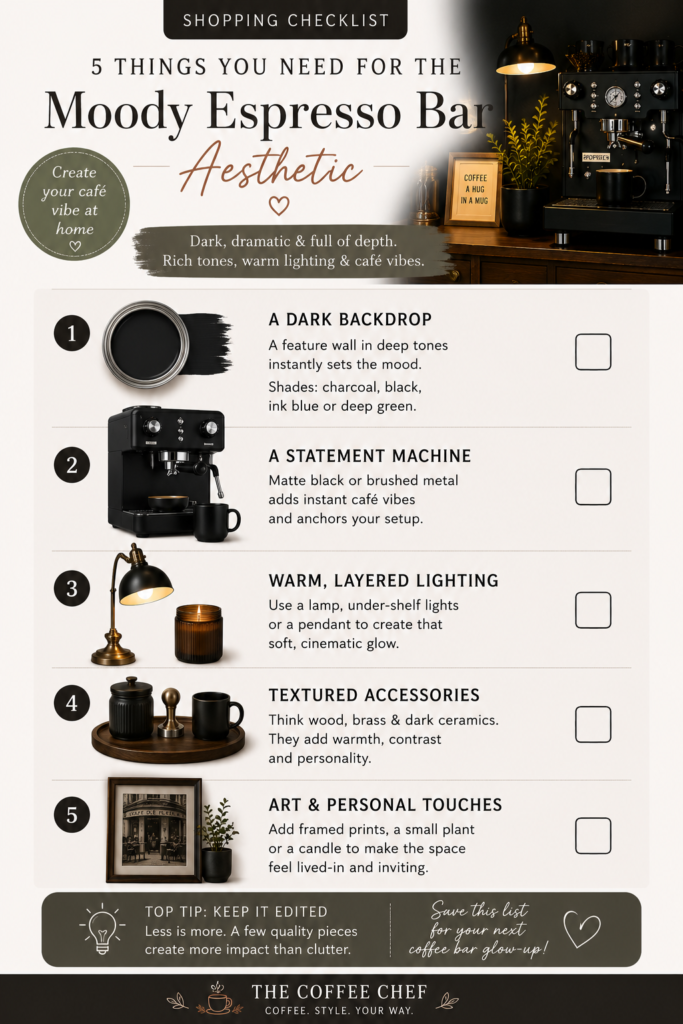
The palette here revolves around deep, saturated tones. Charcoal, black, ink blue, and dark forest green all work beautifully as a backdrop colour — even a single painted wall behind the machine makes a significant difference. Pair these with warm wood tones like walnut or oak, and you’ve got the contrast that makes the look work.
For the machine itself, matte black is the obvious choice, and brushed metal is a close second. Black-framed shelves or a slim console in dark-stained wood carry the palette through the whole setup. If you can stretch to stone or concrete-effect worktops, even better — though dark-stained wood does the same job at a fraction of the cost.
Key Decor Moves
A feature wall is the single biggest impact move for this aesthetic. Dark paint, moody wallpaper, or simple wall panelling behind the machine frames the whole setup and photographs beautifully. Pair this with black-and-white prints in slim dark frames, vintage café signs, or minimal line drawings — nothing too busy, or you lose the cinematic feel.
Lighting is what separates a good moody espresso bar from a great one. Layer your sources: a small table lamp, some under-shelf LEDs on a warm setting, or a single pendant overhead. Warm bulbs are non-negotiable — cool white light kills the atmosphere immediately.
Texture and accessories are where the personality comes through:
- A wooden tray under the machine grounds the whole setup
- Brass spoons and tampers add warmth against the dark palette
- Dark ceramics — ribbed mugs, matte black cups — stay on-brand
- A small candle or two adds to the atmosphere without cluttering the counter
Styling for Pinterest
Style in layers when you’re photographing this setup: start with the console or worktop, add the tray, then stack a couple of coffee books, then work in the smaller accessories. Take photos in low light with a warm lamp switched on, steam rising from the cup if you can manage it, and a candle in the background.
For a carousel post, try “Shop my moody home coffee bar” — link to a black espresso machine, dark wooden tray, brass coffee scoop, ribbed glass jars, and a framed print. These make genuinely useful, saveable content and the dark aesthetic photographs consistently well.
The Clean Scandi Coffee Bar: Bright, Airy, and Effortlessly Calm
This is the look that dominates TikTok and Pinterest for a reason — it photographs brilliantly in natural light, works in almost any kitchen, and feels put-together without being fussy. Think Copenhagen café filtered through a British terraced house.
Colours and Materials
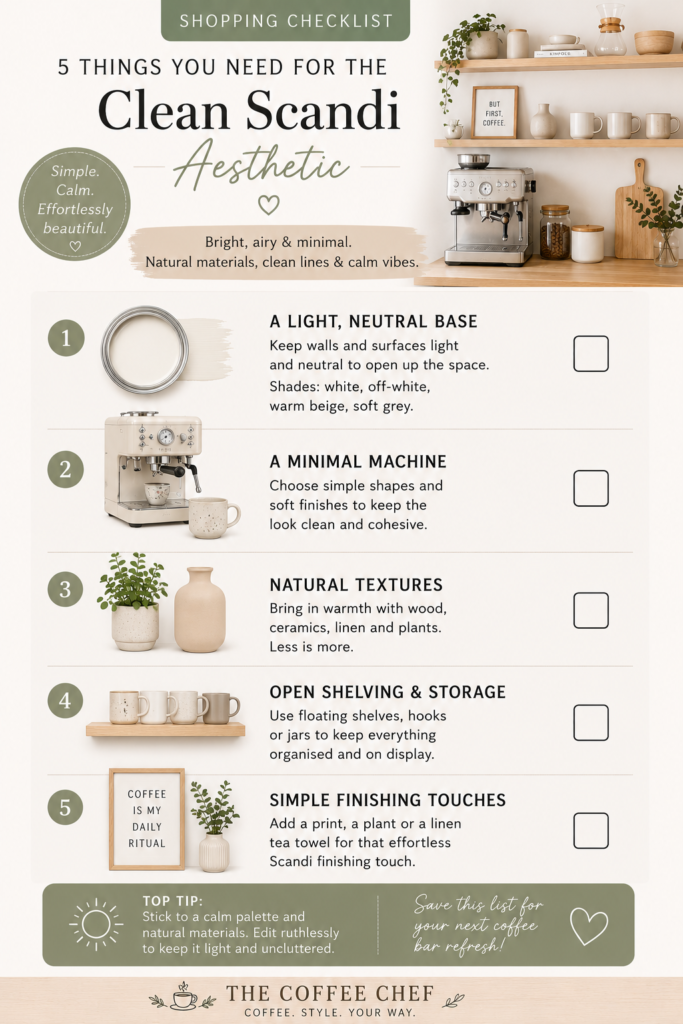
The Scandi palette is built on restraint. White or off-white walls, pale woods like birch, beech, or ash, and a supporting cast of sand, oatmeal, and soft grey. Black is used sparingly for contrast — a matte black machine, thin black shelf brackets, or a black kettle are all you need to stop the palette from feeling too soft.
Natural fabrics do a lot of the atmospheric heavy lifting here. A linen tea towel folded over the machine, a cotton runner under the tray, even a small faux sheepskin on a nearby stool — these textures add warmth to what could otherwise feel clinical.
Key Decor Moves
Minimal open shelving is the backbone of this aesthetic. Thin floating shelves with neatly spaced mugs, one or two ceramic jars, and a single sculptural object — a small vase, a simple plant pot — photograph beautifully without looking styled. The trick is to leave gaps between items so the eye can rest; it reads as deliberate rather than sparse.
A white pegboard or stainless rail with S-hooks keeps the Scandi setup practical without sacrificing the look. Hang your favourite mugs in a row, add a small basket for coffee pods or filters, and you’ve got storage that earns its place on the wall.
Greenery is important here but should be kept simple. One tall plant in a plain terracotta or white pot, or a small cluster of potted herbs, is all you need. Anything fussier starts to break the calm.
For the counter itself, the key rule is hide the clutter. Lidded jars for pods and filters, a simple tray to corral the loose bits, and nothing on the surface that doesn’t earn its place. The Scandi coffee bar lives and dies by negative space.
Styling for Pinterest
Photograph this setup in daylight — the whole aesthetic depends on that bright, airy quality. Try an overhead shot of a flat white on a pale tray with a linen napkin and one pastry alongside. Simple, calm, and endlessly shareable.
A strong carousel idea here is “How to get the Scandi café look in a tiny UK kitchen” — one slide for the colour palette, one for storage solutions, one for budget accessories. This kind of practical, structured content performs really well for saves.
The Cottagecore Coffee Bar: Cosy, Whimsical, and Made for a UK Kitchen
If moody espresso bars are all drama and Scandi setups are all calm, the cottagecore coffee corner is all warmth. This is the aesthetic for anyone with a love of vintage china, dried flowers, and the kind of kitchen that feels like it belongs in a novel. It’s also — not coincidentally — perfectly suited to the period homes, Victorian terraces, and actual cottages that make up a huge chunk of UK housing.
Colours and Materials
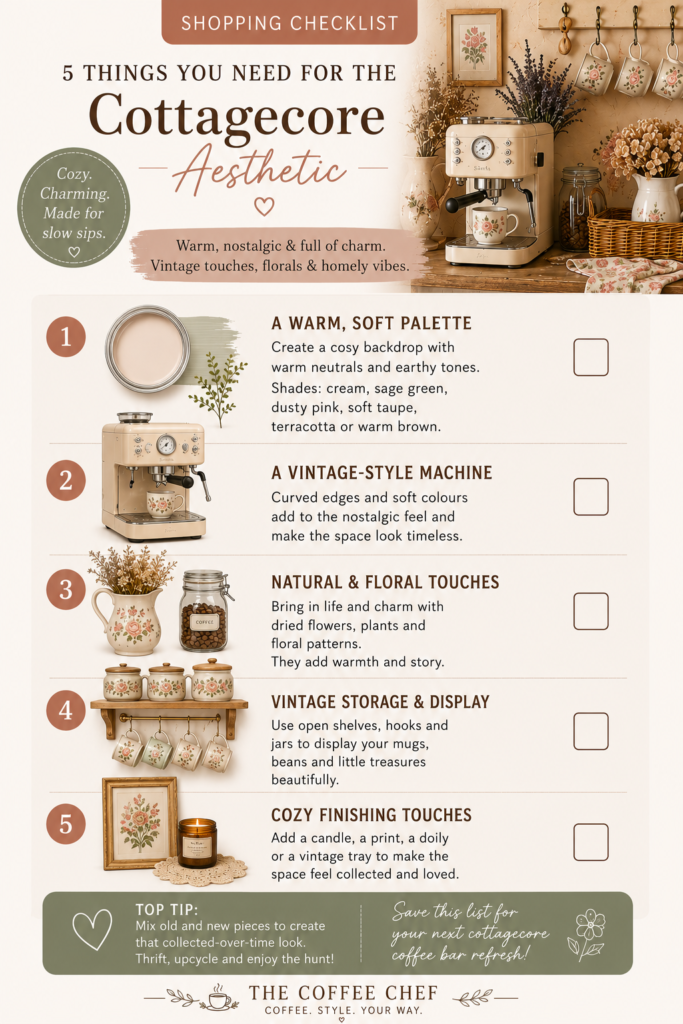
The cottagecore palette is soft and nature-inspired: sage green, duck-egg blue, warm cream, dusty pink, and terracotta, grounded by darker woods. Nothing bright, nothing stark — these are colours that feel like they’ve been in the family for years.
Materials lean into the handmade and the worn. Natural wood with a bit of age to it, wicker baskets, stoneware mugs, embroidered or lace textiles. The mix-and-match approach to crockery is not only allowed here, it’s actively encouraged — mismatched floral mugs and vintage plates are a feature, not a flaw.
Key Decor Moves
The best cottagecore coffee bars don’t start with a new piece of furniture — they start with something that already exists in the home. A sideboard, an old dresser with shelves on top, a hutch that was gathering dust — these become the foundation of the setup, and they carry exactly the right patina that you’d struggle to fake with something new.
Layered textiles are what give this aesthetic its signature feel:
- A crochet runner or embroidered cloth under the tray
- A gingham or floral tea towel folded nearby
- A doily or two under the jars (yes, really — done well, it works)
Nature comes into this space in almost every form. Dried flower bundles hanging from a shelf, a small posy in a jam jar, herbs in terracotta pots on the windowsill, a seasonal garland around the machine in December. This is also the easiest aesthetic to refresh throughout the year — spring daffodils, autumn dried oranges, winter greenery — and each refresh is content in itself.
For the whimsical details that really sell the look, hunt on Etsy and local markets. Mushroom motifs, handwritten labels on jars, cottage-style prints, small wooden signs with something charming on them — these are the details that make the setup feel personal rather than assembled.
Styling for Pinterest
Close-up vignette shots work brilliantly for cottagecore content. A vintage mug on a saucer, a silver teaspoon on a floral napkin, an open book alongside — these intimate shots often outperform wider setups because they draw the eye in. Natural light from a window, slightly golden, is the ideal.
Seasonal refreshes make for easy ongoing content. Autumn garlands and dried orange slices, winter greenery, spring flowers — swapping out a few elements for each season keeps the setup feeling current and gives you a reason to photograph it again. A strong carousel idea is “From plain dresser to cottagecore coffee bar” — before and after, then the steps: the paint, the hardware swap, the mug hooks, the baskets.
Making It Work in a UK Home
A few things are worth addressing specifically for a UK audience, because a lot of the coffee bar content online is designed for American homes with much more counter space and far fewer planning restrictions.
Small Spaces and Rentals
Most UK kitchens are not large. If counter space is genuinely limited, go vertical — a slim shelf above the machine, a pegboard on the wall, or a single open shelf with mugs underneath it. A narrow bar trolley on wheels is brilliant for rentals because it can be moved, doesn’t require any drilling, and can be wheeled out of the way when you need the space.
For renters, stick-on hooks, freestanding shelves, and peel-and-stick wallpaper panels are your best friends. The moody espresso bar look in particular is very achievable with just a removable dark wallpaper panel behind the machine — no commitment, full impact.
High-Impact, Low-Cost Upgrades
You don’t need to replace your machine to transform your coffee corner. Swapping out your mugs for a more cohesive set, adding a simple wooden tray under the machine, changing your storage jars, and adding a small lamp can completely change the feel of the space for well under £30. A single framed print in the right place does more work than most people expect.
Where to Shop in the UK
Each aesthetic has its natural home territory for shopping. The moody espresso bar look is well-served by H&M Home, MADE, and the darker ranges at Dunelm. The Scandi look is exactly what IKEA and Nordichouse do best. For cottagecore, Etsy’s UK sellers are unbeatable for the handmade details, and charity shops and car boot sales often turn up exactly the kind of vintage crockery you’re looking for at a fraction of the cost.
Which Aesthetic Is Right for You?
If you’re still undecided, it helps to think about your existing kitchen rather than starting from scratch. Dark units, stone surfaces, or a naturally dramatic space suits the moody espresso bar. Light, white, or neutral kitchens are natural Scandi territory. Period homes, cottage-style kitchens, and anyone who loves mixing patterns and textures will feel most at home with cottagecore.
The good news is that all three aesthetics work at every budget level — the investment is mostly in editing (removing what doesn’t fit) rather than buying new things. Start with what you’ve already got, identify the two or three items that don’t belong, and replace them with something that does.
Once you’ve settled on your look, take a browse through our coffee bar accessories guide for the specific equipment and styling pieces worth investing in — UK pricing, honest recommendations, and no fluff.
Continue Your Journey
- How to Set Up a Home Coffee Bar UK — the full practical guide to picking the right spot, choosing your machine, and getting organised before you start styling
- Best Coffee Bar Accessories UK — the syrups, tampers, scales, and storage pieces worth having on your counter
- Coffee Bar Ideas for Small Kitchens — specifically for UK flats and terraced houses with limited counter space
- Best Coffee Machines for Home UK — if the decor inspiration has made you rethink the machine at the centre of it all
- Café Drinks to Make at Home — Recipe Hub — once the setup looks great, here’s what to make in it
Which vibe are you going for — moody espresso bar, clean Scandi, or cottagecore? Drop a comment below and let us know, or share a photo of your setup.
Want more UK coffee inspiration delivered straight to your inbox? Subscribe to The Coffee Chef newsletter for new recipes, equipment picks, and home café ideas every week.


