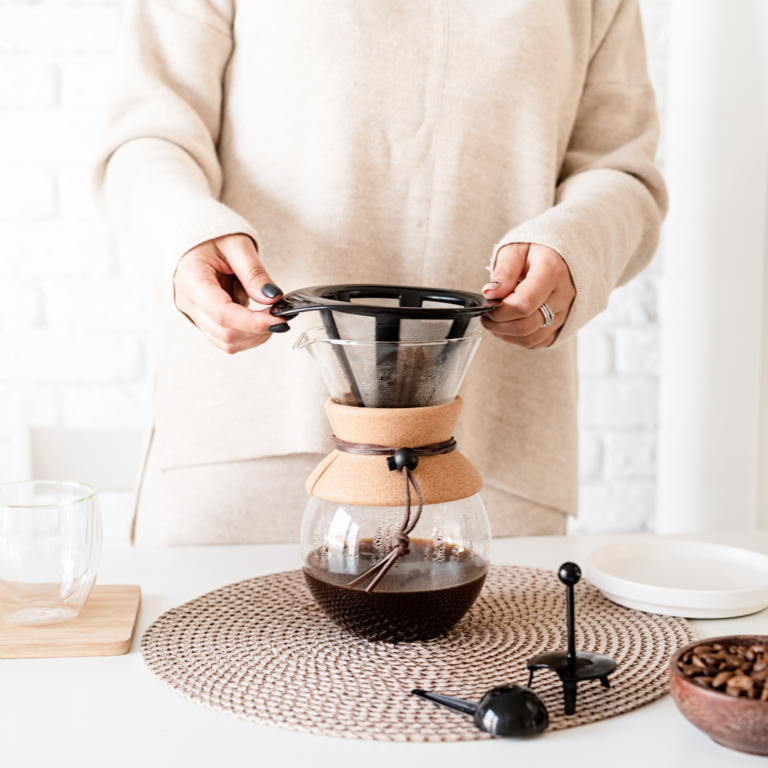
The Chemex method of brewing coffee, renowned for its elegance and simplicity, involves a fascinating interplay of science that transforms simple water and coffee grounds into a delightfully aromatic and refreshing beverage.
As an Amazon Associate, I earn from qualifying purchases and sometimes recommend products from other sellers at no extra cost to you. For more details see my disclosure policy and privacy policy.
The quintessential elements of this transformation – the extraction process, the grind size, water temperature, and brewing time – each possess an intrinsic chemistry that only serves to enhance the complexity and allure of the process.
This article delves into the fascinating world of coffee brewing, shedding light on the integral role each element plays, particularly focusing on the revered Chemex method. Curious about the science behind your morning brew? Let’s embark on this aromatic journey together.

The Coffee Chef Planner
Daily planning, journalling, and a proper coffee tasting log with a flavour wheel — 20 pages in one printable bundle.
Shop the planner →
Brewforge
A growing edit of coffee bar gear we’d genuinely want on our own counter, added to as we find things worth having.
Shop Brewforge →Introduction to Coffee Brewing
The process of coffee brewing is an intricate dance of chemistry and physics that begins with the humble coffee bean. The bean is composed of hundreds of volatile compounds, including oils, acids, and aromatics, each contributing to the flavor, aroma, and body of the final brew. The goal of brewing coffee is to efficiently extract these compounds, unlocking the bean’s full potential and creating a balanced, flavorful cup.
This extraction process is influenced by several factors including grind size, water temperature, and brewing time, each of which we will explore in depth, with a special focus on their role in the Chemex brewing method. Understanding the science behind these elements can not only enhance your appreciation for your morning cup but also refine your brewing technique, ensuring that each cup is as delicious as the last.

The Science Behind Coffee Extraction
The key to unlocking the flavors in a coffee bean lies within the science of coffee extraction – a delicate process that involves the dissolution of the soluble flavors from the coffee grounds into the water. There are hundreds of compounds in coffee, each contributing to the distinct taste we’ve come to love. These compounds include acidic molecules like citric, malic, and chlorogenic acids that impart a bright, tangy flavor; lipids and melanoidins that provide body and richness; and volatile aromatic compounds that shape the coffee’s unique aroma.
Over-extraction, where too much of these compounds dissolve into the water, can result in a bitter, overly strong flavor. Conversely, under-extraction can leave the coffee tasting weak or sour, as not enough of the desirable compounds make it into the cup. Hence, a balanced extraction, governed by the grind size, water temperature, and brewing time, is essential for optimizing these chemical compounds’ contribution to the final taste, especially in the Chemex method.
How Extraction Works
Coffee extraction begins when you pour hot water over the coffee grounds. The water acts as a solvent, dissolving the soluble flavors and aromatics from the coffee grounds. However, this extraction process is not instantaneous and requires careful control.
Temperature plays a crucial role in the rate of extraction. Hotter water will extract compounds faster, but if the temperature is too high, it can over-extract and lead to a bitter taste. Ideally, the water temperature should be between 195 to 205 degrees Fahrenheit for optimal extraction.
Grind size is another significant factor. The finer the grind, the larger the surface area exposed to the water, leading to faster extraction. Conversely, a coarser grind has less surface area and thus extracts more slowly. Therefore, the grind size needs to be adjusted based on the brewing time. For Chemex, a medium-coarse grind is generally recommended.
Lastly, the brewing time also impacts the extraction. A longer brew time can lead to over-extraction, while a short brew time might result in under-extraction. For Chemex brewing, the ideal timing usually lies between 3 to 5 minutes.
By tweaking these variables, you can control the extraction process to achieve a balance of flavors, making the most out of the coffee grounds. In the Chemex method, the combination of the unique filter, grind size, water temperature, and brewing time allows for a clean, well-defined, and flavorful cup of coffee.
Influence of Grind Size on Coffee Brewing
The impact of grind size on coffee brewing and, consequently, on your cup’s final flavor profile is profound. Grind size directly influences surface area in contact with water. A finer grind exposes more of the coffee’s surface area to water, accelerating the extraction process. This can be advantageous for brewing methods with short contact times, like espresso. However, if the grinds are too fine for the brewing method, it can result in over-extraction, creating a brew that is bitter and unbalanced.
Conversely, a coarser grind, which has less surface area exposed to the water, slows the extraction process. This is suitable for brewing methods with longer contact times, like the French press. But if the grinds are too coarse for the brewing method, it can lead to under-extraction, resulting in a weak and sour cup.
For the Chemex method, a medium-coarse grind is often recommended. This grind size, combined with the Chemex’s unique filter and longer brew time, allows for a controlled extraction that strikes the right balance of flavors. It brings out the intrinsic qualities of the coffee, such as brightness and complexity, without leaning towards over-extraction or under-extraction. By understanding and controlling grind size, you can significantly influence the taste of your coffee, crafting a brew that reflects your personal taste preferences.
The Correlation Between Grind Size and Extraction Rate
The relationship between grind size and extraction rate is a direct one, and understanding this correlation is crucial for brewing the perfect cup of coffee. The extraction rate refers to how quickly the water can dissolve the desirable compounds from the coffee grounds. As we’ve mentioned before, a finer grind exposes a larger surface area to the water, which accelerates the extraction process. This means flavors are extracted more quickly, which can be useful for brewing methods with shorter brew times.
Conversely, a coarser grind has a smaller surface area in contact with water, slowing the extraction process down. This slower extraction allows for a more nuanced flavor development, beneficial for brewing methods with longer contact times. However, if the grind is too coarse, the water may not extract enough flavor, leading to under-extraction and a weak, underdeveloped brew.
For the Chemex method, which lies somewhere between a fast espresso and a slow French Press in terms of contact time, a medium-coarse grind provides the optimal balance. It offers enough surface area for efficient extraction without over-extracting, creating a brew that is well-rounded and flavorful. The grind size and extraction rate’s correlation is a key aspect to consider, and tweaking it enables you to fine-tune your brew to your personal taste preference.

Choosing the Right Grind Size for Chemex
The Chemex method stands out for its unique design, including a specialty filter that is thicker than most, leading to slower drainage and a longer brew time. As a result, the recommended grind size for Chemex is medium-coarse. This grind size strikes the right balance, allowing for a slower extraction that aligns well with the Chemex’s extended brew time.
If the grind is too fine, it can lead to over-extraction due to the slow drainage of the Chemex filter, resulting in a bitter taste. Conversely, if the grind is too coarse, the water can drain too quickly, leading to under-extraction and a weak, sour brew. Thus, selecting a medium-coarse grind allows for the right extraction pace, enabling the Chemex to produce a clean, well-defined, and flavorful cup of coffee that is neither over-extracted nor under-extracted. It’s a delicate balancing act, but with practice, you can master the art of choosing the perfect grind size for Chemex brewing.
Importance of Water Temperature in Coffee Brewing
Water temperature plays a critical role in coffee brewing, directly affecting the extraction process and the final flavor of your brew. The optimal temperature range for brewing most coffee is between 195 to 205 degrees Fahrenheit. Within this range, the hot water is capable of extracting the desirable flavors from the coffee grounds effectively without over-extracting.
Over-extraction often occurs when the water temperature is too high, causing the coffee to taste bitter. On the other hand, if the water temperature is too low, it can lead to under-extraction, resulting in a weak and sour brew. In the Chemex method, maintaining the right water temperature is crucial due to the longer brew time. The medium-coarse grind combined with the optimal water temperature allows for a controlled extraction, resulting in a clean, well-defined, and flavorful cup of coffee. Understanding and controlling the water temperature, therefore, is a fundamental step towards brewing a delicious cup of coffee.
The Impact of Temperature on Chemical Extraction
The temperature of water used in brewing coffee directly impacts chemical extraction, influencing the balance of flavors in the final brew. Higher temperatures facilitate a faster extraction of flavors, dissolving the soluble compounds in the coffee grounds more expediently. This can extract a broad spectrum of flavors, from the bright, acidic notes to the deeper, bitter constituents. However, temperatures that are too high can lead to over-extraction, resulting in a brew that is overwhelmingly bitter and unbalanced.
Conversely, lower temperatures slow the extraction process, often focusing on the lighter, acidic flavors in the coffee. This can lead to a brew that is bright and tangy, but if the temperature is too low, it may not fully extract the range of flavors, leading to under-extraction and a brew that is weak and potentially sour.
In the Chemex method, the optimal water temperature combined with the medium-coarse grind size and slower brew time allows for a balanced extraction of flavors. It captures both the bright, acidic notes and the deeper, more complex flavors, without veering into over-extraction or under-extraction. The impact of temperature on the chemical extraction process is crucial in coffee brewing, and mastering it is key to achieving your preferred flavor profile.
Ideal Temperature for the Chemex Method
For the Chemex method, the ideal water temperature range is between 195 to 205 degrees Fahrenheit. This temperature range strikes a balance between extracting the bright, acidic flavors and the deeper, more complex flavors from the coffee grounds. If the water is too hot, it can lead to over-extraction and a bitter brew. On the contrary, if the water is too cool, it can result in under-extraction and a weak, sour coffee.
Therefore, maintaining the optimal water temperature is crucial in the Chemex method to produce a well-rounded and flavorful cup of coffee. Alongside the medium-coarse grind size and the slower brew time, the right water temperature ensures a balanced, controlled extraction, showcasing the full spectrum of coffee flavors without over-extracting or under-extracting any particular taste notes.
The Significance of Brewing Time
Brewing time significantly affects the taste of the coffee as it determines how long the water is in contact with the coffee grounds, thus directly influencing the extraction process. The longer the brewing time, the more flavors are extracted from the coffee grounds. However, this is not necessarily a positive attribute as over-extraction can lead to a bitter-tasting brew. Conversely, if the brewing time is too short, the water may not extract enough flavor, resulting in under-extraction and a weak, sour brew.
In the Chemex method, the brewing time is longer due to the slower drainage through the thick filter. This extended brewing time, combined with the ideal water temperature and medium-coarse grind size, allows for a balanced extraction of flavors, resulting in a clean, well-defined, and flavorful cup of coffee. It’s important to note that while the Chemex method requires a longer brewing time, it’s paramount to avoid over-extraction. Therefore, monitoring and controlling the brewing time is crucial in achieving the perfect cup of coffee, a testament to the art and science of coffee brewing.

Appropriate Brewing Time for Chemex
For the Chemex brewing method, an appropriate brew time typically falls within the range of 4 to 5 minutes. This duration allows the water to interact adequately with the coffee grounds, extracting the optimum amount of flavor without causing over or under-extraction. It is important to note that this brewing time is influenced by factors such as grind size and water temperature.
A medium-coarse grind and a water temperature of 195 to 205 degrees Fahrenheit, when combined with the recommended brew time, yield a balanced, flavorful coffee. It’s a delicate harmony of these parameters that truly brings out the best in your Chemex brew. As always, personal taste may require some experimentation within these guidelines to find your perfect cup.
Mastering the Chemex Method: A Scientific Approach
Mastering the Chemex Method requires an understanding of the science behind each stage of the brewing process, from the grind size to the brewing time. The medium-coarse grind size is crucial as it determines the extraction rate of the coffee – larger particles extract more slowly than smaller ones. This grind size, paired with the unique Chemex filter, slows down the water flow rate, allowing for a prolonged contact time between the water and coffee grounds.
The water temperature, ideally between 195 to 205 degrees Fahrenheit, influences the extraction of flavors. Higher temperatures facilitate a faster extraction, dissolving the soluble compounds in the coffee grounds more expediently, while lower temperatures slow the extraction process, often focusing on the lighter, acidic flavors in the coffee.
The brewing time, typically between 4 to 5 minutes for the Chemex method, is crucial in avoiding over-extraction or under-extraction. This extended brewing time, combined with the ideal water temperature and medium-coarse grind size, allows for a balanced extraction of flavors, leading to a clean, well-defined, and flavorful cup of coffee.
By understanding and applying these scientific principles, coffee lovers can fine-tune their brewing process to achieve their preferred flavor profile. The Chemex method, with its clean, well-defined flavor extraction, is an excellent example of how science and art intersect in the world of coffee brewing.
Conclusion: The Perfect Brew Through Science
Achieving the perfect brew involves a scientific understanding and careful manipulation of key variables such as grind size, water temperature, and brewing time. This is particularly true in the Chemex method, where these factors come together to create a clean, well-defined, and flavorful coffee. The medium-coarse grind size slows extraction, allowing the water longer contact time with the grounds.
The optimal temperature range facilitates a balanced extraction of both the bright, acidic flavors and the deeper, more complex ones. Finally, a brewing time of 4 to 5 minutes ensures neither over nor under-extraction. By understanding and controlling these elements, and appreciating the science behind them, you can consistently achieve a perfect coffee brew that is truly an intersection of science and art.