
In a small kitchen, counter space is prime real estate. Every inch is spoken for — kettle, toaster, chopping board, the washing-up that’s been there since Tuesday — so the idea of dedicating a corner to a coffee setup can feel like a luxury you simply can’t afford. But here’s the thing: a home coffee bar doesn’t need a whole counter run. It just needs to be clever.
As an Amazon Associate, I earn from qualifying purchases and sometimes recommend products from other sellers at no extra cost to you. For more details see my disclosure policy and privacy policy.
Whether you’re in a narrow terraced house kitchen, a compact flat, or a galley-style layout where you can touch both walls at once, there’s a coffee station setup that works for your space. This guide is specifically for UK homes — small by global standards, often rented, and rarely blessed with the sprawling kitchen islands you see on American interior blogs. Think vertical, think moveable, and think “one calm, efficient morning zone.”
Why a Coffee Bar Actually Makes Sense in a Small Kitchen
It sounds counterintuitive, but having a dedicated coffee corner can actually reduce clutter rather than add to it. When coffee kit lives in one organised spot — machine, mugs, beans, syrups — it stops spreading across the whole kitchen. No more rummaging through three cupboards for the cafetière, no more mugs on the windowsill, no more coffee bags stuffed next to the cereal.

The Coffee Chef Planner
Daily planning, journalling, and a proper coffee tasting log with a flavour wheel — 20 pages in one printable bundle.
Shop the planner →
Brewforge
A growing edit of coffee bar gear we’d genuinely want on our own counter, added to as we find things worth having.
Shop Brewforge →The best setups hide the mess, keep the mugs close, and work with awkward UK kitchen layouts rather than fighting them. A good coffee station also signals the start of your morning routine in a way that a scattered kitchen never can — and there’s real value in that small, daily ritual, even if it’s just a corner shelf and a decent machine.
The Coffee Chef — Home Coffee Bar Guide
Which Coffee Bar Setup Is Right for Your Kitchen?
Compare all 7 small-kitchen coffee station ideas at a glance — cost, counter space, storage, and who each one suits best.
| Setup | Approx. Cost | Renter-Friendly | Counter Space Used | Storage Capacity | Difficulty | Best For |
|---|---|---|---|---|---|---|
| Corner Station | £10–£40 (shelf only) |
Yes | Machine only | Moderate | Easy | Most kitchen layouts; best first setup |
| Wall-Mounted Shelf | £15–£60 | Check lease | None extra | Moderate | Medium | Tiny counters; open-plan kitchens |
| Cupboard Coffee Zone | £0–£50 (uses existing unit) |
Yes | None | High | Medium | Capsule machine users; tidy kitchens |
| Slim Trolley | £40–£120 | Yes | Flexible | Moderate | Easy | Renters; small galley kitchens |
| Tray Station | £5–£25 | Yes | Machine only | Low | Very easy | Minimal kit; AeroPress / capsule users |
| Sideboard / Dresser | £60–£250+ | Yes | Outside kitchen | High | Easy | Open-plan homes; larger kit collections |
| Built-In Nook | £200–£600+ | No | Dedicated space | Very high | Requires fitting | Homeowners; long-term kitchen solution |
thecoffeechef.com · Cost estimates based on UK retail prices, April 2026
The Best Coffee Station Spots in a Small UK Kitchen
Before you start buying shelves and baskets, it’s worth thinking about placement. Where your coffee bar lives will determine how practical it is — and how often you actually use it.
Near the Sink or Kettle
Water access is non-negotiable for coffee. If your machine is on the opposite side of the kitchen from your sink, you’ll spend your mornings shuffling a full water tank back and forth — and you’ll quickly abandon the setup. The best spot is usually within arm’s reach of an existing water source, whether that’s beside the sink, next to your kettle, or close to where you already make hot drinks.
A Corner Counter
Corners are often the most underused part of a small kitchen. They’re awkward for prep work, too far from the hob to be useful for cooking, but perfect for a compact coffee station. Pop a machine in the corner, add a shelf above for mugs and beans, and you’ve used space that was otherwise going to waste. If your corner has a cupboard above it, even better — that’s your hidden storage sorted.
The End of a Run
The final unit at the end of a kitchen counter run is another underused spot. It’s slightly away from the main cooking zone, which keeps your coffee kit out of the splash zone, and it’s easy to style as a distinct area rather than just more worktop clutter.
Outside the Kitchen Entirely
In open-plan flats or homes with a kitchen-diner layout, the coffee station doesn’t have to live in the kitchen at all. A sideboard in the dining area, a freestanding cabinet near a breakfast bar, or even a small trolley that lives in the living space can all work beautifully — and they’re particularly good if your kitchen truly has no room to spare.
7 Space-Saving Coffee Bar Ideas for Small UK Kitchens
1. The Corner Coffee Station
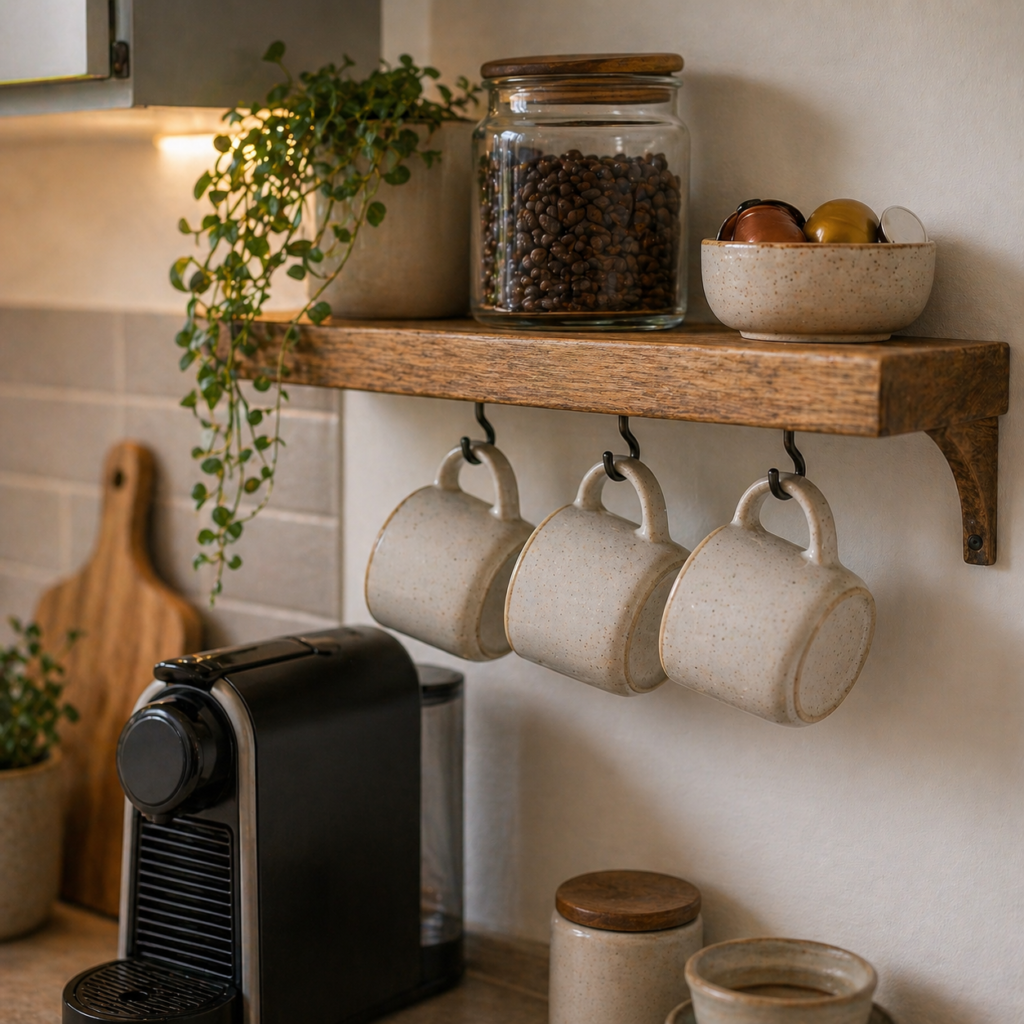
This is the classic move for small kitchens and it works every time. Place your machine in a corner — ideally near the sink — and add a single shelf directly above it at a comfortable height. That shelf handles mugs, a small jar of beans, and any syrups you use regularly. You’ve created a full coffee setup without taking up any more surface area than the machine itself.
The key is keeping the shelf uncluttered. One row of mugs, one small storage tin or jar, maybe a small plant if you’re feeling optimistic. The moment it becomes a dumping ground, the whole setup falls apart.
2. The Wall-Mounted Coffee Bar
If worktop space is genuinely at a premium, going vertical is your best option. A wall-mounted shelf positioned at the right height above the counter means your mugs, beans, and accessories live off the surface entirely, leaving the counter free for prep when you need it.
For rental properties, floating shelves with good fixings into a proper wall — not a partition — work well and look clean. If you’re lucky enough to have a tiled splashback with decent grout, magnetic rails or hook systems can hold mugs and small accessories without any fixings at all. A small wall-mounted cabinet with a door is even better, since it hides everything when you’re not using it.
3. The Cupboard Coffee Zone
This one’s a favourite for anyone who wants to keep their kitchen looking tidy. Take a pantry cupboard, a tall larder unit, or even a standard wall cabinet and convert the interior into a coffee nook. Fit small shelves at different heights — one for the machine, one for mugs, one for accessories — and add a hook or rail to the inside of the door for tea towels or a small basket.
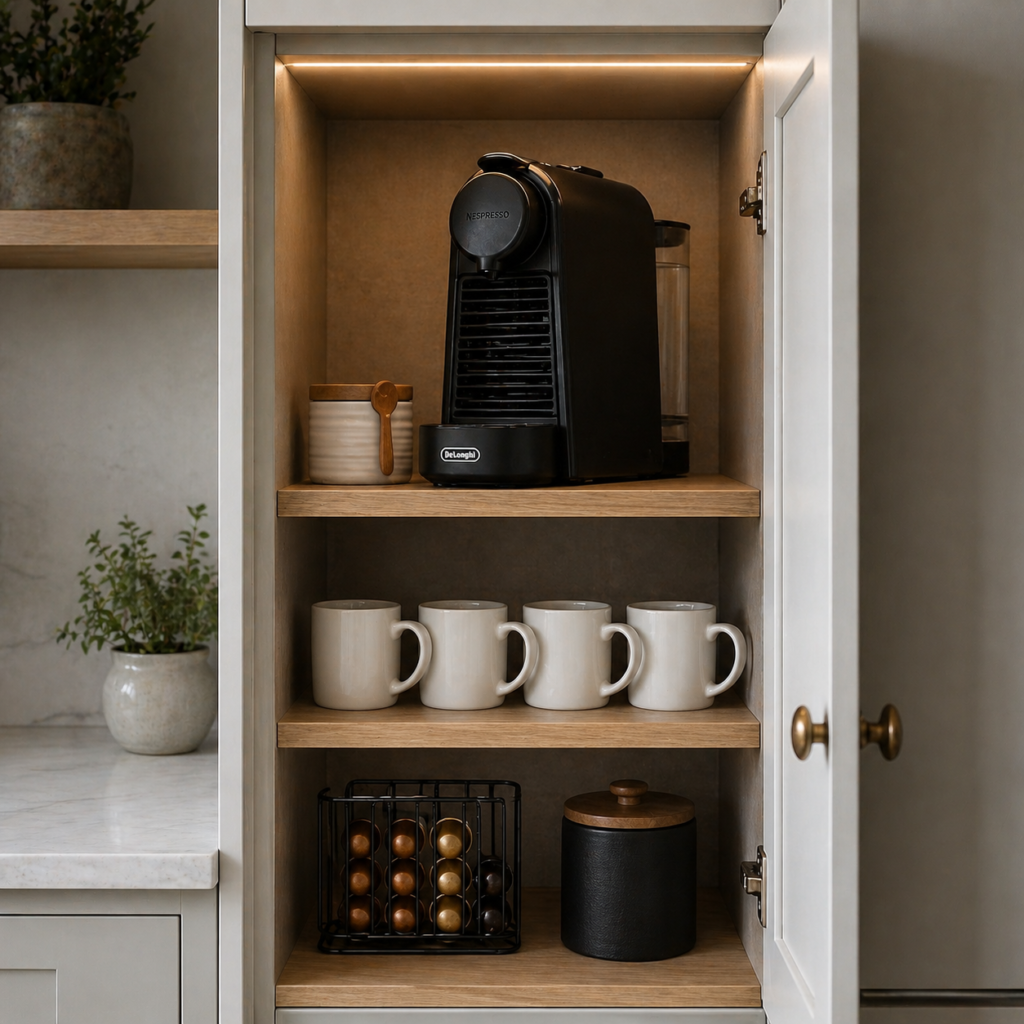
When you’re making coffee, the doors are open and everything’s accessible. When you’re not, the doors close and the kitchen looks like a kitchen rather than a café. It’s particularly useful for capsule machines, where the pod drawer, water tank, and used capsule container can all be accommodated on dedicated shelves inside the cabinet.
4. The Slim Trolley or Portable Station
A narrow kitchen trolley — the kind that’s 30 to 40cm deep — is a brilliant solution for small kitchens, especially rentals where you can’t make any permanent changes. It rolls out when you need it, tucks back against a wall or into a gap between units when you don’t, and because it’s freestanding, you can move it to wherever makes sense.
Look for trolleys with a solid top surface for the machine, a lower shelf for heavier items like a coffee grinder or airtight bean storage, and hooks or a rail on the side for mugs. IKEA, John Lewis, and Lakeland all stock compact kitchen trolleys that work well for this. The added advantage is that a trolley can double as extra prep space when the coffee kit is packed away or stored elsewhere.
5. The Tray-Based Micro Station
If you have a very small machine — a capsule coffee maker, an AeroPress, or a compact pour-over setup — then a tray is all you need. Put everything on one large tray: machine, mug, small jar of pods or coffee, a teaspoon. When you need counter space for cooking, you pick up the whole tray and move it somewhere — a dining table, a worktop extension, even the floor temporarily — in one move.
This is the most flexible option and requires zero DIY or investment beyond a decent-sized tray. It also keeps your setup genuinely portable, which is ideal if you move often or want to use your coffee kit in different rooms.
6. The Sideboard or Dresser Coffee Bar
If your kitchen flows into a dining room or open-plan living area, consider moving the coffee station out of the kitchen entirely and onto a sideboard or dresser. This frees up kitchen counter space completely and gives you a much more generous surface to work with.
A sideboard coffee bar can hold a larger machine, a proper coffee grinder, your full mug collection, a small selection of coffee syrups in a neat row, and even a milk frother — all without it feeling cramped. The dining area context also lets you lean into the café-at-home aesthetic more fully, which is half the fun.
7. The Integrated or Built-In Coffee Nook
If you’re renovating or fitting a new kitchen, this is worth planning for from the start. Built-in coffee nooks — a short stretch of counter at a slightly lower height with shelving above designed specifically for coffee kit — are increasingly popular in UK kitchen design. They solve the space problem permanently and look completely intentional.
Even without a full renovation, a joiner or kitchen fitter can often add a bespoke alcove shelf or pull-out coffee cabinet into an existing run for a few hundred pounds. It’s a bigger investment than a trolley, but it’s the most seamless solution if you’re in your home long-term.
What to Store in a Small Coffee Station
Keeping your coffee bar functional means being selective about what actually lives there. A small station doesn’t need to hold everything — just the things you use every day.
The essentials are your machine, one or two mugs you use regularly, your coffee (whether that’s beans in an airtight container, pods in a dispenser, or ground coffee in a jar), and any milk or milk alternative if your machine doesn’t foam from the main fridge. A small dish for teaspoons is useful. A timer or scales is worth including if you brew manually.
Things that don’t need to live on the station include the whole mug collection, every coffee syrup you own, and equipment you only use occasionally — like a gooseneck kettle that you only need for pour-over brewing. Keep occasional items in a nearby cupboard and only bring them out when needed. The station stays cleaner and more functional when it’s edited down to the daily essentials.
Choosing the Right Machine for a Small Space
The machine you choose has a big impact on how easy the whole setup is to manage. Not every espresso machine belongs in a small kitchen — some are genuinely the size of a microwave, and that’s before you account for a separate grinder, tamper, and milk frother taking up the same stretch of counter.
For tight spaces, capsule machines are the obvious practical choice. Nespresso and Dolce Gusto machines are designed to be compact, and many models are genuinely slim — under 20cm wide in some cases. They don’t require a grinder, the pods store neatly, and the quality has improved considerably. The trade-off is ongoing pod costs and less control over the final brew.
If you want to grind fresh beans, a compact bean-to-cup machine handles everything in one footprint, which is more space-efficient than a separate espresso machine plus grinder. Manual brewing methods — AeroPress, Moka pot, pour-over — are even smaller in terms of hardware, though they need a bit more counter space while you’re actually making the coffee.
The Coffee Chef — Kitchen Planning Guide
How Much Counter Space Does Your Machine Actually Take?
Top-down footprint guide to help you plan your coffee station before you buy. Dimensions are typical ranges — always check the spec sheet for your exact model.
(Nespresso / Dolce Gusto)
The smallest footprint of any machine. Fits on a corner shelf or tray with ease.
Grinder built in — no separate kit needed. One footprint does everything.
+ Separate Grinder
Needs the most counter room. Best on a sideboard or dedicated built-in nook.
+ Kettle (active use)
Moka pot stores in a cupboard — only needs counter space during brewing.
+ Gooseneck Kettle
The most minimal brewing setup possible. AeroPress packs flat for storage.
thecoffeechef.com · Dimensions are typical ranges — check your model’s spec sheet for exact measurements
When you’re ready to buy, our guide to the best coffee machines for home covers the options across different budgets and styles, including compact models that work particularly well in smaller spaces.
Styling a Small Coffee Bar to Look Intentional
There’s a difference between a small coffee station that looks thoughtful and one that looks like stuff was dumped there. The gap between them is usually just a bit of editing and a consistent visual approach.
Colour works hard in a small space. Keeping everything in two or three tones — say, black appliances, natural wood accessories, and white or cream ceramics — makes even a tiny setup look considered. Mixing ten different colours and materials in a tight corner just reads as mess. If you’ve got a Nespresso machine in silver, matte black mugs and a dark wood tray will tie it together. If your machine is white, cream ceramics and light wood feel cohesive.
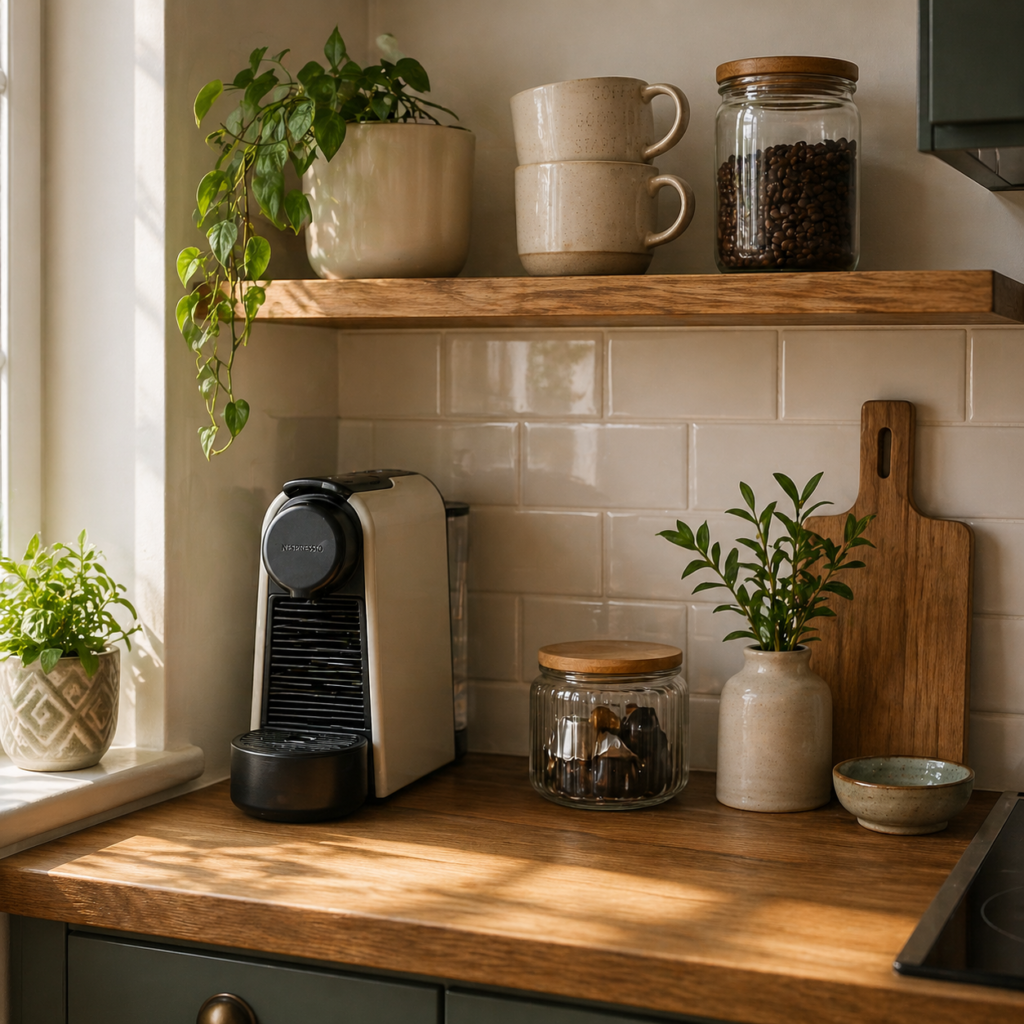
Matching storage helps too. Swap mismatched packaging — coffee bags, pod boxes, sugar sachets — for simple airtight jars or tins. They look better on display, keep your coffee fresher, and make the station feel like it was designed rather than assembled. Small coffee accessories like tampers, milk frothers, and spoons can live in a small ceramic pot or wooden caddy to keep them contained.
For syrups — always good to have a few coffee syrups on hand if you like to recreate café drinks — a small cluster of bottles in a consistent style looks far better than a random assortment. If you enjoy experimenting with latte flavours, a dedicated syrup shelf or row is both practical and genuinely nice to look at.
Renter-Friendly Swaps vs. Built-In Options
If you’re renting, most of the best small coffee bar ideas are already renter-friendly by nature. Trolleys, trays, freestanding sideboards, and cupboard conversions that use existing furniture don’t require any landlord approval or permanent changes.
Where it gets trickier is wall shelving. Most rental agreements allow small picture hooks, but a proper floating shelf with wall fixings is a grey area in many tenancies. The safest approach is to ask your landlord before drilling — most are fine with it if you’re sensible about it — or use freestanding shelving units that lean against the wall without any fixings. Brands like String and IKEA make freestanding shelf systems that look clean and don’t require a single drill hole.
If you own your home or have a longer lease, built-in solutions are worth considering. A bespoke coffee alcove, a fitted larder conversion, or a kitchen with a dedicated appliance cupboard will serve you for years and significantly improve how the whole space functions. The investment pays back quickly in daily convenience — and in the simple pleasure of a morning routine that actually works.
Building Your Coffee Bar: A Practical Starting Point
Starting from scratch can feel overwhelming, so here’s a simple way to approach it. Start with where you’ll put it, not what you’ll put on it. Pick your spot — corner, wall shelf, trolley, sideboard — before you buy anything else. The location determines everything else: how much space you have, whether you need wall storage or freestanding, and how much kit can realistically fit.
The Coffee Chef — Setup Guide
Your Small Coffee Bar Starter Kit
Tick off your essentials first, then add the nice-to-haves once your setup is working. Click each item to check it off.
thecoffeechef.com · Start with the essentials — add the rest once your setup is working
Then start with the minimum. Machine, one mug, coffee, a teaspoon. Use it for a week. Notice what you’re still going to the cupboard for, what’s cluttering the counter, what you wish you had to hand. Then add to the setup based on what you actually need rather than what looks good on a Pinterest board.
A small, well-used coffee station is always better than an elaborate one that doesn’t quite work for how you live. Get the basics right first, then build from there.
The Bottom Line
You don’t need a big kitchen to have a great home coffee setup. A corner shelf, a trolley, a converted cupboard, or a sideboard in the next room — all of these can become a proper coffee bar with the right machine and a bit of organisation.
For UK renters and homeowners alike, the key is choosing a solution that works with your space rather than against it. Think about water access, think about storage height, and edit your kit down to what you genuinely use. Once you’ve got a setup that fits your kitchen and your routine, you’ll wonder why you didn’t do it sooner.
Ready to find the right machine for your new setup? Head to our guide to the best coffee machines for home UK or browse our coffee accessories guide to find the finishing touches that make a small coffee station genuinely useful.
Continue Your Journey
- Best Coffee Machines for Home UK — Find the right machine for your space and budget, including compact models for small kitchens.
- Types of Coffee Accessories — Everything from tampers and frothers to storage and scales — what’s actually worth having.
- Best Coffee Syrups — Build a small syrup collection for your coffee station and recreate café drinks at home.
- Coffee Brewing Methods Explained — Not sure which brewing method suits your setup? This guide breaks down every option.
- Frothing Milk at Home — How to get a great foam with whatever equipment you have, including budget frothers.
What does your home coffee station look like — or what are you working towards? Drop a comment below and let us know your setup.
Love coffee content like this? Subscribe to The Coffee Chef newsletter for new recipes, guides, and equipment picks straight to your inbox.


