
Before you fall for TikTok latte art and splash out on a gleaming machine, it helps to take a step back. Choosing the right coffee machine for your home bar isn’t really about specs or price tags — it’s about matching a machine to the way you actually drink coffee, the space you’ve got, and how much time and effort you’re genuinely willing to put in. Get that match right and your home bar becomes a daily pleasure. Get it wrong and you’ll have a very expensive worktop ornament.
As an Amazon Associate, I earn from qualifying purchases and sometimes recommend products from other sellers at no extra cost to you. For more details see my disclosure policy and privacy policy.
This guide walks you through every decision you’ll face: drink style, machine type, key features, budget, running costs, and everything in between — all with a UK focus. Whether you’re building your first coffee station from scratch or upgrading an existing setup, this is where to start.
Start Here: How Do You Actually Drink Coffee?
This is the most important question, and most people skip straight past it. Your preferred drink style drives everything else — machine type, budget, whether you need a grinder, whether milk matters at all.

The Coffee Chef Planner
Daily planning, journalling, and a proper coffee tasting log with a flavour wheel — 20 pages in one printable bundle.
Shop the planner →
Brewforge
A growing edit of coffee bar gear we’d genuinely want on our own counter, added to as we find things worth having.
Shop Brewforge →If you mostly drink flat whites, cappuccinos, and lattes, you need an espresso-based machine with a steam wand or automatic milk frother. That could be a manual espresso machine, a bean-to-cup, or a higher-end pod system with frothing built in. If you prefer long black coffee — Americanos, filter-style, or just a big mug of something in the morning — you don’t need espresso pressure at all, and a filter machine or a simple pod system will work brilliantly without the extra cost.
If you regularly make coffee for guests or a busy household where everyone drinks something different, a bean-to-cup machine or a versatile pod system can switch between styles and strengths at the press of a button. The point is: there’s no single “best” machine. There’s only the best machine for how you drink.
Which Coffee Machine Is Right for You?
Answer 5 quick questions and find the machine type that fits your life — not just your wishlist.
The Main Types of Coffee Machine
Pod and Capsule Machines
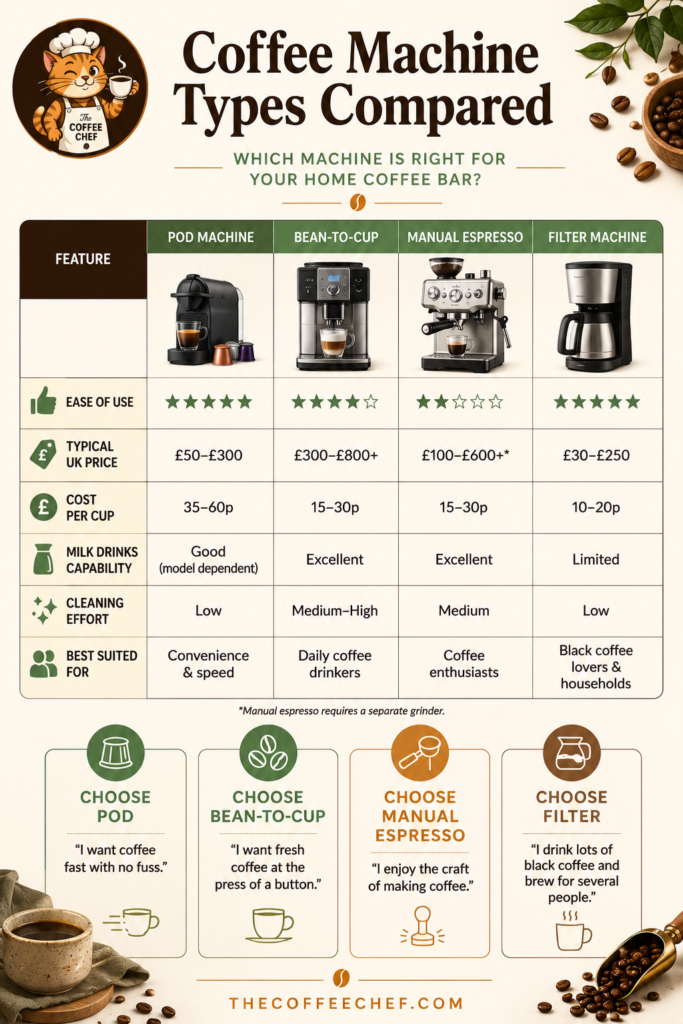
Pod machines — Nespresso, Dolce Gusto, Tassimo — are the most popular choice in UK homes, and it’s easy to see why. They’re fast, consistent, compact, and require almost no skill. Pop in a capsule, press a button, get a decent coffee. For one or two people who want something reliable first thing in the morning without any fuss, they’re genuinely hard to beat.
The trade-offs are real, though. Each pod costs more per cup than buying beans or ground coffee, and that gap adds up if you drink several coffees a day. You’re also locked into that brand’s ecosystem — Nespresso pods only work in Nespresso machines, and so on. Pod waste is another consideration; Nespresso has a dedicated recycling scheme, but it requires you to actually use it.
Typical UK prices run from around £50 for entry-level machines up to £300 or so for premium models with automatic milk frothers. If you want to explore the options in more depth, the Dolce Gusto vs Nespresso comparison is a useful starting point for the two biggest pod systems in the UK market.
Manual Espresso Machines
A manual espresso machine — portafilter, tamping, steam wand, the lot — is the route to genuinely café-quality espresso at home. You have full control over every variable: dose, grind size, extraction time, milk texture. It’s rewarding when you nail it and frustrating when you don’t. This type of machine suits people who actually enjoy the ritual and want to get good at it.
The learning curve is real. You’ll spend time dialling in your grinder and your technique before you pull consistently good shots. Cleaning is also more involved than with a pod machine — backflushing, purging the steam wand, and descaling are all part of the routine. Budget for a decent burr grinder alongside the machine, because the grinder matters as much as the espresso machine itself when it comes to shot quality.
Decent home machines start at around £100 and run to £400 for solid mid-range options. Aspirational home bar machines from brands like Sage and La Marzocco sit significantly higher, but they’re genuinely worth saving for if espresso is your main obsession.
Bean-to-Cup Machines
Bean-to-cup machines are the all-in-one solution: they grind whole beans and pull shots (or make long drinks) at the press of a button. Fresh ground coffee, one-touch convenience, and the ability to make multiple drinks quickly — these are the main draws. They’re a strong choice for home bars where coffee gets used frequently throughout the day, or for households with different preferences.
The upfront cost is higher than other machine types, typically ranging from £300 to £800 for good home models, with some premium machines going well beyond that. They’re also bulkier on the worktop, and they need regular cleaning — particularly the brew unit and milk system — to stay in good working order. Skipping that cleaning is how bean-to-cup machines develop blockages and expensive faults.
Filter and Drip Coffee Machines
Filter machines tend to get overlooked in favour of espresso-based options, but for certain drinkers they’re genuinely the best tool for the job. If you drink a lot of black coffee, regularly brew for several people at once, or love the idea of a big pot of something good in the morning, a filter machine will serve you better than any pod system.
They’re the most budget-friendly category to buy and run, and a good filter machine with a proper thermal carafe (to keep coffee hot without a hotplate degrading the flavour) is a surprisingly satisfying piece of kit. They won’t make espresso or textured milk drinks, so if those are important to you, filter isn’t the right primary machine — though adding a separate milk frother solves that neatly enough.
Matching the Machine to Your Lifestyle
Knowing the categories is useful, but matching them to your actual life is where the decision gets made.
Time and routine matter more than people admit. If mornings in your household are fast and chaotic, a pod or bean-to-cup machine that delivers in under a minute is going to get used. A manual espresso machine that needs ten minutes of dialling in probably won’t — at least not on weekdays. If you look forward to a slower coffee ritual at weekends, a manual machine might be exactly right for those moments even if it’s not your everyday option.
Household size shapes capacity requirements. One or two coffee drinkers can be very well served by a compact pod machine or a single-group espresso machine. Regularly making four or five coffees in a row is where filter machines or bean-to-cup options with larger water tanks and hoppers start to make much more practical sense.
Skill level and interest are worth being honest about. There’s no shame in wanting something that just works — a good bean-to-cup machine or a well-chosen pod system will make consistently decent coffee with no expertise required. If you’re curious about the craft, enjoy watching coffee YouTube, and want to get genuinely good at making espresso, then a manual machine with a proper grinder is a more satisfying long-term investment.
Key Features to Understand (In Plain English)
Bar Pressure
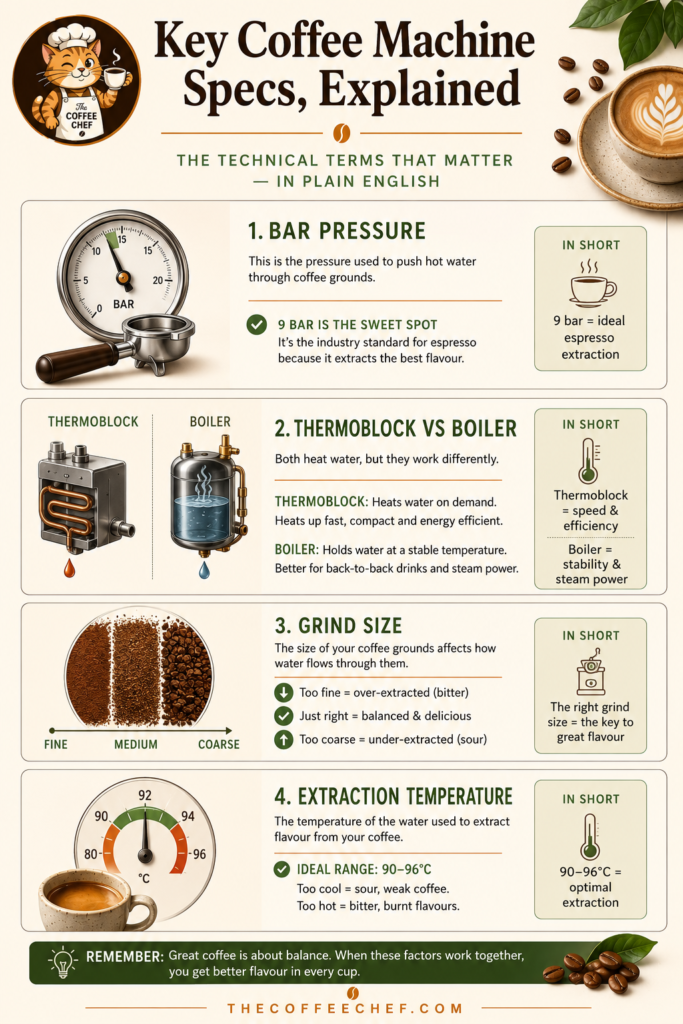
You’ll see bar pressure figures everywhere in espresso machine marketing. UK retailers typically recommend 15–19 bar as the optimal range for home espresso machines. The pressure helps water move through the coffee at the right rate to extract the good stuff without going bitter or thin. Beyond the 15–19 bar range, bigger numbers are largely a marketing exercise — don’t choose a machine on bar pressure alone.
Boiler and Temperature
Most domestic machines use thermoblock heating, which moves water through a heated block for a quick warm-up rather than maintaining a full boiler. Coffee extracts best at around 93°C, so look for machines that hit and hold that temperature consistently. “Extra hot” settings marketed as a feature are mostly unnecessary and can actually push flavour quality in the wrong direction.
Milk Frothing
If milk drinks are important to you, the milk system deserves serious attention. Automatic frothers heat and froth milk at the touch of a button — they’re convenient and consistent but give you limited control. Manual steam wands require practice but deliver better results once you’ve got the technique, and they’re the only way to produce the silky microfoam that makes latte art possible. If you mostly drink black coffee, you may not need a milk system at all — a separate frother added later is always an option.
Grinder and Beans
For bean-to-cup machines, the grinder is built in. For manual espresso, you’ll want to budget for a separate burr grinder — blade grinders produce inconsistent particle sizes that make it almost impossible to pull good shots. Beyond the equipment, using freshly roasted beans from a UK specialty roaster and brewing within about 30 days of the roast date makes a noticeable difference to cup quality. Freshness matters more than most people realise.
Space, Design, and Noise
For a home bar setup, aesthetics and practicality have to coexist. Before you buy anything, measure your worktop depth and the gap under your wall cabinets. Some bean-to-cup machines are surprisingly tall — and nothing is more frustrating than a machine that doesn’t actually fit under the cupboards.
Water tank position is worth checking too. Side-loading tanks can be tricky to fill if the machine sits under a shelf; front-loading tanks are far more practical in a tight space. If you’re organising a small kitchen coffee station, these details end up mattering a lot in daily use.
On the aesthetic side, many UK buyers care about how a coffee machine looks alongside other appliances. Some brands lean heavily into design — retro colourways, considered shapes, finishes that match toasters and kettles. That’s a legitimate thing to factor in, especially if your coffee bar is a focal point of the kitchen. And if you live in a flat or open-plan space, it’s worth noting that bean-to-cup grinders and steam wands can be noticeably loud at 7am. Worth checking reviews for noise levels before you commit.
Budget and Running Costs
The sticker price is only part of the picture. Thinking about total cost of ownership — upfront machine, ongoing coffee cost, and maintenance — gives a much more accurate picture of what you’re actually signing up for.
Pod machines are typically the cheapest to buy but the most expensive to run per cup. If you drink two or three coffees a day, that pod cost compounds fast over the course of a year. Beans and ground coffee cost significantly less per cup, which is one reason bean-to-cup machines often make financial sense despite their higher upfront price.
Running costs to factor in include:
- Descaling tablets and water filters — needed regularly for all machine types, more frequently in hard water areas (most of England counts as hard to very hard water)
- Replacement seals and gaskets — relevant for manual espresso machines over time
- Grinder burr replacement — an occasional cost for bean-to-cup and manual setups
- Servicing — bean-to-cup machines particularly benefit from professional servicing every couple of years
The broader framing that holds up well: a home bar is an investment that typically works out cheaper per cup than daily coffee shop visits in a fairly short time, even accounting for decent kit. At £3.50–£5 per coffee shop visit versus 30–60p per cup at home, the maths aren’t hard.
Cleaning and Maintenance
This is the section most buyers skim over, and it’s also the one that causes the most problems down the line. Every machine type needs regular maintenance — the question is just how involved that maintenance is.
Pod machines are fast to wipe down day-to-day but still need descaling every few months and regular emptying of used pod containers and drip trays. Bean-to-cup machines need more attention: cleaning cycles, brew unit removal and washing, and milk system purging all need to happen regularly or you’ll end up with blockages. Manual espresso machines have their own rhythm — backflushing, wiping the group head, purging the steam wand after every use, and descaling on schedule.
Before you buy, it’s worth checking how accessible the key components are. Machines with automated cleaning programmes make the habit much easier to stick to, which is worth paying for if your honest self-assessment is that manual cleaning will get skipped.
Sustainability
Sustainability is a real consideration for a growing number of UK coffee drinkers. If you’re drawn to pod machines, choosing brands with clear recycling schemes and actually using them makes a meaningful difference — Nespresso’s dedicated return programme is one of the better examples in the UK market.
Reusable pods and washable metal filters reduce waste compared to single-use capsules and paper filters if you’re willing to spend a bit more time on prep. For bean-to-cup and manual setups, energy-saving modes and automatic switch-off features are worth looking for — these machines can draw significant power if left on all day, which adds up on energy bills and environmental footprint alike. Coffee grounds, incidentally, are brilliant for composting if you have a garden or compost bin.
Where to Research and Buy in the UK
When you’re ready to narrow down specific models, the UK has good resources. John Lewis, Currys, AO, and Lakeland all carry a solid range of home coffee machines with genuinely useful buying guides, and their customer reviews tend to reflect real UK conditions (water hardness, kitchen sizes, actual British morning routines) rather than American or Australian use cases.
For more specialist guidance, UK specialty coffee roasters often publish machine buying guides aimed at home baristas — these tend to be more opinionated and technically grounded than retailer pages, which makes them useful for the manual espresso end of the market. Publications like Which? test large numbers of machines against consistent criteria each year if you want independent performance comparisons.
Whatever machine you land on, pairing it with the right coffee bar accessories — a decent scale, good storage, the right cups — will make the whole setup more enjoyable and better-looking. And if you’re still in the planning stages for the bar itself, the home coffee bar setup guide is a useful companion to this post.
Making the Decision
There’s no perfect answer that works for everyone — the right machine is the one that fits the way you actually live, not the one with the most impressive spec sheet. Run through these questions before you commit:
- What drinks do I make most often?
- How much time do I genuinely want to spend making coffee each morning?
- How many people am I making coffee for, and how often?
- What’s my honest budget — machine plus ongoing running costs?
- How much worktop space do I actually have?
- Am I interested in the craft, or do I just want a great result with minimal effort?
Answer those honestly and the right category of machine becomes fairly obvious. From there, it’s a question of finding the best model within that category for your specific budget — which is exactly what the equipment reviews on this site are built to help with. A good place to start is the best coffee machines for home UK guide for a full breakdown across all types and price points.
Enjoyed this guide? Sign up to The Coffee Chef newsletter for more practical UK coffee tips, new recipe ideas, and honest equipment recommendations — straight to your inbox.
Continue Your Journey:
- How to Set Up a Home Coffee Bar: The Ultimate UK Guide — the full room-by-room setup guide once you’ve chosen your machine
- Best Coffee Bar Accessories UK — what to add around your machine to complete the setup
- Best Coffee Machines for Home UK (2026) — model-by-model breakdown across all budgets
- Best Dolce Gusto Machine UK 2026 — if pod machines feel like the right fit for you
- Coffee Station Organisation Ideas — making the most of your worktop space once everything’s in place
What’s the one thing that made you finally choose your coffee machine — or is still holding you back from deciding? Share in the comments.


