Budget does not have to mean bitter. The trick is knowing where a small outlay gets you a properly good cup and where a few extra pounds saves you a lot of grief later.
As an Amazon Associate, I earn from qualifying purchases and sometimes recommend products from other sellers at no extra cost to you. For more details see my disclosure policy and privacy policy.
This guide treats “budget” as a sliding scale from about £15 to £100. At each step you will see what you gain, what you give up, and which type of machine makes the most sense. If you are a cost-conscious home brewer, this is the map.
💷 What “Budget” Really Means in the UK in 2026
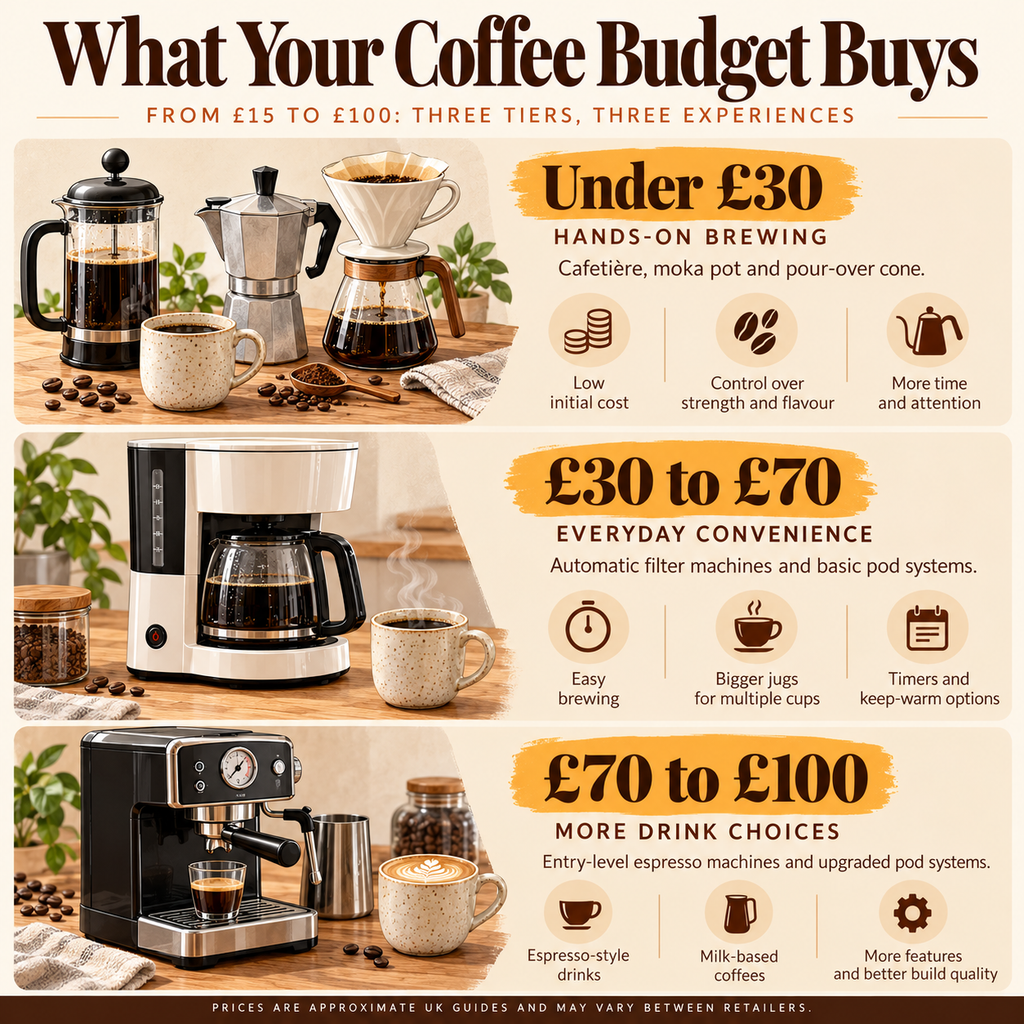
Budget is not one price. It is three rough tiers, and each one buys a different kind of coffee experience.

The Coffee Chef Planner
Daily planning, journalling, and a proper coffee tasting log with a flavour wheel — 20 pages in one printable bundle.
Shop the planner →
Brewforge
A growing edit of coffee bar gear we’d genuinely want on our own counter, added to as we find things worth having.
Shop Brewforge →- Under £30: manual brewers and the very simplest machines. Think cafetière, moka pot, pour-over cone, or a basic one-cup brewer.
- £30 to £70: the sweet spot for automatic filter machines and the cheapest pod systems.
- £70 to £100: entry-level espresso machines and better-built pod machines start to appear.
Here is what each step up typically gets you:
- From nothing to £30: you gain control. You choose the coffee, the grind and the strength, but you do the work.
- From £30 to £70: you gain convenience. Timers, bigger jugs and keep-warm plates mean less standing about.
- From £70 to £100: you gain range. Espresso-style drinks and milk-based coffees become possible, although extras like a grinder can push the total higher.
Prices move around with sales and retailers, so treat every figure here as a guide and check the current price before you buy.
☕ The Cheapest Ways In: Brewers That Are Not Machines
If you want the best coffee for the least cash, you may not need a machine at all. A cheap manual brewer, a decent grinder setting and fresh coffee will beat an expensive machine fed with stale grounds.
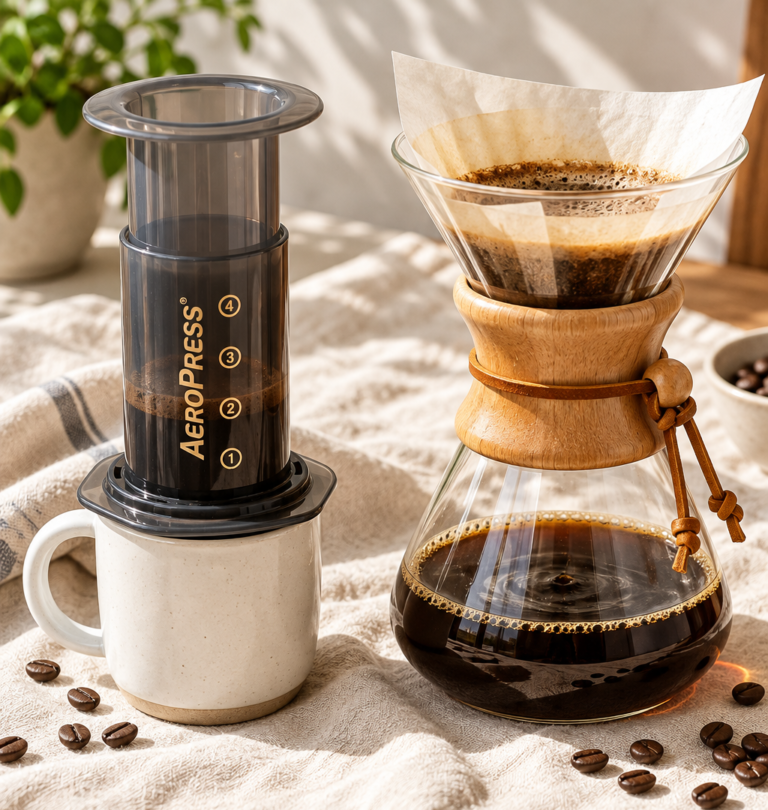
Cafetière. Easy, forgiving and hard to get wrong. It makes a full-bodied cup, and it is the gentlest introduction to brewing at home. Our guide to the main brewing methods explains how it compares with the rest.
Moka pot. It makes a strong, espresso-style coffee on the hob. It takes a little practice, but our moka pot how-to walks you through it. A basic stovetop moka pot is one of the best-value buys in coffee.
Pour-over cone. A plastic or ceramic cone and some paper filters give you a clean, bright cup. Not sure whether to go with pour-over or a press? Our French press vs pour over comparison helps you pick.
A handy rule of thumb: the cheaper the brewer, the more the quality depends on you. Good beans, a consistent grind and water just off the boil matter more than the badge on the side. Our guide to coffee grind sizes explains which grind suits which brewer.
The catch is time and attention. A manual brewer asks you to stand there, heat the water and pay attention. If you want to press a button and walk away, read on.
🫖 Best Budget Pick: Filter Coffee Machines
For most people on a budget, a filter machine is the smartest buy. It brews a big jug, it keeps things simple, and the per-cup cost is low.
Who it is for: families, couples, home workers and anyone who drinks several cups a day.
At the lower end, you can find machines that brew up to around 1.25 litres and include a keep-warm plate or a timer. The Russell Hobbs Buckingham is a good example of a straightforward no-fuss machine, and you can pick up the Russell Hobbs Buckingham here. UK review sites have listed it at around £44, though prices change.
Another filter machine worth a look is the KRUPS KM321 Pro Aroma Plus, so compare the two before you decide. Our Krups buying guide goes through the wider range.
Spend a little more, around £60 to £70, and you can find machines with a built-in grinder. Grinding fresh just before brewing makes a real difference to flavour, but these machines have more parts to clean.
Our best coffee maker under £50 post has the full list of sub-£50 picks, so I will not repeat it here.
💧 Where Cheap Is Fine and Where It Is a False Economy
Not every corner of a budget machine is equal. Some savings cost you nothing at all. Others cost you a cup that tastes burnt.
Cheap is fine on:
- Plain plastic bodies and simple controls
- A basic keep-warm plate for the first 30 minutes
- No fancy display or app
Cheap becomes a false economy on:
- Heating. A weak heating element never gets the water hot enough, so your coffee tastes sour and thin. Look for reviews that mention brew temperature.
- The carafe. A glass jug on a hot plate will stew your coffee. A thermal carafe keeps it drinkable for hours. Our thermal carafe coffee maker guide shows what is worth buying.
- The filter basket. A flimsy or badly shaped basket lets grounds slip through or overflows.
- Warranty. A one-year warranty from a known brand beats a mystery machine with no support.
One cheap habit that does pay for itself is descaling. Limescale shortens the life of any machine, and a descaling solution costs far less than a replacement. If you live in a hard water area, a water filter jug helps too.
🔌 Budget Pod Machines: Convenient, but Watch the Running Costs
Pod machines are quick, tidy and consistent. They are also where the true cost of “budget” gets interesting, because the machine is cheap and the pods are not.
Who it is for: one or two coffee drinkers who want speed and zero mess.
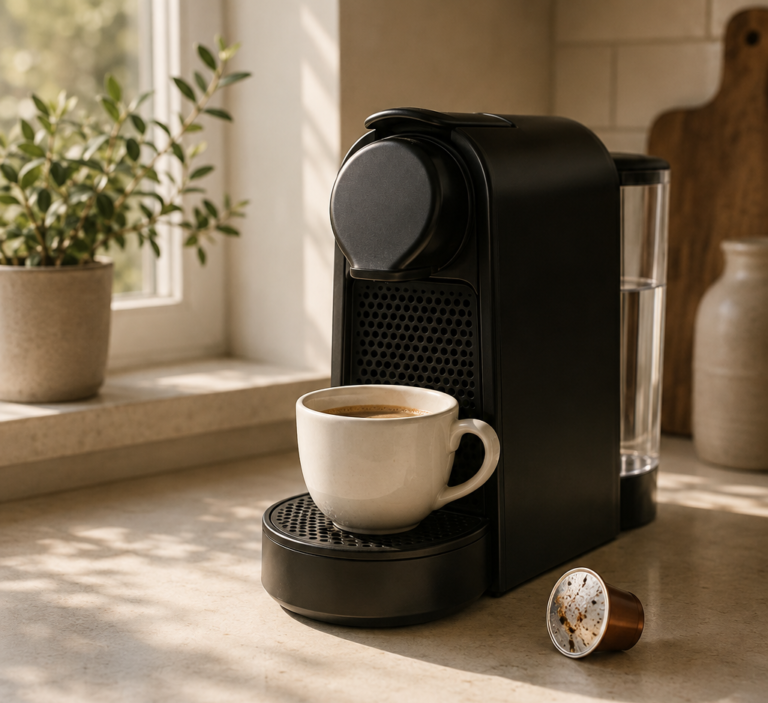
If pods suit you, the Nespresso Essenza Mini is a compact choice. For a wider look, see our best single cup coffee system guide and our Dolce Gusto comparison.
Pod machines also suit households where only one person drinks coffee. You make a single cup without brewing a whole jug, so nothing goes to waste.
The downsides are the ongoing cost, the packaging and the limited choice of coffee. You are tied to whichever pods fit your machine. The machine price is only the start, so read the next section before you commit.
🧮 Running Costs: What a Cup Really Costs
This is where budget buyers can be caught out. A cheap machine that eats expensive pods is not a bargain.
An Ideal Home calculation, using supermarket prices from December 2022, worked out these rough costs per cup:
- Instant: about 4.5p
- Bean to cup: about 11p
- Ground coffee in a cafetière or filter: about 14p
- Pods or capsules: about 28p
Supermarket prices have risen since then, so treat those numbers as a guide to the relative cost, not as today’s prices. The pattern holds, though. Pods cost around double what ground coffee does, and energy adds only a penny or two per cup.
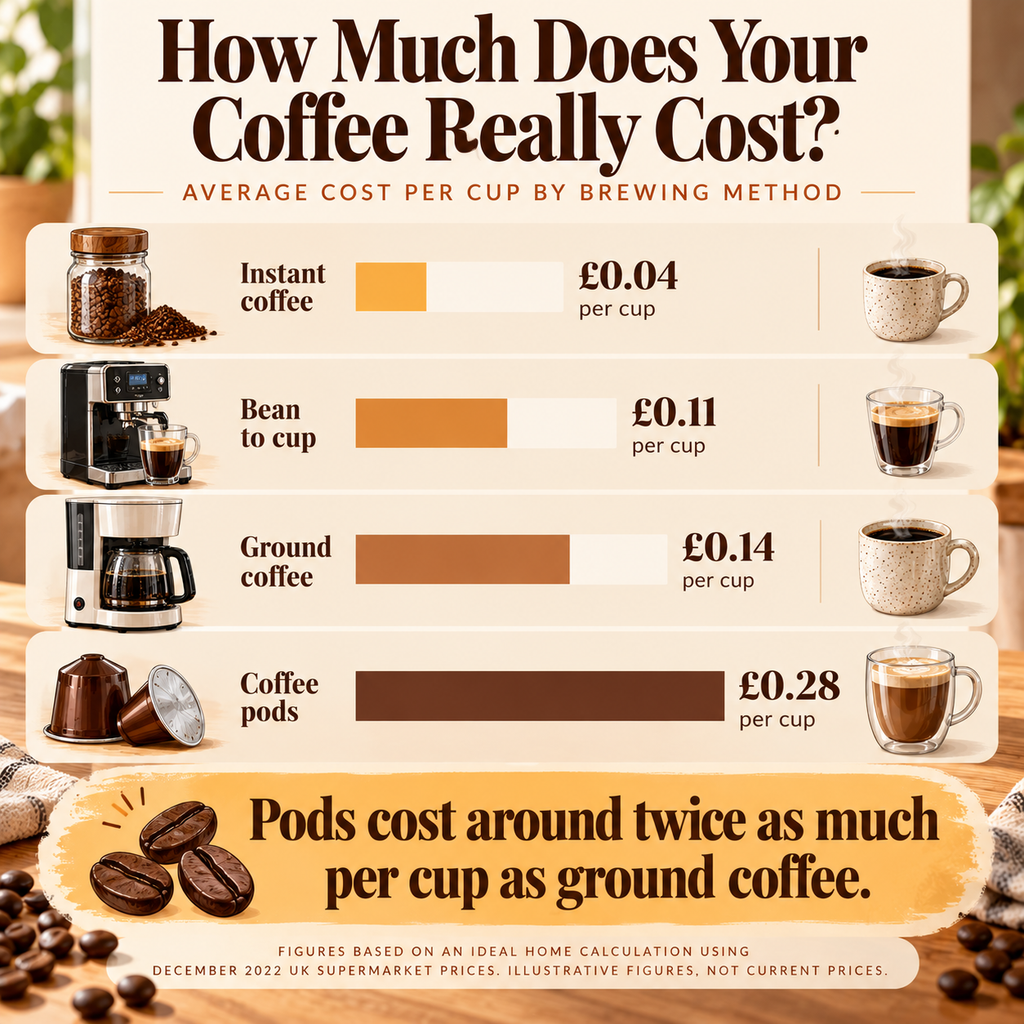
Here is what that means over a year. If you drink two cups a day, the gap between ground and pods is roughly 14p per cup, which adds up to around £100 a year. That is a respectable chunk of a budget machine’s price, saved every year.
⬆️ Budget Espresso: Is It Worth It?
You can buy an espresso machine at the top of the budget range. The De’Longhi Stilosa is widely listed at around £80 to £100 by UK reviewers, which makes it one of the cheapest ways in.
Who it is for: people who love flat whites and lattes, and are happy to learn a new skill.
A budget espresso machine needs a decent grinder to go with it. Without one, you will be fighting the machine from day one. Add a grinder and the true cost passes £100 quickly.
If milk drinks are the goal, a cheap handheld milk frother is a small upgrade that goes a long way. Our guide to frothing milk shows how.
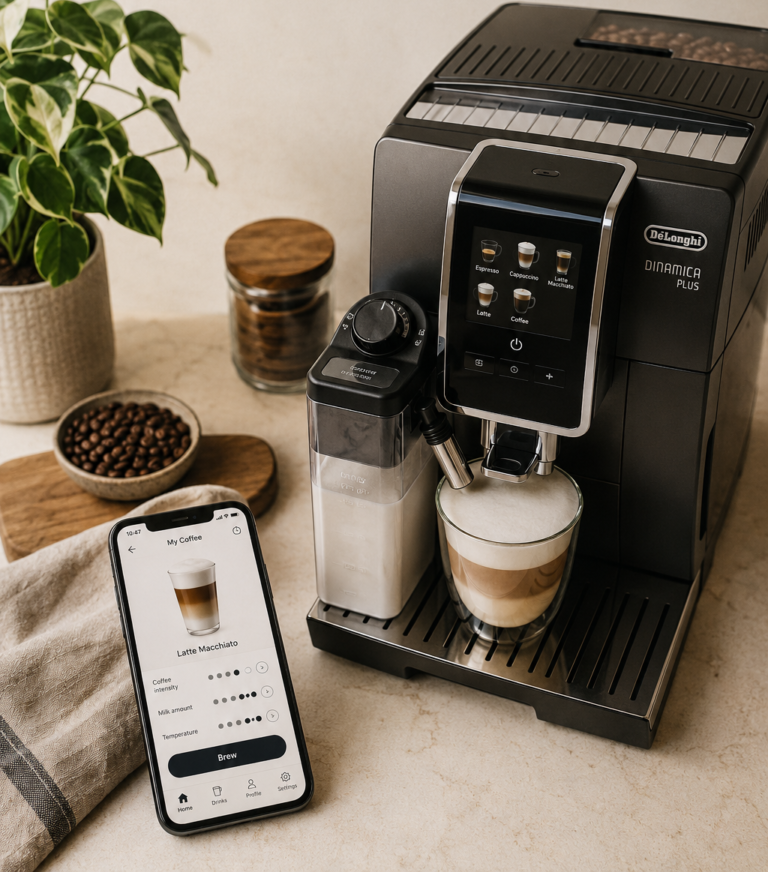
When you are ready to go beyond £100, the De’Longhi Dedica EC685 is a popular step up. Our espresso machines for home guide covers the whole range.
🌱 How to Get More From a Budget Machine
A modest machine can punch above its weight if you look after the basics. These small habits cost almost nothing.
- Use fresh coffee. Buy smaller bags more often, store them airtight, and avoid coffee that has been open for weeks. Our post on how long coffee beans last has the details.
- Measure properly. A rough guide for filter coffee is about 60g of ground coffee per litre of water. Adjust to taste, then stick to what works.
- Rinse the paper filter. A quick rinse with hot water removes any papery taste and warms the jug.
- Clean after every brew. Old coffee oils turn rancid and make everything taste flat. A quick rinse each day and a deeper clean each week keeps things fresh.
- Pre-heat the carafe. A splash of hot water in the jug before brewing keeps the finished coffee hotter for longer.
None of these needs a bigger budget. They just need a few extra minutes.
🧭 Which Budget Coffee Maker Should You Buy?
Here is the quick version.
- Under £30 and happy to be hands-on: a cafetière, moka pot or pour-over cone.
- £30 to £70 and want to press a button: a filter machine.
- Want speed and no mess, and can live with pod costs: a budget pod machine.
- £80 to £100 and love espresso drinks: an entry-level espresso machine, plus a plan for a grinder.
Still not sure? Our guide to choosing the best coffee maker for home walks you through the decision step by step.
❓ Budget Coffee Maker FAQs
What is the best budget coffee maker? For most people, a filter machine in the £30 to £70 range gives the best balance of price, cup quality and ease. If you want the lowest outlay, a cafetière or moka pot is hard to beat.
What is the cheapest way to make good coffee at home? A cafetière or moka pot, plus fresh ground coffee, is the cheapest route to a properly good cup. You skip the machine and put your money into the coffee itself.
Is a cheap coffee machine worth it? Often yes, as long as you check the heating, the carafe and the warranty. A well-chosen budget machine can last for years.
Is a budget coffee machine cheaper than buying coffee out? Usually, yes. Even at pod prices, a home cup costs a fraction of a café coffee, and ground coffee costs far less than that.
How long should a budget coffee machine last? With regular descaling and a clean after each use, a well-made filter machine can last several years. The heating element and the carafe are usually the first parts to give up.
Can I get a good budget espresso machine? Yes, but you need to factor in a grinder. Budget espresso works best if you enjoy tinkering, and less well if you want a push-button result.
☕ The Bottom Line
The best budget coffee maker is the one that matches how you actually drink coffee. A filter machine suits most households, a manual brewer suits the hands-on, and pods suit the time-poor if you can stomach the running costs.
Spend where it counts, on heating, a decent carafe and fresh coffee, and save on everything else.