There’s a moment most of us have had standing in a queue at Costa or Pret, watching the till total climb past £4 for a drink that’s mostly milk and ice, and thinking: I could probably make this myself. You can. Better, in fact, once you know a few tricks about ratios, foam, and flavour that most café menus never bother explaining.
As an Amazon Associate, I earn from qualifying purchases and sometimes recommend products from other sellers at no extra cost to you. For more details see my disclosure policy and privacy policy.
This is the hub for every café-style drink recipe on The Coffee Chef, organised the way a coffee shop menu actually works: hot drinks, iced drinks, cold brew and espresso-based options, and the flavoured specials that make a drink feel like a treat rather than just a caffeine delivery system. Wherever you land after this page, you’ll find a full recipe with UK-friendly ingredients, proper ratios, and enough context to understand why the drink works the way it does.
A Quick Note on UK Café Terminology
Before diving into recipes, it’s worth settling the language, because “café drink” means slightly different things depending on where you’re standing. In the UK, we lean on flat white, cappuccino, latte, americano, mocha, and cold brew as our core vocabulary, borrowed from Italian and Antipodean coffee culture rather than the more elaborate specialty-coffee naming you’ll see on American menus.

The Coffee Chef Planner
Daily planning, journalling, and a proper coffee tasting log with a flavour wheel — 20 pages in one printable bundle.
Shop the planner →
Brewforge
A growing edit of coffee bar gear we’d genuinely want on our own counter, added to as we find things worth having.
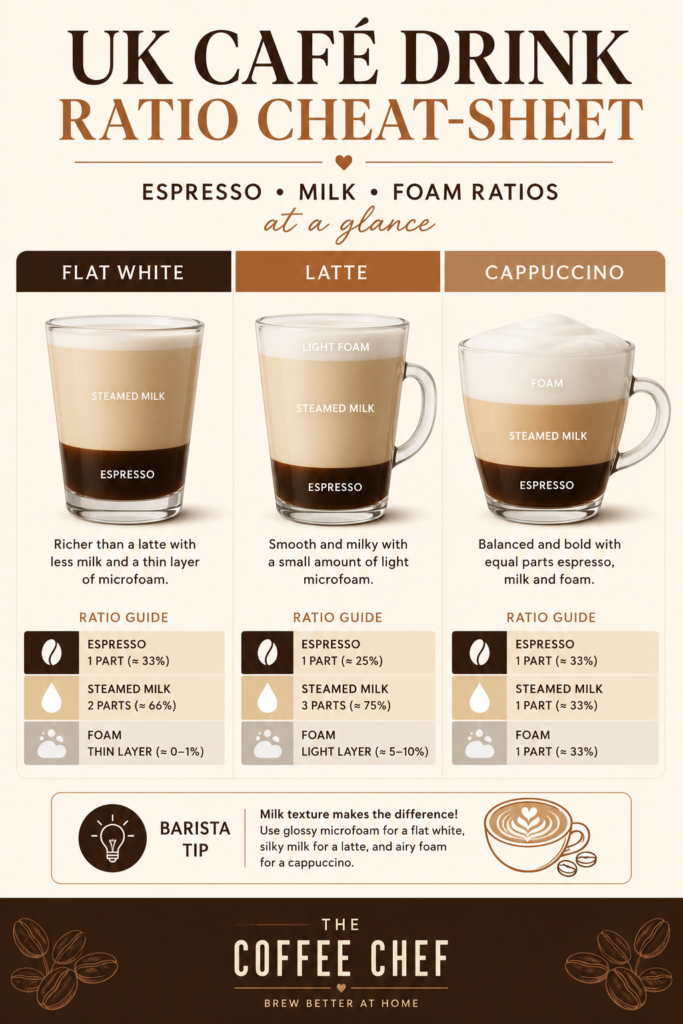
Shop Brewforge →A flat white, for context, sits at around one-third espresso to two-thirds steamed milk, with a thin layer of glossy microfoam rather than the thick, spoonable foam you’d get on a cappuccino. A latte uses a similar ratio but with more milk and a looser foam, and a cappuccino splits roughly into thirds of espresso, steamed milk, and foam. Get comfortable with those three and most café menus, and most of what follows on this site, will make a lot more sense.
Hot Café Drinks
Hot coffee is where most of us start, and it’s also where a coffee machine at home earns its keep fastest. A properly pulled espresso is the backbone of nearly everything on this list: aim for 7 to 9 grams of coffee producing around 30ml of espresso in 25 to 29 seconds, with water somewhere between 91°C and 96°C. Get that right and a flat white or cappuccino at home stops being a compromise and starts being genuinely better than the version you’d queue for.
If you’re using a cafetière instead of an espresso machine, the ratio to remember is roughly 60g of coffee per litre of water, brewed around 94°C. It’s a different style of drink, but it’s a completely legitimate way to build the milky classics if you don’t have a machine yet. For a full breakdown of how to build the exact café ratios at home, along with milk texturing tips for that flat white microfoam, our how to choose a coffee machine for your home bar guide is a good next stop if you’re still deciding on equipment.
Chocolate and Cream-Based Classics
Once you’ve got the espresso side sorted, the chocolate-based drinks are usually the next thing people want to recreate. A proper white café mocha is easier at home than most people expect, and it’s a genuinely different drink from a standard mocha rather than just a paler version of it. If you’re more of a dark chocolate person, our guide to mocha variations runs through the different styles worth trying, and our piece on chocolate flavoured coffee covers the UK brands worth keeping in the cupboard.
For something a little more indulgent, rich espresso tiramisu uses the same espresso skills in dessert form, which is a nice reminder that café-quality coffee isn’t just for drinking.
Iced Café Drinks
Iced coffee has quietly become one of the biggest categories on UK café menus, no longer a summer-only order the way it was a few years back. The trick with iced drinks is avoiding the watered-down flavour that puts a lot of people off making them at home. For an iced latte, a double shot made from around 18g of coffee to 36ml of espresso, pulled in 25 to 30 seconds, gives you enough concentration to stand up to the ice without tasting thin.
Our full Iced Coffee at Home guide is the pillar for this side of the site and covers every method from the Japanese iced method to shaken espresso, so it’s worth bookmarking if cold coffee is your main interest. For a recipe collection with more variety, 15 iced coffee recipes to make at home has options for most tastes and skill levels.
Comparing Your Options
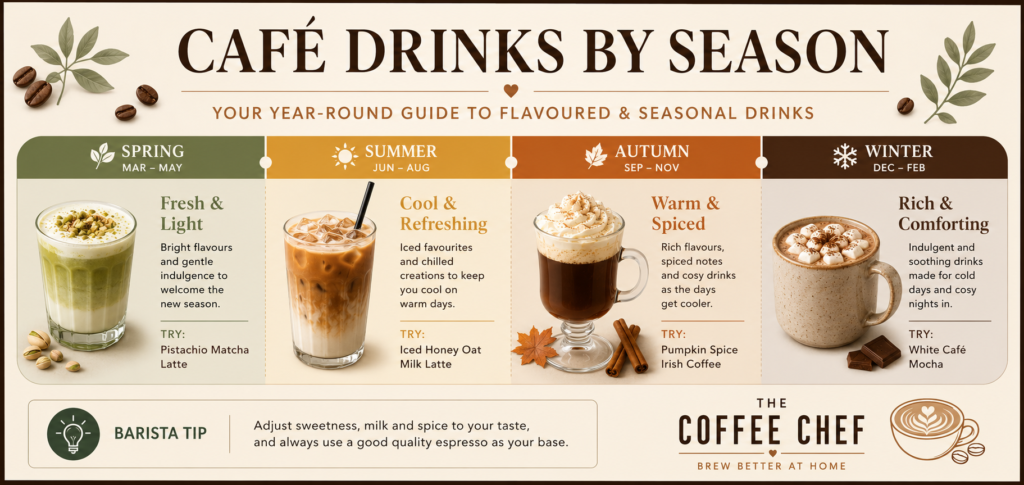
If you’ve ever stood at a counter wondering what the actual difference is between an iced americano and an iced coffee, you’re not alone, and our iced americano vs iced coffee comparison sorts out the confusion properly. For something a bit sweeter and more indulgent, the iced honey oat milk latte is one of the most popular recipes on the site, and it recreates a well-known café copycat with ingredients you’ll already have in most UK kitchens.
Seasonal fruit drinks also fall into this category, and our strawberry latte recipe is worth trying while UK strawberries are in season. If you’re after something a little more indulgent still, iced coffee with ice cream turns your afternoon coffee into a genuine summer treat.
Cold Brew and Espresso Drinks
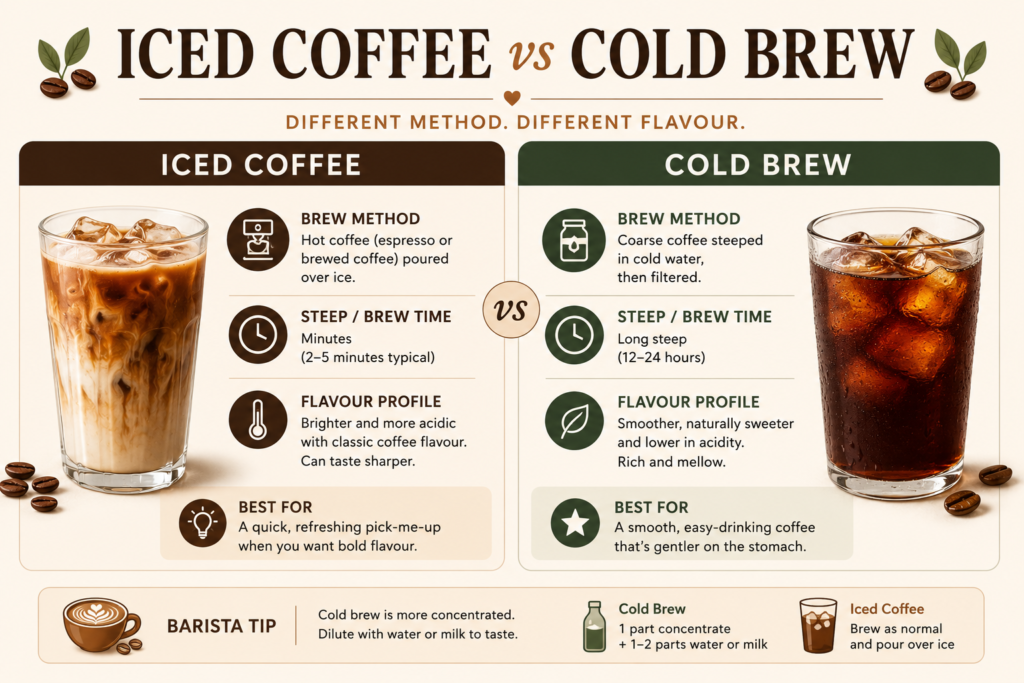
Cold brew and iced coffee get used interchangeably by a lot of people, but they’re genuinely different drinks made in different ways, and they don’t taste the same either. Cold brew is steeped, not brewed hot and cooled, which gives it a smoother, less acidic flavour that a lot of people find easier to drink black. A simple home method uses around 50g of coarsely ground coffee steeped in cold water for at least 8 hours in the fridge, though some methods push that up to 24 hours for a stronger concentrate.
Our Cold Brew Coffee at Home guide walks through the no-fuss version of this method step by step, and if you’re shopping for beans specifically suited to the long steep time, best coffee for cold brew rounds up the picks worth trying. For anyone still unclear on how the two drinks actually differ in strength and flavour, cold brew vs iced coffee caffeine breaks down the numbers properly rather than relying on guesswork.
If you’re building out equipment for either method, an AeroPress does double duty for cold brew and espresso-style shots, and it’s one of the more affordable ways to get café-quality results at home. Our wider gear reviews live in the equipment cluster, but the coffee bar setup itself is worth sorting first if you haven’t already, and how to set up a home coffee bar is the place to start.
Flavoured and Seasonal Drinks
This is where café drinks stop being about caffeine and start being about fun, and it’s honestly the category where making things at home pays off the most. Flavour syrups add up fast at a café till, whereas a bottle of syrup at home works out at pennies per drink. Our best coffee syrups guide covers the UK brands and flavours worth keeping stocked, and 8 latte flavours to try is a good starting point if you’re not sure where to begin.
Caramel deserves its own mention, mostly because so many people order it without knowing what they’re actually asking for. Our caramel macchiato vs caramel latte comparison clears up exactly how the two drinks differ, which is handy both for ordering out and for building the right one at home.
Trend-Led Drinks Worth Trying
Chai has held its place as a genuine café staple rather than a passing trend, and our 15-minute vanilla chai latte is one of the quickest wins on the site if you’re short on time. If you want something with a bit more theatre to it, chai crème frappuccino is the blended, café-copycat version worth trying on a warmer day.
Matcha and pistachio have both had a proper moment on UK café menus recently, and our pistachio matcha 3 ways recipe covers a latte, a frappé, and a mocktail version, so there’s an option whichever mood you’re in. For something with a bit of morning-routine practicality, coffee breakfast smoothies blend the caffeine hit into something you can actually eat with a spoon.
Seasonal specials are worth planning around too, since a lot of café-style drinks only make sense at certain times of year. Boozy pumpkin spice Irish coffee is the obvious autumn pick, and it’s a good one to bookmark now for when the weather turns.
Frequently Asked Questions
What’s the difference between a flat white, a latte, and a cappuccino? It comes down to the ratio of espresso to milk to foam. A flat white is mostly steamed milk with a thin layer of microfoam, a latte has more milk overall with a looser foam, and a cappuccino splits fairly evenly into thirds of espresso, steamed milk, and thicker foam.
Can I make café drinks without an espresso machine? Yes, easily. A cafetière or moka pot won’t produce true espresso, but both can build a strong enough base for milky drinks, and a lot of the iced and cold brew recipes on this site don’t need espresso at all.
What coffee beans work best for iced drinks? A medium to dark roast generally holds up better once diluted with ice, since it has more body to start with. Anything ground specifically for cold brew or espresso will usually work well here too.
How do I stop iced coffee tasting watered down? Brew it stronger than you would for a hot drink, since the ice will dilute it as it melts. Using a double shot of espresso or a proper cold brew concentrate rather than diluted filter coffee makes the biggest difference.
What milk works best for café-style drinks at home? Whole milk froths and steams the most reliably thanks to its fat content, though oat milk has become a genuinely good alternative for both flavour and foam if you’re avoiding dairy. Barista-labelled plant milks tend to perform noticeably better than standard versions.
Can I make foam without a steam wand? A milk frother wand, a French press pump, or even a jar with a tight lid and a good shake can all produce usable foam. It won’t have quite the same silky texture as a proper steam wand, but it’s more than good enough for most home drinks.
Is cold brew stronger than iced coffee? Cold brew concentrate is usually stronger than standard iced coffee, though it’s often diluted before serving, which brings the final strength closer to a regular cup. The flavour is smoother and less acidic either way, which is the bigger difference most people notice.
Are matcha drinks worth including alongside coffee recipes? If you enjoy the flavour, yes. Matcha has become a regular fixture on UK café menus, and it works well as an occasional swap for coffee drinkers who want variety without giving up the ritual.
Bringing It All Together
The honest truth about café drinks is that most of what makes them feel special isn’t complicated: it’s ratio, temperature, and a bit of attention to the small details like foam texture and syrup quality. None of that requires expensive equipment or barista training, just the right information and a bit of practice.
If you’re still building out your setup, our coffee bar accessories guide covers the tools that actually earn their space on your counter, and the Brewforge accessories collection has a curated set of the essentials if you’d rather skip the research. For anyone planning out a full month of drinks, recipes, and shopping lists in one place, the Coffee Planner is designed exactly for that.
Pick one recipe from this hub and give it a proper go this week. Once you’ve nailed the ratios on a single drink, the rest of the menu gets a lot easier to work through.
Bookmark this page as your café drinks home base, and come back whenever you fancy trying something new. New recipes get added to this hub regularly, so there’s always another drink worth queuing up for at home instead.