Choosing a home coffee machine feels like it should be simple — until you’re forty minutes deep into a review site, comparing milk frothers and bar pressure ratings, wondering if you actually need a built-in grinder. The truth is there’s no single “best” machine. There’s only the best one for you, based on how you drink coffee, how much faff you’re willing to tolerate in the morning, and what you want to spend.
As an Amazon Associate, I earn from qualifying purchases and sometimes recommend products from other sellers at no extra cost to you. For more details see my disclosure policy and privacy policy.
This guide cuts through the noise. We’ve looked at what’s actually popular with UK buyers right now, broken it down by type and budget, and given you a straight answer for each kind of coffee drinker — from the “just make it quick” crowd to the home barista who enjoys the process as much as the cup.
At a Glance: Best Coffee Machines by Type (UK 2026)
| Machine Type | Best Pick | Price Range | Best For |
|---|---|---|---|
| Bean-to-cup (mid) | De’Longhi Magnifica S | £350–£500 | Fresh coffee, everyday ease |
| Bean-to-cup (premium) | De’Longhi Rivelia | £600–£900 | Touch-screen luxury, flat whites |
| Semi-auto espresso | Sage Barista Express Impress | £600–£700 | Hands-on barista experience |
| Premium espresso | Sage Oracle Jet | £1,000+ | Café-quality at home |
| Capsule | Nespresso Vertuo Pop / Essenza Mini | £60–£120 | Speed, consistency, no mess |
| Capsule (Lavazza) | Lavazza Desea | £80–£150 | Italian coffee, simple operation |
| All-in-one | Ninja Luxe Café Pro Series | £300–£550 | Versatility across drink styles |
| Automatic milk drinks | Philips LatteGo 5400 | £500–£700 | One-touch lattes and cappuccinos |
| Budget capsule | Dolce Gusto compact models | £30–£80 | Low entry cost, wide pod range |
The Four Main Types of Home Coffee Machine
Before you look at specific models, it helps to understand the four main categories — because the type of machine matters far more than the brand. Getting the wrong type is the most common and most expensive mistake people make.

The Coffee Chef Planner
Daily planning, journalling, and a proper coffee tasting log with a flavour wheel — 20 pages in one printable bundle.
Shop the planner →
Brewforge
A growing edit of coffee bar gear we’d genuinely want on our own counter, added to as we find things worth having.
Shop Brewforge →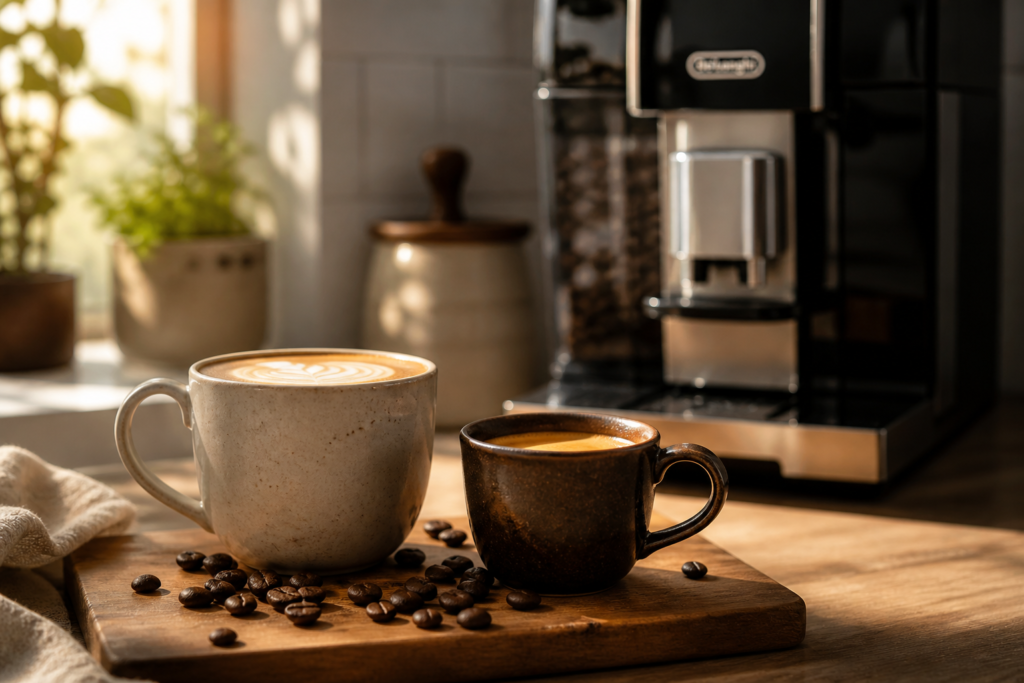
Bean-to-Cup Machines
Bean-to-cup machines are exactly what they sound like: you add whole coffee beans, press a button, and the machine grinds them fresh before brewing your drink. They’re the most popular choice in UK coffee machine roundups right now, largely because they strike the best balance between fresh coffee and genuine convenience. The De’Longhi Magnifica S and Magnifica Evo consistently appear at the top of expert lists for this reason — they make excellent coffee with very little fuss.
The main trade-off is price. You’re typically looking at £300 minimum for a decent bean-to-cup machine, with good models sitting between £400–£700. The upside is that the cost per cup is lower than capsule machines over time, and freshly ground coffee is meaningfully better than pre-ground alternatives. If you drink coffee every day and want quality without becoming a full-time barista, this is probably your category.
The De’Longhi Rivelia is a newer option getting a lot of attention — it has a smart touch interface and handles flat whites and cold brew at the press of a button, which puts it in slightly different territory from older bean-to-cup designs.
Semi-Automatic Espresso Machines
Semi-automatic machines give you more control. You still grind, tamp, and pull shots yourself, but the machine manages the temperature and pressure. The Sage Barista Express Impress is the most well-known example in the UK market and it’s popular because it includes a built-in grinder — which removes the need to buy a separate grinder and saves significant counter space.
These machines reward a bit of learning. If you enjoy the ritual of making coffee — adjusting your grind, dialling in your shot — then a semi-auto is genuinely satisfying. If you’d rather just press a button at 7am, it probably isn’t for you. The Sage Oracle Jet sits at the premium end and does more of the work automatically, but it comes with a premium price to match.
Capsule Machines
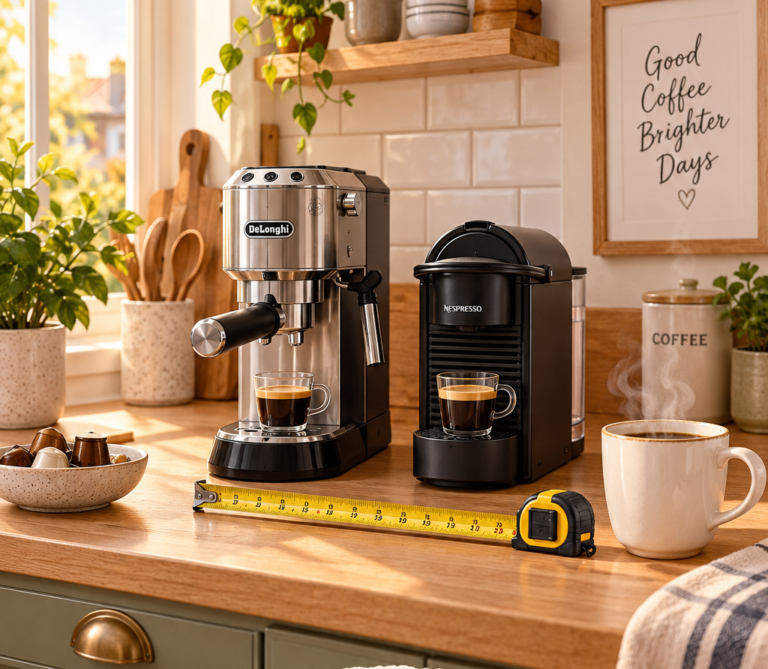
Capsule machines are the fastest, most consistent, and most maintenance-free option. You pop in a pod, press a button, and you have a coffee in under a minute. Nespresso machines are the dominant force here and they appear in virtually every UK recommendation list — the Vertuo Pop and Essenza Mini are both strong, affordable entry points. The Lavazza Desea is also showing up regularly in current UK roundups as a stylish alternative with a good range of pod flavours.
The honest downside is ongoing cost. Capsules cost more per cup than ground coffee or beans, and you’re locked into buying pods that fit your specific machine. That’s fine if convenience is your priority, but worth factoring into your decision over a year or two of use.
If you’re already a Dolce Gusto household, their compact models remain a budget-friendly way in — some go for as little as £30–£50 and the pod range is wide. Our full Dolce Gusto machine guide covers all the current models and UK pricing in detail.
Manual and Filter Coffee Machines
Drip filter machines — the kind that brew a full pot of coffee — are the most affordable and most straightforward option. They don’t make espresso, lattes, or cappuccinos, but if you drink a lot of black coffee and want something that costs very little to run, they do the job reliably. A decent filter machine can be found for £30–£60 and ground coffee bought in bulk keeps the running costs low.
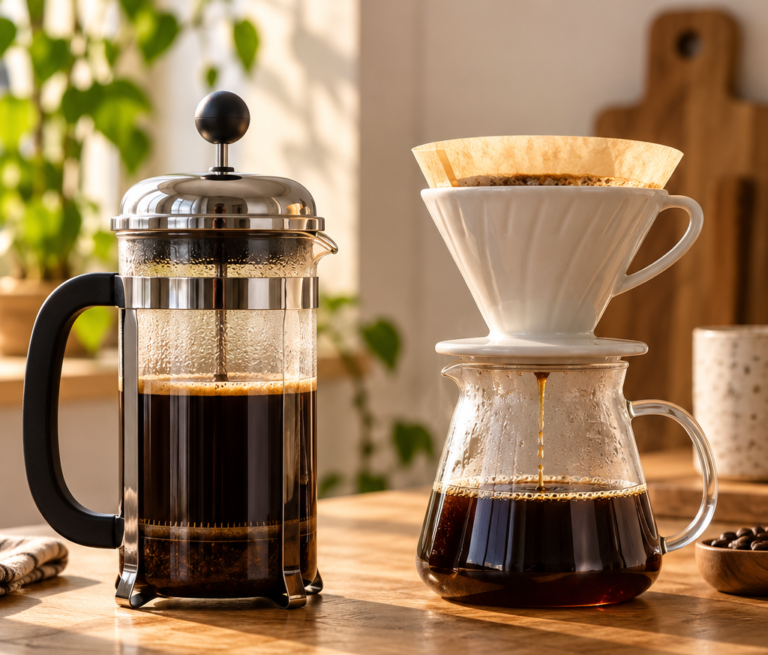
Moka pots, AeroPresses, and pour-over equipment also fall into the manual category and while they’re not “machines” in the traditional sense, they can make outstanding coffee for a much lower upfront cost. If you’re curious about manual methods, our brewing methods guide walks through which style suits which drinker.
Find Your Perfect Coffee Machine
Answer 5 quick questions and we’ll point you straight to the right type — no faff.
Budget Tiers: What You Actually Get at Each Price Point
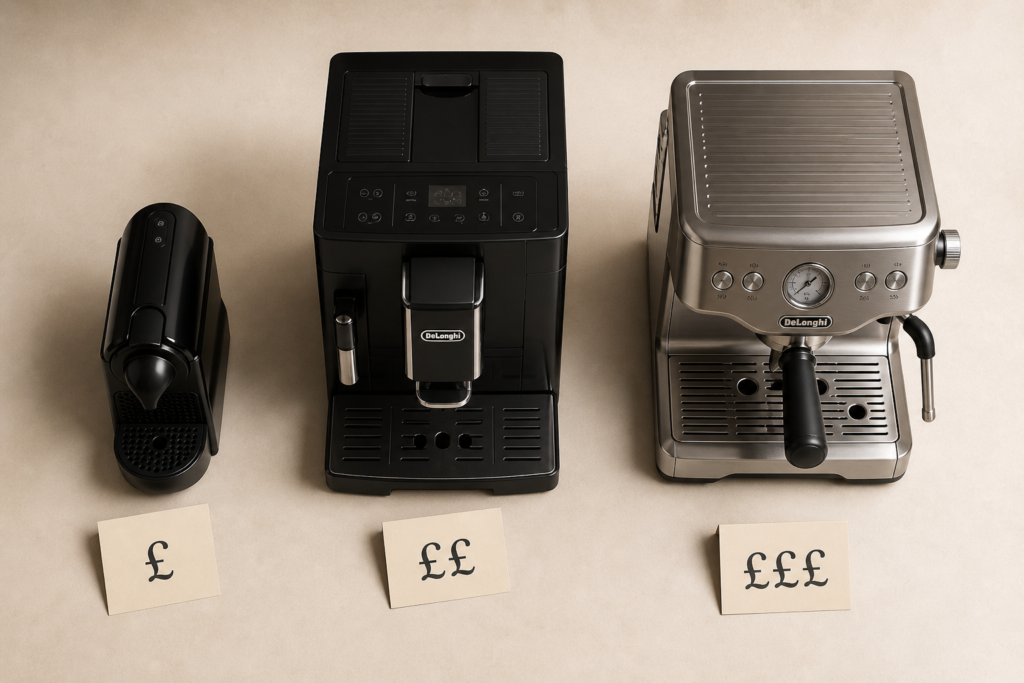
One of the most useful things we can do here is be straight with you about what your money actually buys — because the jump from £60 to £300 to £700 is significant and the differences are real.
Under £100: Capsule Machines and Basic Filter
At this price point, you’re looking at capsule machines and basic drip filter coffee makers. The coffee quality from a Nespresso machine in this range is genuinely good — that’s not a compromise, it’s actually an excellent entry point if pods suit your lifestyle. Dolce Gusto machines also start here and offer a wider variety of drinks including hot chocolate and chai.
Filter machines in this bracket make solid coffee for everyday drinking. Don’t expect espresso or milk drinks, but for a household that just wants a pot of coffee in the morning, a £40–£60 filter machine does the job well.
£100–£300: Better Capsule Machines and Entry-Level Espresso
This is where you start getting Nespresso machines with built-in milk frothers, smarter pod systems, and entry-level manual espresso machines. The Ninja Luxe Café Pro Series sits at the top of this bracket and is worth considering — it does more than most machines at this price, handling espresso, filter coffee, and cold brew in one unit.
Be cautious about very cheap “espresso” machines in this range that claim café-quality results. Bar pressure ratings can be misleading, and the build quality at the lower end of this bracket is often disappointing. If you want genuine espresso, the jump to the next tier is usually worth it.
£300–£600: The Sweet Spot for Most UK Coffee Drinkers
This is where the De’Longhi Magnifica S and Philips LatteGo 5400 live, and it’s the bracket that delivers the biggest jump in daily coffee quality. Bean-to-cup machines in this range grind fresh beans, make genuinely good espresso, and handle milk drinks automatically. The Philips LatteGo 5400 is particularly well regarded for its automatic milk system — it produces lattes and cappuccinos with very little effort and the milk carafe is easy to clean, which is not always the case.
At £300–£600, you’re making a real investment, but for a daily coffee drinker it’s one that pays back quickly compared to buying café coffee. A rough calculation: buying two flat whites a day at a UK café costs around £3,500–£4,000 a year. A machine in this bracket plus beans brings that closer to £600–£800 annually.
£600–£1,000+: Serious Machines for Serious Coffee
The Sage Barista Express Impress sits around £600–£700 and is one of the most popular machines in this bracket in the UK. It’s a semi-automatic machine with a built-in grinder and it rewards the people who enjoy making coffee as a process. You won’t get the same one-touch convenience as a bean-to-cup machine, but the results — when you’ve dialled in your grind and technique — are outstanding.
The Sage Oracle Jet is at the premium end of this range and automates much of what you’d normally do manually on a semi-auto machine. The De’Longhi Rivelia also sits here and takes a different approach — it’s a smart, touch-screen bean-to-cup machine that manages everything automatically while still producing high-quality drinks. Both are excellent if budget allows.
Key Features to Check Before You Buy
Once you’ve picked a type and a budget, these are the specific features worth comparing between models.
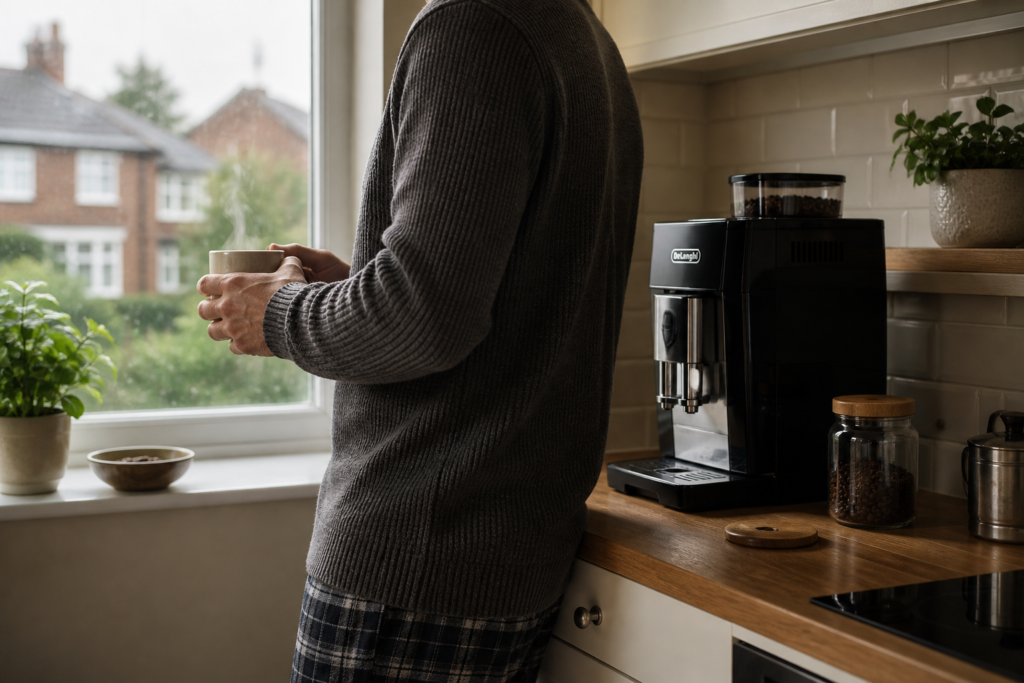
Milk system: If you drink lattes, cappuccinos, or flat whites regularly, how the machine handles milk matters a lot. Automatic milk systems (like the LatteGo carafe or Sage’s steam wand) vary significantly in how easy they are to use and clean. Check reviews specifically for milk system feedback before committing.
Water tank size: For households making multiple coffees, a larger tank means fewer trips to the tap. Most machines in the mid-range sit between 1.5–2 litres, which is enough for 4–6 drinks before refilling.
Grinder quality: Bean-to-cup machines have built-in grinders, and not all grinders are equal. Burr grinders produce a more consistent grind than blade grinders. Most mid-range bean-to-cup machines now use burr grinders, but it’s worth confirming.
Descaling and maintenance: Hard water areas of the UK (most of England) will need more frequent descaling. Some machines have automatic descaling alerts and simple one-button descaling programmes — this genuinely makes a difference to long-term ownership experience. Our coffee grind sizes guide also touches on how grind settings affect machine maintenance.
Pod compatibility: If you’re buying a capsule machine, check what pods it uses and whether those pods are widely available in UK supermarkets. Nespresso pods are everywhere. Some less common capsule systems require online ordering, which can be inconvenient.
Which Machine Is Right for You?
Rather than giving you a single “best” pick, here’s an honest recommendation based on what kind of coffee drinker you are.
You just want a decent coffee with minimum effort: Look at the Nespresso Essenza Mini or a compact Dolce Gusto machine. They’re reliable, affordable, and genuinely quick. Don’t overthink it.
You want café-style drinks at home without learning barista skills: The Philips LatteGo 5400 or De’Longhi Magnifica S are your best options. Both make excellent lattes and cappuccinos at the touch of a button and are designed for everyday use.
You want the freshest possible coffee and drink a lot of it: A bean-to-cup machine in the £400–£700 range — Magnifica S, Magnifica Evo, or Rivelia — gives you fresh-ground coffee every time with the convenience of a one-touch machine. Worth the investment if you drink two or more coffees a day.
You enjoy making coffee as much as drinking it: The Sage Barista Express Impress is the one. It gives you control over every variable, produces outstanding espresso when you’ve dialled it in, and is the machine most often recommended by people who genuinely love coffee.
You’re on a tight budget but still want something decent: A filter drip machine for £40–£60 paired with good quality ground coffee will serve you better than a very cheap espresso machine. Alternatively, a Moka pot for around £20 makes excellent stovetop espresso — simple, durable, and surprisingly satisfying.
What Does Your Morning Coffee Actually Cost?
Comparing 2 coffees per day across machine types over one year — machine cost included
The café habit over 5 years
2 coffees a day at a UK café, 5 years — including a mid-range bean-to-cup machine
How we calculated this
- 2 coffees per day, 365 days per year
- UK café average: £4.10 per coffee (2026)
- Nespresso pods: ~55p per pod (standard pods)
- Whole beans: ~£12–£15 per 250g specialty bag
- Ground coffee (filter): ~£6–£8 per 250g
- Machine costs amortised over 5 years
If you’re thinking about where to put your new machine once it arrives, our home coffee bar setup guide covers how to organise your coffee station properly, including storage, accessories, and layout ideas for smaller UK kitchens.
Where to Buy in the UK
Most of the machines in this guide are available from John Lewis, Lakeland, Currys, and directly from brand websites. John Lewis and Currys tend to have the most competitive pricing on mid-to-high-end machines, and John Lewis’s extended warranty is worth considering for machines above £400. Amazon UK is also reliable for competitive prices, particularly on Nespresso and Dolce Gusto machines.
For Sage machines specifically, buying direct from the Sage website often comes with better customer support and warranty terms than third-party retailers — worth knowing given the price point.
The Bottom Line
There genuinely isn’t one best coffee machine for home — there’s only the right one for your home. The most popular choices in the UK right now are the De’Longhi Magnifica S (bean-to-cup), the Sage Barista Express Impress (semi-auto espresso), and Nespresso machines (capsule) — and that’s not a coincidence. They’re popular because they deliver on their promises consistently.
Start with your type, match it to your budget, and then compare two or three specific models within that shortlist. You’ll spend less time agonising and end up with a machine you actually enjoy using every morning.
Continue Your Journey
- Best Dolce Gusto Machines UK 2026 — If pods appeal to you, this guide covers every current Dolce Gusto model with UK pricing and honest verdicts.
- Coffee Brewing Methods Explained — Not sure whether you want espresso, filter, or something in between? This guide helps you figure out your style.
- How to Set Up a Home Coffee Bar UK — Once you’ve chosen your machine, here’s how to set up a proper coffee station at home.
- Coffee Grind Sizes Guide — If you go for a machine that uses ground coffee, this explains everything you need to know about grind settings.
- Bean to Cup Coffee Machines UK — A deeper dive into bean-to-cup machines specifically, with more model comparisons.
Which type of coffee machine are you leaning towards — and what’s stopping you from making the jump? Drop your questions in the comments and we’ll help you decide.
Want a weekly nudge of coffee tips, new recipes, and honest equipment reviews? Sign up for The Coffee Chef newsletter below.