There’s something genuinely satisfying about making a great iced coffee in your own kitchen — especially when you’ve worked out that the version you make at home is often better than the one you just paid £6 for. The problem is that most guides online assume you’re in the US, or that “iced coffee” just means chucking some ice in a mug and hoping for the best.
As an Amazon Associate, I earn from qualifying purchases and sometimes recommend products from other sellers at no extra cost to you. For more details see my disclosure policy and privacy policy.
This guide covers every method worth knowing about, from the dead-simple (strong brew over ice) to the slightly more satisfying (Japanese iced coffee, cold brew concentrate). Whether you’ve got a pod machine, a cafetière, an espresso machine, or just a kettle and a jar, there’s a method here that works with what you already have. And once you know the methods, a whole world of iced café drinks opens up — iced lattes, shaken espresso, cold brew lattes, espresso tonics, and more.
Let’s get into it.

The Coffee Chef Planner
Daily planning, journalling, and a proper coffee tasting log with a flavour wheel — 20 pages in one printable bundle.
Shop the planner →
Brewforge
A growing edit of coffee bar gear we’d genuinely want on our own counter, added to as we find things worth having.
Shop Brewforge →Which Iced Coffee Method Is Right for You?
Before we go through each method in detail, here’s a quick comparison so you can find your match straight away.
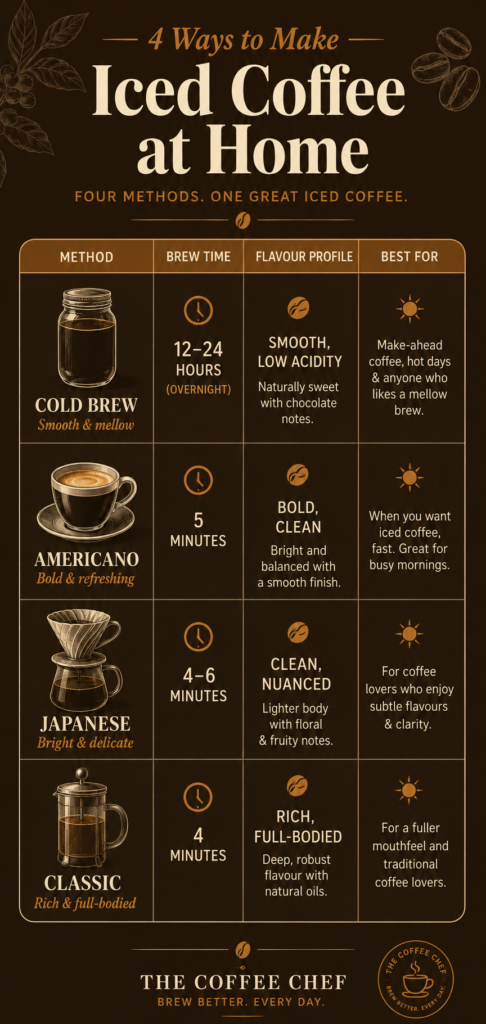
No method is better than another — they just suit different kit, different moods, and different amounts of planning ahead. Once you’ve tried a couple, you’ll probably settle on a favourite for weekdays and a fancier one for weekends.
Method 1: Classic Iced Coffee (Strong Brew Over Ice)
This is the starting point for most people and there’s nothing wrong with that. The principle is simple: brew your coffee stronger than usual to account for the dilution from the ice, let it cool slightly, then pour it over ice with whatever milk or syrup takes your fancy.
The key word there is stronger. If you brew your usual strength and pour it over ice, you’ll end up with something watery and disappointing. Add roughly 25–30% more coffee than you normally would — so if you’d usually use two heaped tablespoons for a cafetière, use three. This compensates for the ice melt and keeps the flavour where it needs to be.
What kit you need
You don’t need anything special here. A cafetière, a drip machine, a pod machine, or even a good-quality instant coffee all work. The aim is a strong, concentrated brew — how you get there is up to you.
Once brewed, add any sweetener while the coffee is still warm. Sugar and syrups dissolve much more easily in warm liquid than in cold, so don’t skip this step if you like your iced coffee sweetened. If you’re using flavoured syrups, this is the moment to stir them in.
How to serve it
Fill a tall glass with ice, pour your cooled (or room temperature) brew over the top, and add milk — dairy, oat, almond, or soya all work well here. Oat milk is the most popular choice in the UK right now and it pairs particularly well with medium roast coffees. Give it a stir and you’re done.
If you want to chill the brew quickly without diluting it, pour it into a small container and pop it in the freezer for 15–20 minutes before serving. It won’t be fully cold, but it won’t melt all your ice either.
Method 2: Cold Brew at Home
Cold brew is the one people make a weekend project of, and for good reason — the result is something genuinely different from hot-brewed coffee. It’s smoother, sweeter, and much lower in acidity, which makes it gentler on the stomach and easier to drink without milk if you prefer.
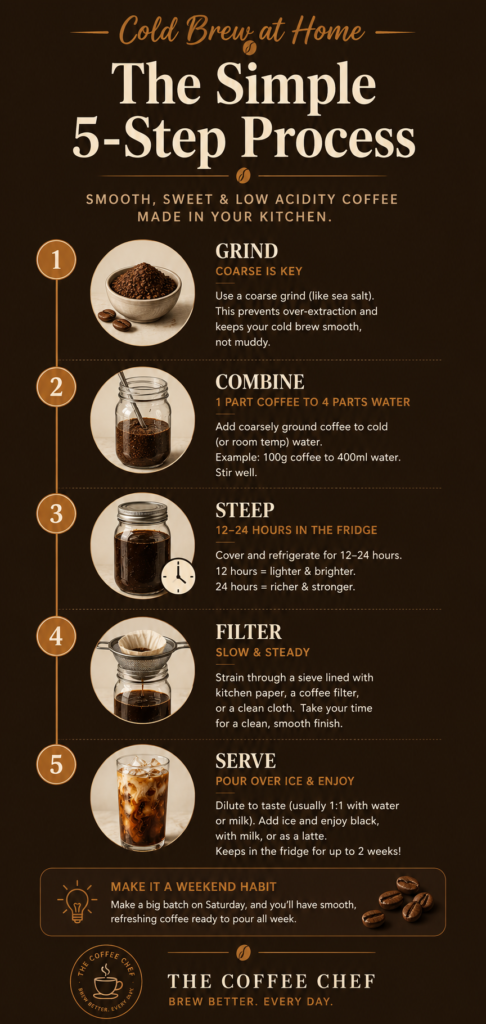
The method is simple in theory: steep coarse grounds in cold (or room temperature) water for 12–24 hours, then filter and serve. The magic is in the long, slow extraction — because there’s no heat involved, the bitter and acidic compounds that normally make coffee sharp stay largely locked in the grounds.
The ratio and process
A reliable starting ratio for UK home cold brew is 1 part coarsely ground coffee to 4 parts cold water. For a standard batch, that might be 100g of coffee to 400ml of water — this gives you a concentrate that you dilute over ice. Use a large jar or a jug, stir everything together, cover it, and leave it in the fridge for 12–24 hours. Twelve hours gives a lighter result; 24 hours gives something richer and stronger.
When it’s done, filter it through a sieve lined with a piece of kitchen paper, a paper coffee filter, or a clean cloth. The filtering takes a few minutes but it’s worth doing properly — unfiltered cold brew is muddy and gritty. Once filtered, store it in the fridge in a sealed jar or bottle where it’ll keep well for up to two weeks.
Serving cold brew
To serve, pour the concentrate over ice and dilute to taste — usually 1:1 with cold water or milk. A cold brew latte is just concentrate over ice with oat or dairy milk poured on top, and it’s one of the nicest things you can make at home for almost no effort on the day. The iced honey oat milk latte is a fantastic option using cold brew as the base — honey, oat milk, and a good cold brew concentrate is hard to beat on a warm afternoon.
Cold brew is also brilliant for UK heatwaves. Make a big batch on Saturday, and you’ve got cold coffee ready to pour all week without turning the kettle on.
Method 3: Iced Americano
If you have a home espresso machine or a pod machine that produces proper espresso shots, the iced Americano is your quickest route to a great cold coffee. It takes about two minutes, requires no planning ahead, and the result is sharp, bold, and properly espresso-forward.
The method is exactly what it sounds like: a double espresso diluted with cold water and served over ice. Fill a glass with ice, add a generous splash of cold water (roughly the same volume as your espresso), then pour the fresh espresso over the top. The ice cools the espresso almost instantly and the cold water gives you enough volume to make it a proper drink.
What makes it work
The key is pouring the espresso over the ice and water, not the other way around. This creates a visual layering effect as the espresso meets the cold — it looks great and it gives you a moment to stir before drinking. Some people prefer to pour the espresso first and add the ice and water on top, which gives a more uniform mix straight away. Try both and see which you prefer.
Iced Americanos are much more acidic than cold brew because the espresso is extracted hot under pressure — that’s just the nature of the method. If you find them too sharp, a small amount of simple syrup rounds things out nicely without adding a heavy flavour. For more on what makes an Americano different from other espresso drinks, the Americano guide is worth a read.
Method 4: Japanese Iced Coffee (Pour-Over Over Ice)
This is the method that specialty coffee shops use, and it’s genuinely one of the most satisfying ways to make iced coffee at home — particularly if you already brew with a V60, Chemex, or Kalita Wave. The idea is clever: instead of brewing hot coffee and then cooling it down, you brew directly over a bed of ice, so the coffee chills as it’s being made.
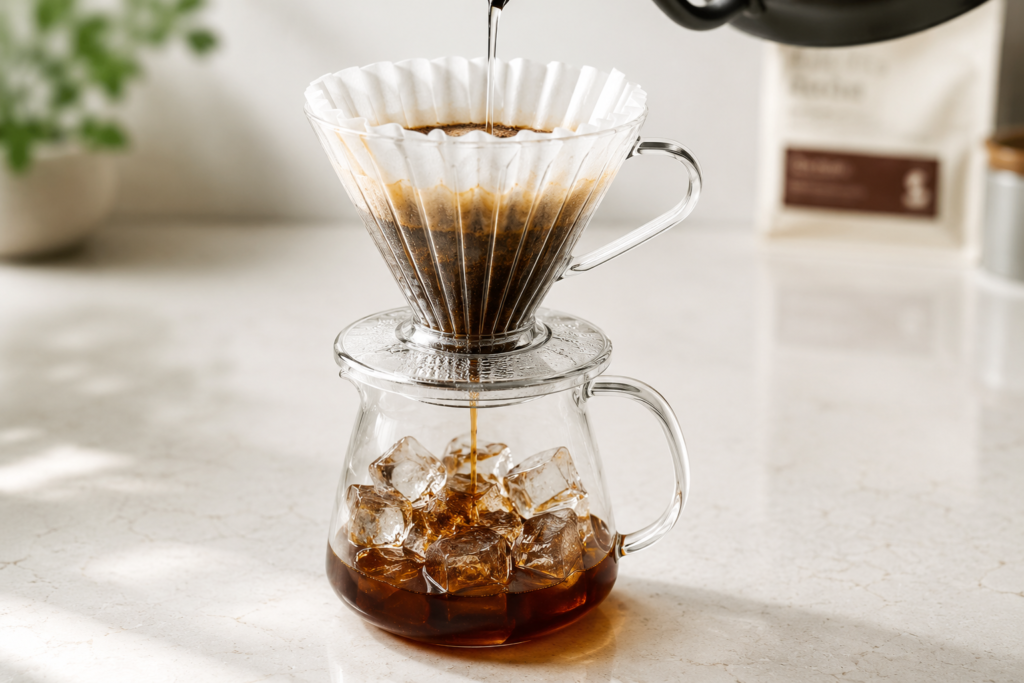
Because you’re brewing hot over ice, the ice forms part of your total brew water. You use roughly half the water you’d normally use for a pour-over, then compensate with the equivalent amount of ice in the server beneath the filter. The melting ice dilutes the brew as it drips through, and you end up with a perfectly chilled cup — no waiting around, no dilution from extra ice.
The recipe
A solid starting recipe: use 30g of coffee, 250g of hot water for brewing, and 250g of ice in the serving vessel below. Grind slightly finer than your usual pour-over setting — the colder environment slows extraction slightly, so you need to compensate. Bloom the coffee with a small pour of hot water for 30 seconds, then continue your usual pour-over method in stages. Once the brew is done, give the server a gentle swirl and pour over a fresh glass of ice if you want more chill.
The result is something that tastes like hot filter coffee but cold — all the brightness and aromatics of a great pour-over, just served at the right temperature for a warm day. It’s a fantastic method for anyone who loves single origin coffee and wants to experience those flavours in a new way. Light and medium roasts shine here; dark roasts can taste a little flat with this method.
Building a World of Iced Drinks From These Methods
Once you have the four core methods down, you’re really just choosing which base to build on. Here’s how the methods feed into a whole family of cold drinks.
Iced lattes and flat whites
An iced latte is simply espresso over ice with cold milk. Double espresso, glass full of ice, milk poured over the top — done. For an iced flat white, use a shorter pour of milk and add a touch of microfoam if your machine can do it cold. Oat milk works beautifully in both.
Shaken espresso
This one’s popular at chains like Starbucks but easy to recreate at home. Pull a double espresso, add it to a cocktail shaker with ice and a splash of simple syrup (or flavoured syrup — vanilla works well), shake hard for about 15 seconds, then strain over a fresh glass of ice. Top with a little oat milk or leave it black. The shaking creates a light, foamy texture that you don’t get from just stirring — it’s worth trying at least once. There’s a good range of ideas in the iced coffee recipes post if you want to experiment with flavours.
Espresso tonic
This is one of those combinations that sounds strange and tastes brilliant. Pull a double espresso, fill a glass with ice and good quality tonic water (Fever-Tree works well), then pour the espresso carefully over the top. Add a strip of orange peel or a slice of lemon if you’re feeling fancy. The bitterness of the espresso and the bitterness of the tonic hit different notes and it somehow works. It’s sharp, refreshing, and genuinely different from anything else in the iced coffee world.
Blended iced coffee (the home frappé)
If you want something closer to a blended frappuccino, add your cold brew concentrate or strong cooled coffee to a blender with ice and milk. A ripe banana adds creaminess without being obvious. Blend until smooth, pour, and drink immediately. You can add vanilla syrup, caramel, or chocolate powder depending on what you fancy. The coffee breakfast smoothies post has some good variations if you want to go down this route.
UK Tips: Milk, Equipment, and Making It Work for You
Milk options
The UK has strong opinions about milk, and the iced coffee world is no different. Here’s a quick breakdown:
- Oat milk — the crowd favourite for iced coffee. Slightly sweet, creamy, and it doesn’t curdle when you pour espresso over it. Oatly Barista is widely available from Waitrose, Sainsbury’s, and most supermarkets.
- Semi-skimmed dairy — classic, reliable, and good in cold brew lattes where you want a lighter result.
- Almond milk — thinner than oat, but works well in lighter iced coffees. It can split when it hits hot espresso directly, so let the espresso cool for a moment first.
- Soya milk — the original plant milk for coffee, works well but can have a stronger flavour of its own.
Equipment you probably already have
You don’t need to buy anything to make most of these methods work. A cafetière, a large jar, and a kitchen sieve cover cold brew. A standard pour-over set-up covers Japanese iced coffee. Most pod machines can pull something close enough to espresso for iced Americanos and lattes.
The one thing worth buying if you’re serious about iced coffee is a set of coffee ice cubes — just brew strong coffee, pour into an ice cube tray, freeze, and use those cubes instead of water ice in your drinks. They melt in and add flavour rather than diluting it. No special kit required, just a bit of forward planning.
Sweeteners
If you like a sweeter iced coffee, make a simple syrup in advance — equal parts caster sugar and water, heated until dissolved, then cooled and stored in a bottle in the fridge. It keeps for weeks and dissolves instantly in cold drinks in a way that granulated sugar doesn’t. Flavoured versions (vanilla, caramel, hazelnut) are easy to make at home, or you can pick up bottles from supermarkets and coffee shops. See the full coffee syrups guide for the best options available in the UK.
Which Beans Work Best for Iced Coffee?
Not all coffees translate equally well when served cold. Flavours shift when coffee cools — some notes become more pronounced, others fade — so it’s worth knowing which origins and roast levels tend to perform well.
Medium roasts are the most versatile across all four methods. They have enough body to hold up to ice dilution without being harsh, and the natural sweetness comes through well when cold. Colombian and Brazilian coffees work particularly well here.

Light roasts shine in Japanese iced coffee and cold brew. Ethiopian and Kenyan coffees — the ones that taste fruity and wine-like when hot — become even more expressive when cold. The acidity is more noticeable when cold, which is either a plus or a minus depending on your preferences.
Dark roasts are the trickiest. They can taste bitter and flat when cold because the roasty notes that work in a hot cup become a bit one-dimensional in iced drinks. If dark roast is what you have, cold brew is your best option — the slow extraction softens the edges.
For a proper overview of how roast level affects flavour, the coffee roasts guide is worth bookmarking.
Frequently Asked Questions
Can I make iced coffee with instant coffee? Yes, absolutely. Dissolve two teaspoons of good instant coffee in a small amount of hot water (just enough to dissolve it), then pour over ice with cold milk. It’s the quickest method of all and works better than you’d expect if you use decent quality instant. Instant coffee has come a long way and some of the freeze-dried options from UK supermarkets are genuinely good.
Does cold brew have more caffeine than regular iced coffee? It depends on how you make it and how you dilute it. Cold brew concentrate is significantly stronger than regular coffee, but by the time you dilute it over ice, the caffeine per cup is roughly similar to a strong hot brew. An iced Americano made with two espresso shots will typically have more caffeine than a single serving of cold brew. For the full breakdown, take a look at the cold brew vs iced coffee caffeine comparison.
Why does my iced coffee always taste watery? Almost certainly a brewing strength issue. You need to brew significantly stronger than usual to account for the ice dilution. Aim for 25–30% more coffee grounds than your normal ratio, or use the Japanese iced coffee method where the ice is calculated into the recipe from the start.
How long does cold brew keep in the fridge? Up to two weeks in a sealed container, though it’s usually at its best in the first week. After that the flavour can start to turn slightly dull. Label the jar with the date so you don’t have to guess.
What’s the difference between an iced Americano and iced coffee? An iced Americano is specifically espresso diluted with cold water over ice — bold, clean, and coffee-forward. Iced coffee is a broader term that covers any coffee served cold, including versions made with brewed coffee rather than espresso. For a detailed comparison, the iced Americano vs iced coffee post covers it well.
Start Here, Then Branch Out
If you’re new to making iced coffee at home, start with the classic method — strong brew, cooled, over ice with oat milk. It works with whatever kit you have and it tastes good straight away. Once you’ve got that dialled in, try cold brew on a weekend when you have the patience to wait. Then, if you have an espresso machine or pod machine, give the iced Americano a go.
Each method opens up a whole family of drinks from there. Cold brew becomes cold brew lattes and flavoured cold brew. Iced Americanos become iced lattes, iced flat whites, and shaken espresso. Japanese iced coffee becomes the foundation for showcasing really good beans.
The summer is long enough to try all of them.
Continue Reading:
- Iced Americano vs Iced Coffee — What’s the Difference?
- Cold Brew vs Iced Coffee: Which Has More Caffeine?
- Iced Coffee with Ice Cream — How to Make an Affogato-Style Drink
- Best Coffee Syrups UK — What’s Worth Buying?
- Iced Honey Oat Milk Latte Recipe
Which iced coffee method are you going to try first — or is there one you’ve already tried that you swear by? Drop it in the comments below.
Enjoyed this guide? Sign up for The Coffee Chef newsletter for more home coffee tips, new recipes, and UK-focused equipment recommendations delivered straight to your inbox.