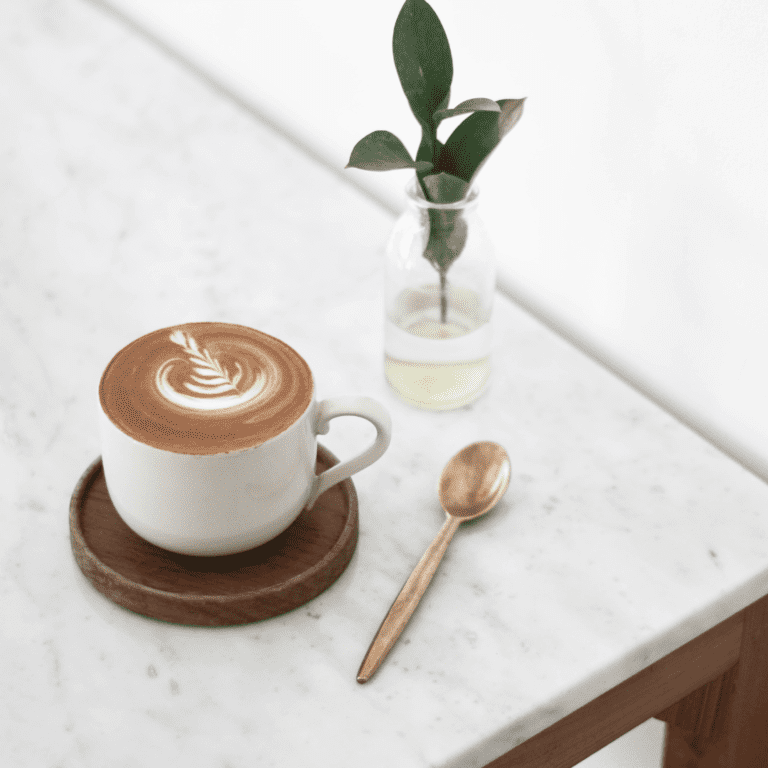
Do you love coffee? If you do, then you’re definitely not alone. In fact, coffee is one of the most popular drinks in the world. There are endless variations of coffee drinks, each with its own unique flavor profile and taste.
As an Amazon Associate, I earn from qualifying purchases and sometimes recommend products from other sellers at no extra cost to you. For more details see my disclosure policy and privacy policy.
In this blog post, we’ll explore some of the best coffee drinks from around the globe. So sit back, relax, and prepare to be transported to a world of coffee!
Espresso or Double Espresso
There’s no easier drink to make than an espresso. The coffee grinds are crammed tightly into the filter and hot water is forced through it, resulting in a powerful dark brew often served in 1-2 ounce servings.

The Coffee Chef Planner
Daily planning, journalling, and a proper coffee tasting log with a flavour wheel — 20 pages in one printable bundle.
Shop the planner →
Brewforge
A growing edit of coffee bar gear we’d genuinely want on our own counter, added to as we find things worth having.
Shop Brewforge →A double espresso is a double shot of espresso, which refers to twice the amount (read: strength). A double espresso will wake you right up if you need a jolt of caffeine.
Cappuccino
The cappuccino, which is quite popular worldwide, is similar to a flat white but with the addition of more milk before the milk foam is added. It’s generally made up of equal parts espresso, milk, and milk foam.
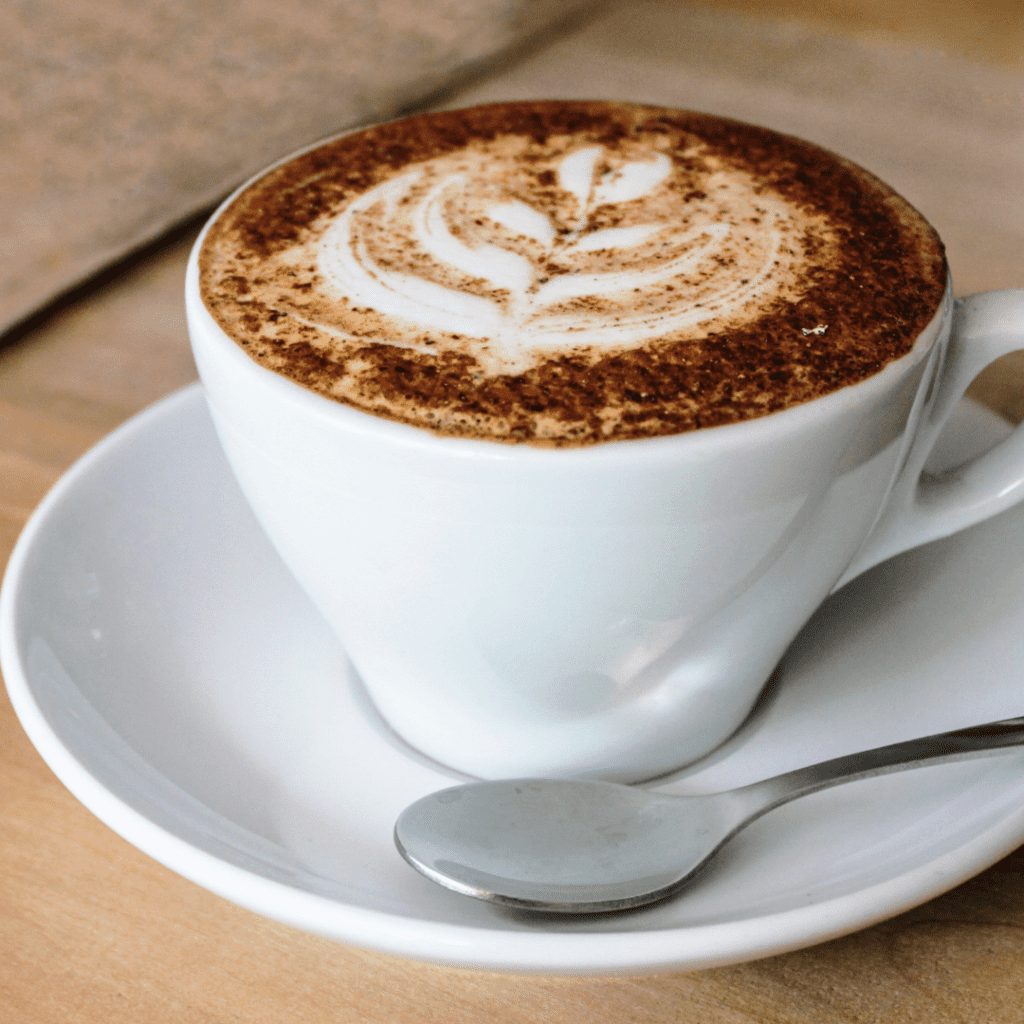
The cappuccino is a popular coffee beverage in Italy, where it was invented. Italians only drink cappuccino (or any milky coffee) in the morning and never after a meal, according to tradition. Discover other Italian coffee beverages to order.
Latte
A latte is like a cappuccino but with more milk and just a thin layer of foam on top. You’ll most likely enjoy a latte if you don’t care for strong coffee.
In most coffee shops, there are many different flavorings to choose from when creating a latte. Vanilla and pumpkin spice lattes are two of the most popular varieties available in the United States.
More Latte variations
Check out these different ideas for latte coffee drinks with a twist

Mocha
A mocha is a cappuccino or coffee + milk beverage with additional chocolate, most often in the form of cocoa or chocolate syrup. To me, they’re the grown-up equivalent to chocolate milk only you don’t sound like a child ordering one at a coffee shop.
To prepare a mocha at home, follow these steps:
- 1 shot of espresso
- 1 cup milk of your choice
- 3 tbsp chocolate syrup
- Whipped cream
- Chocolate shavings (optional)
Americano
An Americano is a type of espresso that has more water added to it than usual. Americans usually drink a larger cup of lower-strength coffee, while Europeans prefer higher-strength beverages like espressos.
You may order an Americano when you’re in Europe and craving a coffee that tastes like what you’re used to at home. It’s not a typical filter-brewed coffee, but it’s similar.
Learn more about the Americano
Get more information on the Americano and how to make it yourself

Cafe au Lait
A cafe au lait is a coffee with milk. It’s a hot, filtered or brewed coffee (not espresso) with warm milk added. This is the most popular way to request coffee in France and northern Europe.
A cafe mocha is made with espresso rather than brewed coffee, unlike a cafe latte. Depending on where you’re from, there are several different ways to order a simple cafe au lait. In Spain, it’s known as a cafe con leche, while in Germany it’s known as a milchkaffee.
In Switzerland, there is a well-known variant known as “café renversé,” which is prepared with milk as the base and then topped off with coffee (the opposite of how it’s usually made).
Flat White
The flat white has captivated the hearts and stomachs of coffee lovers since its introduction in New Zealand. There is some debate about where it was originally created — either Australia or New Zealand. We’re just pleased someone realized how wonderful a beverage it would be. It wasn’t until Starbucks began selling it that most people in the world discovered it, but now it’s widely known and you can get it practically everywhere.
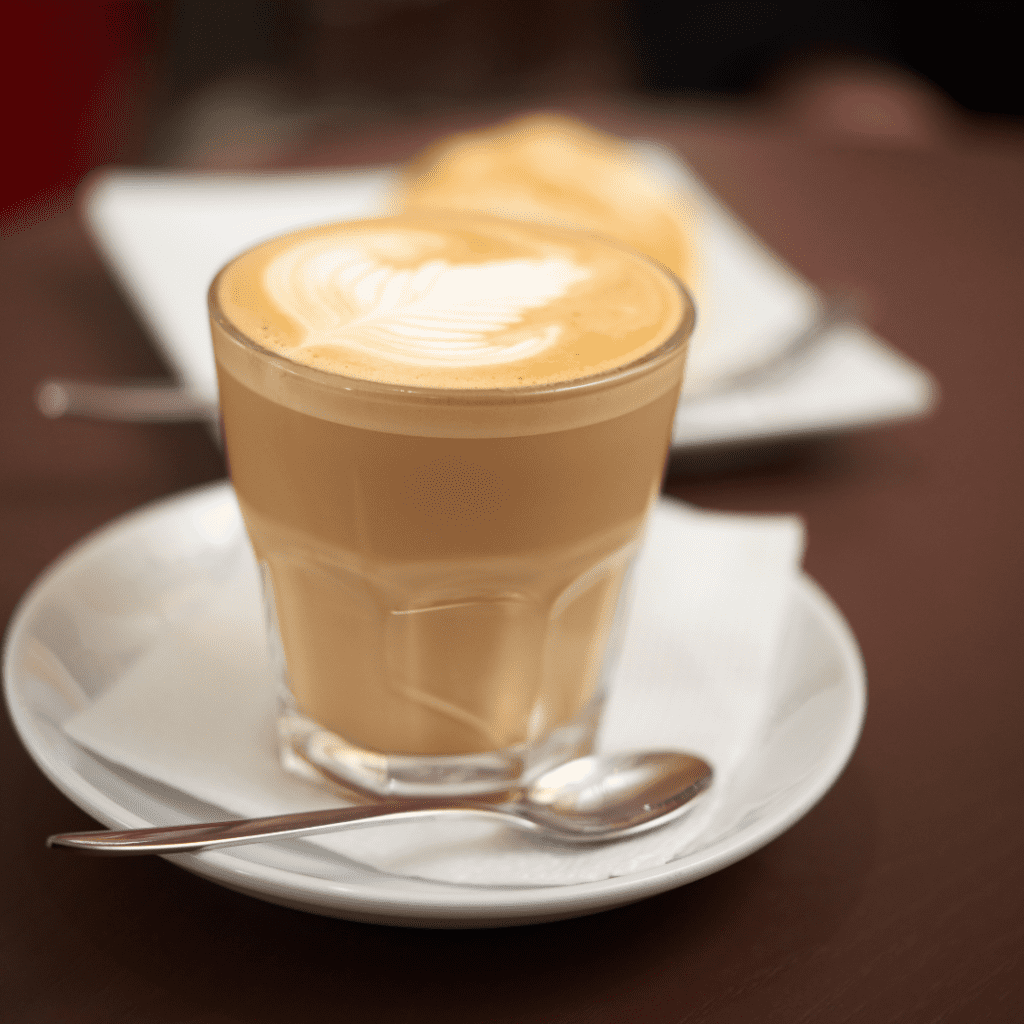
A latte and a flat white are essentially the same thing. They’re both made with steamed milk and espresso, although they’re not quite the same. The flat white is just a little more powerful than a latte. In addition, they are generally served in smaller portions.
Cortado
In Spain, a cortado was first created. It’s similar to a flat white with a few modifications. It’s made only of espresso, but it includes steamed milk that has not been textured or frothed in any way. Every sip has 1:1 proportions of espresso and milk, making this a one-to-one (about half espresso, half milk) balance. This beverage has grown more popular on coffee shop menus across the world, despite its roots in Spain.
You’ll need an espresso machine with a milk steamer to make a cortado. The coffee is first brewed, and the milk is heated and poured over the top of the coffee gradually. There isn’t any froth on top.
Macchiato
The espresso macchiato originated in Italy as a specialty drink for the afternoon. It isn’t a strong espresso shot or a milky Cappuccino, which is only appropriate to consume in the morning. Instead, it’s made with equal parts espresso and milk. The milk softens the espresso’s intensity and acidity ever so slightly.

It differs from the cortado in that it isn’t a 1:1 mix of coffee and milk. In reality, it’s simply a little bit of milk, generally in the form of a foamed top. It’s usually served in an espresso cup (if genuine).
Caffe Crema
Cafe Crema became widespread in Southern Switzerland and Northern Italy during the 1980s. It’s an espresso made with an espresso machine, but the coffee is ground more coarsely than it would be for a normal espresso and isn’t packed as tightly, causing the water to flow through the grounds differently while the coffee brews.
A Crema Cafe is larger in size than an espresso, generally ranging from 6 oz to 8 oz. Despite the fact that it contains the word crema, it does not include any milk or cream.
Café Cubano
The recipe for this Cuban espresso drink is as follows: espresso is mixed with sugar until it froths, and then a thick layer of sweet “cream” is created by whisking the coffee and sugar together. The frothy foam is then poured over the top of the coffee, which sinks to the bottom, forming a cap on it.
This is a great place to try if you want your coffee sweetened. If you don’t care for it sweetened, this sort may not be for you. You must try it if you go to Cuba. It’s an important part of the culture and a fantastic dessert.
Dalgona Coffee
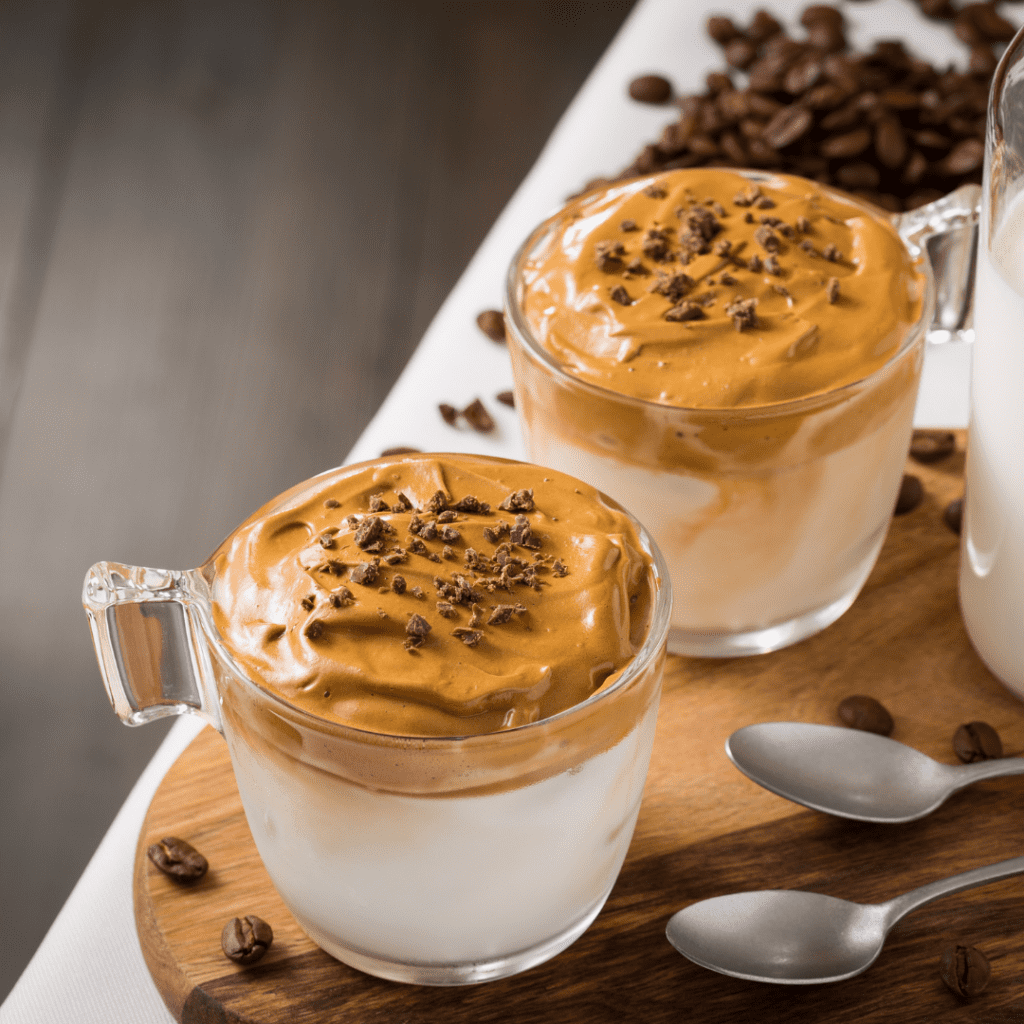
This whipped coffee craze has been all over the internet in recent months. Dalgona coffee originated in South Korea and exploded on YouTube for how easy it is: simply add instant coffee, water, and sugar to create this creamy whipped topping.
However, like other nations that have been producing a whipped topping in this manner for a long time (such as Cafe Cubano and Frappe), Dalgona is quite similar to it. While it isn’t exactly something brand-new, it is fascinating to look at and delicious to consume.
To prepare it, you simply mix together the three components in equal proportions. Then add a glass of ice cream to each glass.
Irish Coffee
This beverage is frequently found on the bar menu rather than the coffee shop menu. Although it’s classified as a cocktail, it still counts as a coffee drink to me. You might order an Irish coffee in the late morning or early evening during the winter as a warming pick-me-up.
A classic Irish coffee is made with hot coffee, Irish whiskey, and demerara sugar. It’s topped with heavy cream and stirred together before serving. You sip the combination through the cream. It’s sweet, delicious, and comforting all at once.
To make one at home, simply use a decent Irish whiskey like Jameson’s, some demerara sugar (or brown sugar), a strong black coffee, and thick homemade whipped cream. Here’s a delicious Irish Coffee recipe that we’re confident you’ll enjoy.
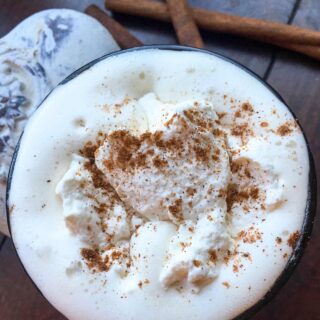
Boozy Pumpkin Spice Irish Coffee Recipe with Whipped Cream
Try something different in your Irish coffee with this recipe
Turkish Coffee
This coffee is prepared differently than other coffees. It’s prepared by boiling water in a wide-bottom copper pot with really fine, medium roast coffee grounds.
As the coffee on the stove cools, a considerable foam forms, which will be brought to cup. You may then add the required amount of sugar to each cup before serving. In Turkey, that’s generally a lot of sugar. If you don’t want it sweet, you’ll have to request for it to be less sugary.
Turkish coffee is thicker and roastier than espresso. After you’ve finished the cup (which is frequently rather little), a thick layer of coffee grounds will remain on the bottom.
Greek Coffee
The type of coffee consumed in Greece is similar to Turkish coffee, however the grounds aren’t quite as burned. The color of the coffee is lighter and has a more subtle roasted flavor due to this.
It is prepared in a tall, thin pot known as a briki and served with the grounds at the bottom of the cup and a layer of thick foam on top, called kaimaki.
Variglykos is basically sugar water, but it’s served very sweet. If you only want a little bit of sugar, ask for it “metrios.” Variglykos is for full-strength sugar and can swiftly cause your teeth to fall out. Simply stating the fact.
Frappe
In Greece, Frappé coffee is also popular. It’s one of the most common cold coffee beverages in both countries, and locals frequently order it. It’s the most popular afternoon beverage in both countries.
The drink is served over ice in a tall glass, with foam covering the ice. Is this description sounding familiar? It’s made out of the same stuff as the Dalgona. It’s just a tall foamy drink rather than simply a whipped topping, and it’s made with more water.

Vietnamese Coffee
Many people visiting Vietnam fall in love with the coffee. It’s made using finely ground coffee filtered through a device that sits above your cup and brews while you wait.
A layer of condensed milk is at the bottom of a transparent, thick glass. The stainless steel Vietnamese filter rests on top of the cup, and you can witness the water drip slowly into it. It takes around 4 minutes for the brewing to finish, so don’t order if you’re in a hurry.
We make Vietnamese coffee at home all the time now. On Amazon, you may get a filter. It’s called a Phin. Then all you need is finely ground coffee (ideally Vietnamese coffee beans).
Cafe de Olla
In Mexico, café de olla is made with ground coffee, cinnamon, and piloncillo (known as panela in other countries), which is an unrefined whole cane sugar.
A typical earthen clay pot is used to brew the coffee. It’s a very sweet coffee (thanks to the cane sugar) with a wonderful cinnamon flavor. It isn’t intended to be consumed with milk. It’s meant to be a powerful, sweet tasting beverage.
Affogato
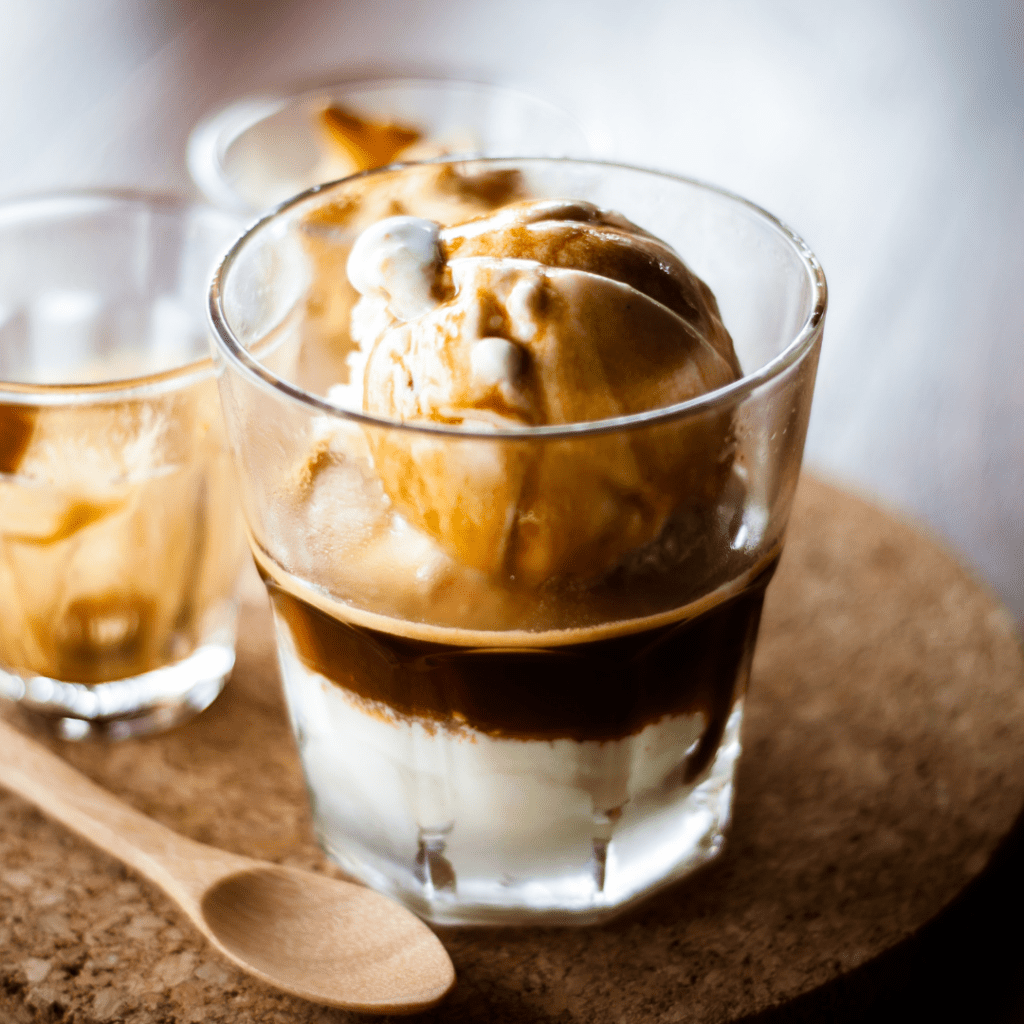
This is a glass-based dessert. It has hot or cold espresso (a single or double shot), vanilla ice cream, and possibly whipped cream and sprinkles or chocolate sauce on top.
We pick this up in Italy at a gelato shop, where you may customize your gelato. It’s the ideal afternoon treat.
Einspänner (aka Viennese Coffee)
The Einspänner coffee is from Austria. It’s comparable to a number of the other coffees on this list. It’s created with a strong espresso and sugar as a foundation. The ultimate dessert is a rich, whipped cream that has been seasoned with vanilla and sugar. It’s definitely the case of in a glass being served as a dessert.
You might also like How to Make Keurig Hot Chocolate Taste Better by The Coffee Chef