
If you’re looking for a unique coffee experience, Sumatran coffee is definitely worth checking out. Sumatra is an Indonesian island that is known for its high-quality coffee beans. The beans are grown in volcanic soil, which gives them their characteristic earthy flavor. Sumatran coffee is also known for its strong body and intense aroma. If you’re looking for a real caffeine rush, Sumatran coffee is the way to go!
As an Amazon Associate, I earn from qualifying purchases and sometimes recommend products from other sellers at no extra cost to you. For more details see my disclosure policy and privacy policy.
Where is Sumatra coffee from?
Sumatra is an Indonesian island. It’s the world’s sixth-largest island and has over 50 million inhabitants. It’s one of three main islands in Indonesia that includes Borneo and Java with it.
On the island of Sumatra, coffee cultivation began in 1884, around Lake Toba, which is the world’s largest volcanic lake.

The Coffee Chef Planner
Daily planning, journalling, and a proper coffee tasting log with a flavour wheel — 20 pages in one printable bundle.
Shop the planner →
Brewforge
A growing edit of coffee bar gear we’d genuinely want on our own counter, added to as we find things worth having.
Shop Brewforge →What is Sumatra Coffee? A bit of History
Coffee and Indonesia have a long history. Coffee grew wild in Ethiopia until 1699 when the Dutch introduced it to Indonesia via Yemen.

Java was eventually known as the greatest coffee in the world for a period of time when it grew widely. It thrived in this region, and Indonesia quickly became the largest coffee producer on earth. Coffee from Jakarta was carried to Java by boat, where it acquired its moniker “the finest coffee in the world.”
This isn’t that unusual since the coffee was packed and exported in bags that read “Java.” It’s similar to how tissue is often referred to as a Kleenex, even though it’s a brand name.
Many coffee beliefs exist, particularly those from the traditional regions. As a result, much Sumatran coffee has been marketed under the label “Mandheling” (or “Mandailing”) because of these misconceptions.
The term “Sumatra” coffee is a misnomer, according to the story. But it actually refers to a tribe that lived in Sumatra and not a specific variety of coffee. Today, the word is nothing more than marketing nonsense. It’s just another name for Kenyan AA or Kona coffee without any real significance.
Sumatra Coffee Facts
- Sumatra is an Indonesian island with fertile volcanic soil.
- The taste of the coffee from Sumatra is often described as earthy, creamy, chocolaty, and even mushroomy
- The beans are typically low-acid (but this also has to do with the roast and processing)
- The most famous subregions of Sumatra are Lintong close to Lake Toba, and Gayo in the Northern Aceh region.
- Sumatran coffee is often processed with the ‘gilling basah’ method.
Is Sumatra coffee lower in acid?
Low-acid coffee is a specialty of Sumatra’s coffee. There are several reasons for this, but the most significant one is how the local farmers process the coffee. In Indonesia, the technique is known as “wet hulling” (or “giling basah”). It’s a more basic and random approach to removing the cherries than the one utilized in Latin America.
When the coffee cherries are plucked, they are depulped as soon as possible. The depulping is frequently extremely basic and vintage. I saw elderly ladies in Sumatra using a large wooden pole as a mortar and pestle to remove the husk of their beans.
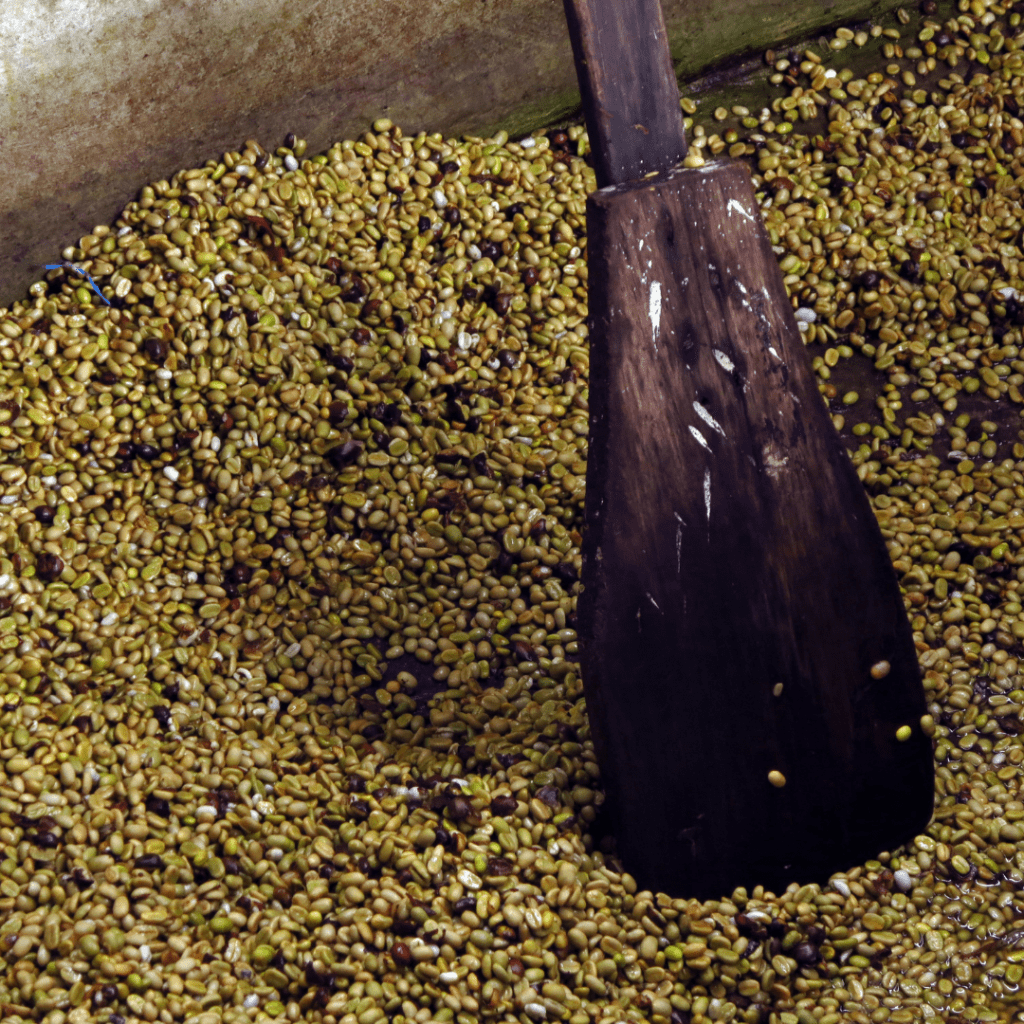
The beans are then placed in a large plastic bag and allowed to ferment overnight. The remaining pulp is manually removed the next day, leaving the beans to dry on a patio.
After that, a middleman will show up and buy the beans, after which he’ll transport them to a warehouse and remove the parchment layer, allowing them to dry further before export.
The processing changes the flavor
This is due to a difference in washing, drying, and blending processes. A more earthy and less acidic flavor results than when coffee is washed at a station and dried more carefully. The body and texture of the beverage are improved, but the faint aromas of stone fruit and berry are muted.
For many coffee consumers, particularly in the specialty coffee industry, this implies that Sumatran coffee isn’t as attractive. However, many old-school coffee drinkers enjoy a deeply serious nature to their brews.
If you were to speak with a Sumatran coffee expert in Sumatra they would say that within three months of picking, it is critical to roast Sumatran coffee. Because of the rudimentary processing, green beans have a shorter shelf life than other types of coffee.
However, none of the Sumatran beans are wet-hulled. When you come across Sumatran beans that have been washed or dry processed, they are frequently delicious and acidic. In fact, they rival Colombian coffee in terms of quality.
Is Sumatra a dark roast?
Many individuals believe that Sumatra coffee must be a dark roast, but the location and roast profile has nothing to do with each other. It’s up to the roastmaster as to how he or she wants to roast a specific bean. This is most likely your local coffee company or an artisan roaster in your case.
Many roasters, on the other hand, opt for a Sumatran profile since many consumers expect it to be full-bodied, rich, and low in acidity.
Starbucks To use Sumatran coffee as a foundation for espresso blends or as a single origin, large amounts of it must be purchased and roasted to a dark brown. This might be the source of the notion that a ‘Sumatra roast’ is somehow darker than normal.
However, if you expect all coffees from Sumatra to taste similar to what Starbucks offers – you will be disappointed. Or perhaps pleasantly surprised.
Types of coffee grown on Sumatra
Indonesia is home to a wide range of coffee. This is owing to Indonesia’s long coffee history compared to other nations.
- The original Java and Sumatra cultivar, Typica, was the first to be cultivated on the islands. However, less than a hundred years ago, this plant almost entirely perished due to leaf rust. On Sumatra, a few local types of typica can still be found at very high elevations.
- Several of the most commercially attractive arabica varieties in Indonesia have some robusta heritage to make them more disease resistant. Catimor, for example, and Hibrido de Timor are two examples.
- In India, the country of origin for both Linie S and another popular disease-resistant variety, Liberica, is given. It’s a natural variation of Bourbon and Liberica that originated in India.
- There are also two strains of Ethiopian coffees that were introduced to Sumatra in the late 1920s and are still alive today. They’re known as Abyssinia and Rambung.
Indonesia, on the other hand, produces a lot of robusta coffee. However, this variety is generally found at lower elevations and is used for instant coffee or eaten locally. We’re talking about the type of coffee that is sold for five dollars per pound, which is also known as “robusta.”
It’s not bad; it’s just not very pleasant. It tastes harsh and has a bitterness to it. Many people will pass this off as plain watery instant coffee, but there are others who would drink anything with caffeine in it!
You might also like Best Coffee Maker Under $50: How to Get a Budget-Friendly Coffee Machine by The Coffee Chef.


