If you are anything like me, one of the things I am worst at is remembering to drink. I get involved with what I’m doing, and a couple of hours go by without a drink of any kind. So I’m often looking for new drinks to try and stimulate myself into actually drinking the stuff. That’s how I came across kombucha and decided to investigate what it was and how to make kombucha at home.
As an Amazon Associate, I earn from qualifying purchases and sometimes recommend products from other sellers at no extra cost to you. For more details see my disclosure policy and privacy policy.
What is Kombucha?
Kombucha is a fermented drink that is made up of sweet tea and something called scoby. Sorry, I instantly thought of Scooby Doo when I first read that but no it is utterly un-doglike and actually stands for ‘symbiotic culture of bacteria and yeast’. Or maybe that still sounds like something out of the cartoon, who knows? But the scoby works on the sugar in the tea and makes it into ethanol and acetic acid. The second is the one that makes the drink taste sour.
The end result is a drink that doesn’t contain much sugar or even much caffeine. Plus you can add flavours to it to change how it tastes. But why would you drink it? What are the health benefits?

The Coffee Chef Planner
Daily planning, journalling, and a proper coffee tasting log with a flavour wheel — 20 pages in one printable bundle.
Shop the planner →
Brewforge
A growing edit of coffee bar gear we’d genuinely want on our own counter, added to as we find things worth having.
Shop Brewforge →
Health benefits of Kombucha
Now for me, fermented drinks sound a little weird tasting so I’m looking for some solid health benefits before I start making it at home or trying it from the supermarket. And in that area, there are some definite benefits:
- Helps with digestion and gut health – it has a mild flavour for people who suffer with strong flavours and also has probiotic properties with the scoby, so it helps with digestion and general gut health
- Great as a detox – kombucha recipes work well as a detox, clearing the kidneys and liver, removing bad bacteria and toxins. So if you want to have a detox, such as after Christmas, this is the drink you want
- Eases inflammation – the properties in kombucha have also been shown to ease inflammation in conditions such as arthritis because it supplies hyaluronic acid through the glucosamines in it
It also has a good number of antioxidants in it which combat free radicals that cause a host of problems in the body. Because it is made with tea, it contains polyphenols and you can go with green tea to increase those benefits. There are even a small number of vitamins and minerals including Vitamin B, C and B12 when the yeast breaks down the sugars.
How to make Kombucha at home
Another big benefit to kombucha is that you can make it at home. You can easily buy a ‘make Kombucha at home’ starter kit on Amazon and begin to make drinks at home.
Make sure you have a large glass jar or container, some loose tea leaves, sugar, a metal tea ball, tightly woven cloth or sieve and hot water with your kit that contains the scoby. You might also want to have some flavourings or just try brewing kombucha in a plain way to get started.
Fill the jar with hot water and sugar, letting the sugar dissolve completely. Add the loose tea leaves or tea bags and let the water cool. The longer they are in there, the stronger the flavour will be. Next add the scoby as per directions in the starter tea kit.
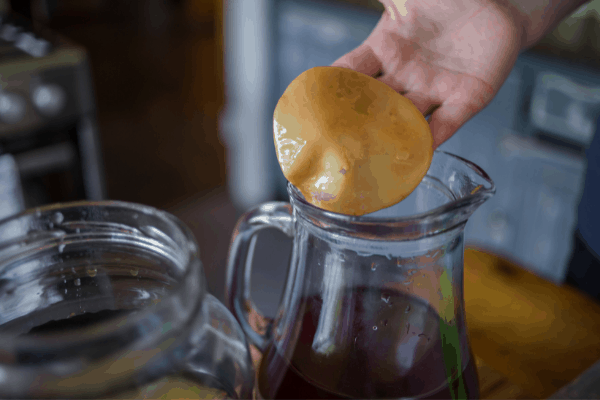
Now you need to ferment your drink. Cover the jar with a coffee filter or a towel and make sure it is a tight weave material. Don’t leave it in direct sunlight but keep it at room temperature and don’t give in the to urge to open it early.
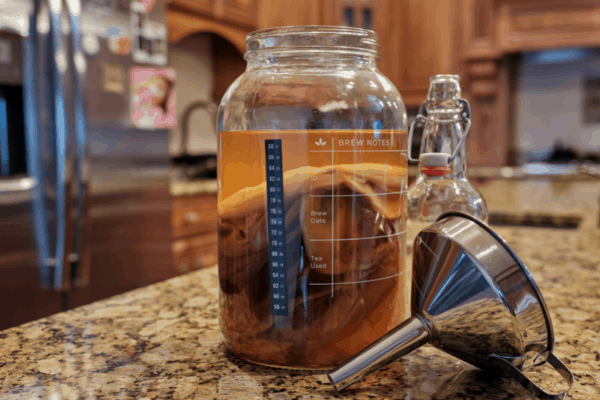
The process can take from one week to one month, but the average is 10-14 days. When the drink it ready, scoop out the scoby and save for the next batch of kombucha. Then add any flavouring as you drink it.
Adding flavours to your drink
Kombucha in its basic form is a bit of a strong, bitter drink and that’s why people often add flavours to it. Plus you can pick flavours that add extra nutritional benefits to the drink,
- Fruit – you can add fruit juice to the tea with lemon, grapefruit and orange being popular or you can run the fruit through a blender first, sieve it and then add the liquid. Alternatively, smash or chop the fruit and add to the bigger batch before it ferments as this will make the flavour stronger. Remove the fruit before drinking
- Herbs and spices – you can add these with fruit or just on their own to make a variety of different flavours. Favourites include vanilla bean, basil, mint, rosemary, fennel seed, cinnamon sticks or fresh ginger
- Other types of tea – you can also use a different type of tea for the initial fermentation process or add more than one type. Green tea is a popular alternative and flavoured teas can also be added

Other ways to use Kombucha
Obviously, the main way to use homemade kombucha is just to drink it but there are other ways you can use it if you aren’t too keen on the taste.
If you like gelatin for snacks or desserts, you can add some of the kombucha drink to this and make the gelatin with it. You may need to add a sweetener to make it a bit tastier.
You can also use it as a dressing or marinade. Keep some in a bottle and add to vinaigrettes or flavoured oils. It works well with Italian seasoning, honey or lemon juice.
For smoothie fans, you can add kombucha to your smoothies or even to smoothie bowls in place of other liquids to get extra health benefits. You can even use it for an unusual way to flavour cocktails and works well in recipes with fruits like pineapple, mango and papaya in them.
The healthy if unusual drink option
Looking at the Kombucha health benefits, there’s no doubt that there are some strong reasons to try drinking it, even if you don’t want to look at how to make Kombucha at home. And with the different flavours you can add, the whole drink sounds quite appealing!
Have you tried kombucha? What did you think? Tell all in the comments!