Ethiopia, the birthplace of coffee, has a rich history deeply intertwined with the aromatic beans that have captured the world’s attention. Legend has it that a goat herder named Kaldi discovered coffee when he noticed his goats becoming energetic after eating berries from a certain tree. This discovery, dating back to the 9th century, marked the beginning of coffee cultivation in Ethiopia.
As an Amazon Associate, I earn from qualifying purchases and sometimes recommend products from other sellers at no extra cost to you. For more details see my disclosure policy and privacy policy.
Coffee isn’t just a beverage in Ethiopia; it’s a vital part of the country’s culture and economy. The traditional Ethiopian coffee ceremony, a ritual of hospitality and respect, showcases the beverage’s social importance. Economically, coffee is Ethiopia’s largest export, supporting millions of farmers and contributing significantly to the nation’s GDP.

Ethiopian Coffee Regions
Ethiopia’s diverse landscapes and climates contribute to the unique flavors of its coffees. The main coffee-growing regions include:

The Coffee Chef Planner
Daily planning, journalling, and a proper coffee tasting log with a flavour wheel — 20 pages in one printable bundle.
Shop the planner →
Brewforge
A growing edit of coffee bar gear we’d genuinely want on our own counter, added to as we find things worth having.
Shop Brewforge →- Yirgacheffe: Known for its floral and citrusy notes, Yirgacheffe coffees are often described as tea-like and delicate.
- Sidamo: Produces beans with a well-balanced body and complex flavor profile, often featuring notes of blueberry and dark chocolate.
- Guji: A sub-region of Sidamo, Guji coffees are known for their jasmine-like floral notes and bright acidity.
- Harrar: Famous for its wild and fruity flavors, often with a hint of mocha. Harrar coffees are typically dry-processed, contributing to their unique taste.
- Limu: Produces washed coffees with a balanced, clean cup and subtle spice notes.
Types of Ethiopian Coffee Beans
Ethiopia boasts an incredible diversity of coffee varieties, with over 10,000 different types estimated to exist in the wild. Most Ethiopian coffees are referred to as “heirloom varieties,” a term that encompasses this vast genetic diversity. Some specific cultivars have gained recognition:
- Gesha (or Geisha): Originally from Ethiopia, this variety has gained fame for its exceptional cup quality and distinctive floral notes.
- Moka (or Mocca): Not to be confused with the chocolate-coffee drink, this variety is known for its small, rounded beans and complex flavor profile.
Flavor Profiles
Ethiopian coffees are celebrated for their diverse and complex flavor profiles. Common tasting notes include:
- Floral (jasmine, bergamot)
- Fruity (blueberry, strawberry, citrus)
- Herbal (tea-like, sage)
- Chocolate and nutty undertones
The flavor profiles can vary significantly between regions:
- Yirgacheffe: Floral, citrusy, and tea-like
- Sidamo: Berry-forward with chocolate notes
- Harrar: Wild, fruity, with wine-like characteristics
- Limu: Clean, balanced, with subtle spice notes
Processing Methods
The way coffee is processed significantly impacts its final flavor. In Ethiopia, three main processing methods are used:
- Natural (dry) process: The traditional Ethiopian method. Coffee cherries are dried with the fruit intact, resulting in more fruity, complex flavors.
- Washed process: Cherries are de-pulped and fermented before drying, producing cleaner, brighter flavors.
- Honey process: A method between natural and washed, where some fruit is left on the bean during drying. This results in a balance of fruity and clean flavors.
Brewing Methods for Ethiopian Coffee
Ethiopian coffees are versatile and can be brewed using various methods, each highlighting different aspects of the beans’ complex flavor profiles.
Pour-over
The pour-over method is excellent for bringing out the delicate floral and fruity notes characteristic of many Ethiopian coffees, especially those from Yirgacheffe. This method allows for precise control over the brewing process, resulting in a clean, bright cup that showcases the coffee’s nuanced flavors.
To brew Ethiopian coffee using the pour-over method:
- Use a medium-fine grind
- Start with a 1:16 coffee-to-water ratio
- Bloom the coffee for 30 seconds with twice the weight of water to coffee
- Pour slowly in concentric circles, maintaining a consistent flow
- Aim for a total brew time of 2.5 to 3 minutes
French Press
The French press method is ideal for emphasizing the full body and complex flavors of Ethiopian coffees from regions like Sidamo and Harrar. This immersion brewing technique allows for maximum extraction, resulting in a rich, full-bodied cup with a silky mouthfeel.
For French press brewing of Ethiopian coffee:
- Use a coarse grind
- Start with a 1:15 coffee-to-water ratio
- Steep for 4 minutes
- Gently press the plunger and serve immediately
Espresso
While not traditionally associated with Ethiopian coffee, single-origin Ethiopian espressos can be vibrant and complex, offering a unique espresso experience. Natural processed Ethiopian beans, in particular, can produce shots with intense fruity notes and a syrupy body.
Tips for pulling Ethiopian espresso:
- Use a slightly coarser grind than typical espresso blends
- Start with a 1:2 ratio (e.g., 18g in, 36g out)
- Aim for a 25-30 second extraction time
- Experiment with slightly lower temperatures (around 92°C) to tame acidity

Cold Brew
Ethiopian coffees make excellent cold brews, emphasizing their naturally sweet and fruity characteristics. The slow extraction process of cold brewing can result in a smooth, refreshing drink with minimal acidity.
For cold brew with Ethiopian coffee:
- Use a coarse grind
- Use a 1:5 coffee-to-water ratio for a concentrate
- Steep for 12-18 hours at room temperature or in the refrigerator
- Dilute the concentrate with water or milk to taste when serving
Popular Coffee Drinks Using Ethiopian Beans
Ethiopian coffee’s unique flavor profile lends itself well to various coffee drinks, both traditional and modern.
Single-origin Espresso
Single-origin Ethiopian espresso showcases the unique flavors of specific Ethiopian regions. When pulled correctly, it can offer a complex and intense flavor experience, with notes ranging from bright citrus and berries to deep chocolate, depending on the origin and processing method.
Enjoy Ethiopian single-origin espresso:
- As a straight shot to appreciate its full complexity
- In a small milk drink like a cortado or cappuccino to balance its bright acidity
- As the base for an Americano to experience its flavors in a longer drink
Ethiopian Pour-over
A classic way to enjoy the nuanced flavors of Ethiopian coffees, the pour-over method allows for a clean, crisp cup that highlights the beans’ subtle notes. This method is particularly popular for light to medium roast Ethiopian coffees, where the delicate floral and fruit notes can truly shine.
Enhance your Ethiopian pour-over experience:
- Use filtered water to ensure clean flavors
- Experiment with different pour-over devices (V60, Chemex, Kalita Wave) to find your preferred flavor profile
- Try different water temperatures to fine-tune the extraction (start around 95°C and adjust as needed)
Iced Ethiopian Coffee
Perfect for highlighting the fruity notes in natural processed beans, iced Ethiopian coffee can be a refreshing and complex summer drink. There are several methods to prepare iced Ethiopian coffee:
- Japanese-style iced coffee: Brew directly onto ice using the pour-over method, adjusting the recipe to account for dilution.
- Cold brew: Use the cold brew method described earlier for a smooth, low-acid iced coffee.
- Flash-chilled: Brew a strong pour-over and immediately chill it over ice.
Each method brings out different aspects of the coffee’s flavor profile, so experiment to find your favorite.
Traditional Ethiopian Coffee Ceremony
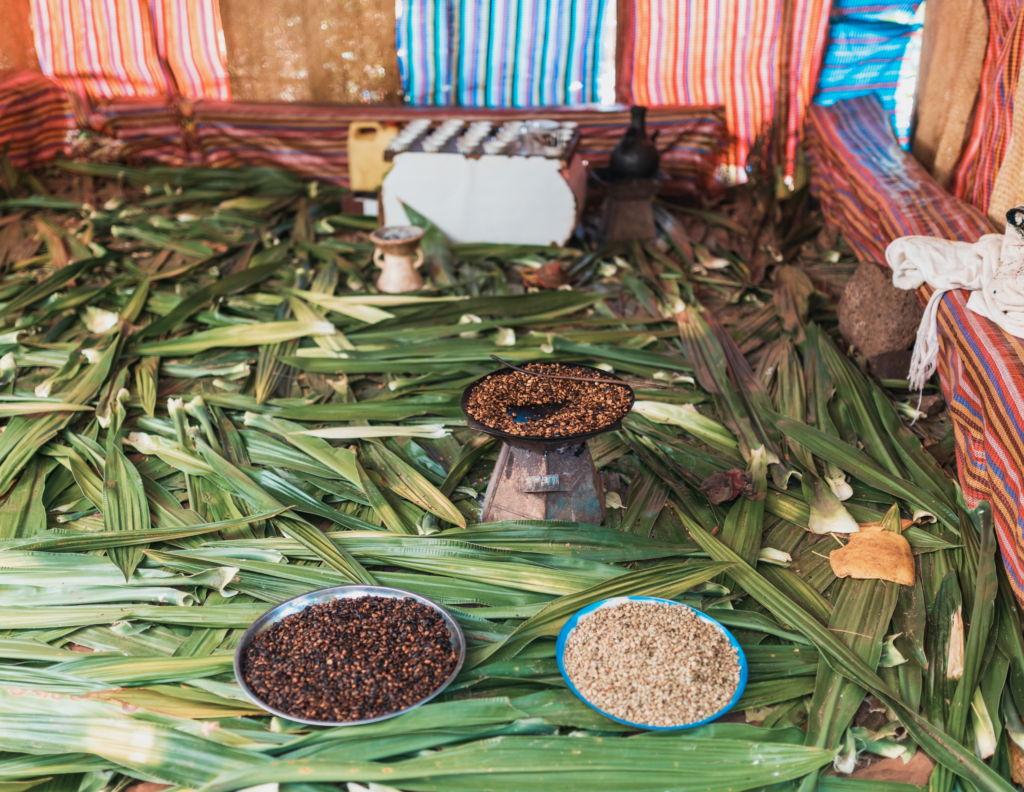
While not a specific drink, the traditional Ethiopian coffee ceremony is an important cultural ritual that showcases Ethiopian coffee in its purest form. The ceremony involves roasting green coffee beans, grinding them by hand, and brewing the coffee in a special pot called a jebena.
Experience the Ethiopian coffee ceremony:
- The coffee is typically served in small cups without milk or sugar
- It’s often accompanied by snacks like popcorn or roasted barley
- The ceremony usually involves three rounds of coffee, each with its own name and significance

By exploring these brewing methods and popular drinks, coffee enthusiasts can fully appreciate the diverse and complex flavors that Ethiopian coffee beans have to offer.
Buying and Storing Ethiopian Coffee
To enjoy Ethiopian coffee at its best:
- Purchase from reputable roasters who can provide information about the coffee’s origin and processing method.
- Look for recently roasted beans, ideally used within 2-4 weeks of the roast date.
- Store coffee in an airtight container, away from light, heat, and moisture.
- For best flavor, grind beans just before brewing.
Conclusion
Ethiopian coffee stands out in the global market for its incredible diversity, complex flavors, and rich cultural heritage. From the floral notes of Yirgacheffe to the wild, fruity characteristics of Harrar, Ethiopian beans offer a unique and rewarding experience for coffee enthusiasts. By understanding the various regions, processing methods, and brewing techniques, coffee lovers can fully appreciate the exceptional qualities that make Ethiopian coffee truly special.