There’s a reason the Espresso Martini refuses to go out of style and Irish Coffee shows up on menus every winter: coffee and alcohol genuinely make each other better. The bitterness and roast in coffee balance out a spirit’s sweetness, and the alcohol brings a warmth that plain coffee can’t.
As an Amazon Associate, I earn from qualifying purchases and sometimes recommend products from other sellers at no extra cost to you. For more details see my disclosure policy and privacy policy.
This guide is built around that idea. Instead of one more “top 10 cocktails” list, it’s organised by pairing type, so you understand why a coffee liqueur works in a shaken drink but Baileys works better in a hot one. Then it walks through three flagship recipes you can actually make at home tonight: a proper Espresso Martini, a Classic Irish Coffee, and the pumpkin spice version that’s become an autumn regular.
☕ Why Coffee and Alcohol Work So Well Together
Coffee’s bitterness and roasted depth are a natural match for spirits. The trick is knowing which spirit pairs with which style of coffee drink, so the two flavours support each other instead of fighting.

The Coffee Chef Planner
Daily planning, journalling, and a proper coffee tasting log with a flavour wheel — 20 pages in one printable bundle.
Shop the planner →
Brewforge
A growing edit of coffee bar gear we’d genuinely want on our own counter, added to as we find things worth having.
Shop Brewforge →If you want the full rundown on how different spirits interact with coffee, Coffee Alcohol Types: A Comprehensive Guide goes deeper into the pairing logic. Here’s the short version, organised by the four pairing categories you’ll see most often at home.
🥃 The Four Pairing Categories
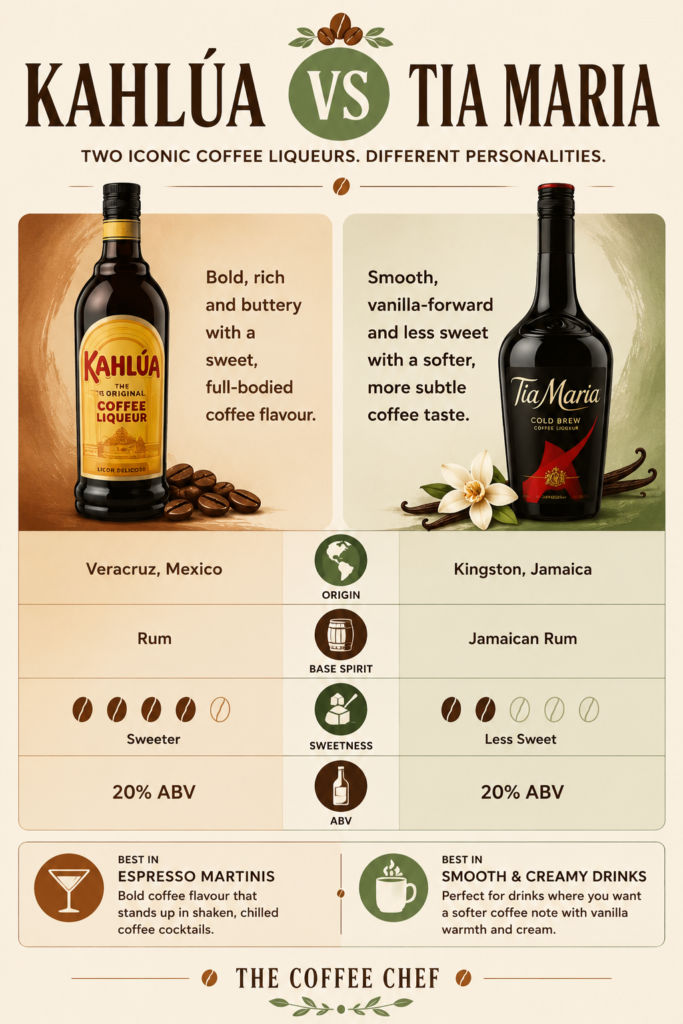
Coffee liqueurs (Kahlúa, Tia Maria): Both sit around 20% ABV and both start from a coffee base, but they’re not interchangeable. Kahlúa is Mexican, sweeter, and has a bolder, more buttery coffee flavour. Tia Maria is Jamaican-rum-based, less sweet, and leans into vanilla notes with a smoother finish. Either works in an Espresso Martini, it’s really down to taste.
Whiskey: A splash of Irish or Scotch whiskey brings warmth and a bit of spice-box complexity to coffee. This is the backbone of a classic Irish Coffee.
Dark rum: Rich and slightly sweet, and good with cream-topped coffee drinks or anything leaning toward dessert territory.
Baileys and cream liqueurs: Baileys has a noticeably lower ABV than the coffee liqueurs above, and it brings sweetness and a velvety texture rather than a strong alcohol kick. That makes it ideal for coffee drinks meant to sip slowly.
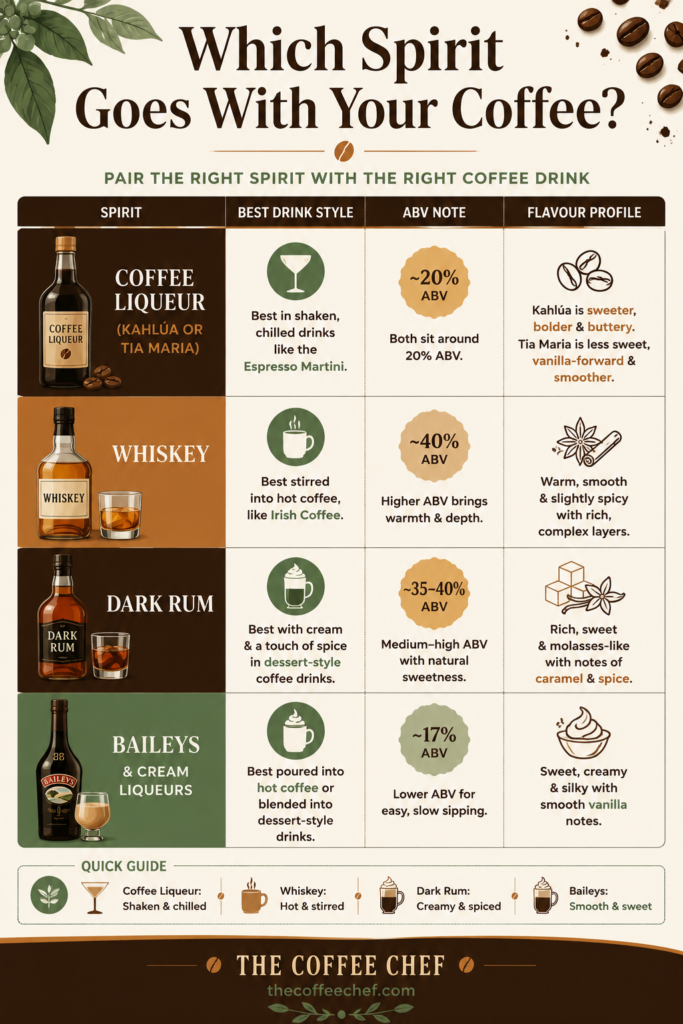
- Coffee liqueur (Kahlúa or Tia Maria): best in shaken, chilled drinks like the Espresso Martini.
- Whiskey: best stirred into hot coffee, as in Irish Coffee.
- Dark rum: best with cream and a touch of spice.
- Baileys: best poured into hot coffee or blended into dessert-style drinks.
Equipment That Actually Helps
You don’t need a full home bar to make good coffee cocktails, but a few things make it easier:
- A pod or espresso machine for a fast, consistent shot. A Dolce Gusto Genio S Plus is a solid, low-fuss pod option if you’re just getting started, while something like the Nespresso Vertuo pulls a shot with more crema, which helps specifically for the Espresso Martini.
- A cocktail shaker with a tight seal: the shake is what builds the foam on an Espresso Martini, so a proper shaker matters more here than in most cocktails.
- Proper glassware: a coupe or martini glass for the Espresso Martini, a heatproof glass or mug for Irish Coffee.
🍸 Espresso Martini
What it is: Vodka, coffee liqueur, and a fresh shot of espresso, shaken hard over ice and strained into a chilled glass. The foam on top comes from the shake, not from any additive.
Ingredients
- Vodka (50ml): a clean, neutral vodka won’t compete with the coffee.
- Coffee liqueur (25ml): Kahlúa or Tia Maria both work; see the pairing notes above for the difference.
- Freshly pulled espresso (25-30ml), cooled slightly: don’t use instant coffee here; the crema matters.
- Sugar syrup (optional, 10ml): only if your coffee liqueur isn’t sweet enough on its own.
Method
- Pull your espresso shot first and let it cool for a minute or two. Pouring hot espresso straight onto ice will melt it too fast and water the drink down.
- Add vodka, coffee liqueur, espresso and syrup (if using) to a shaker with plenty of ice.
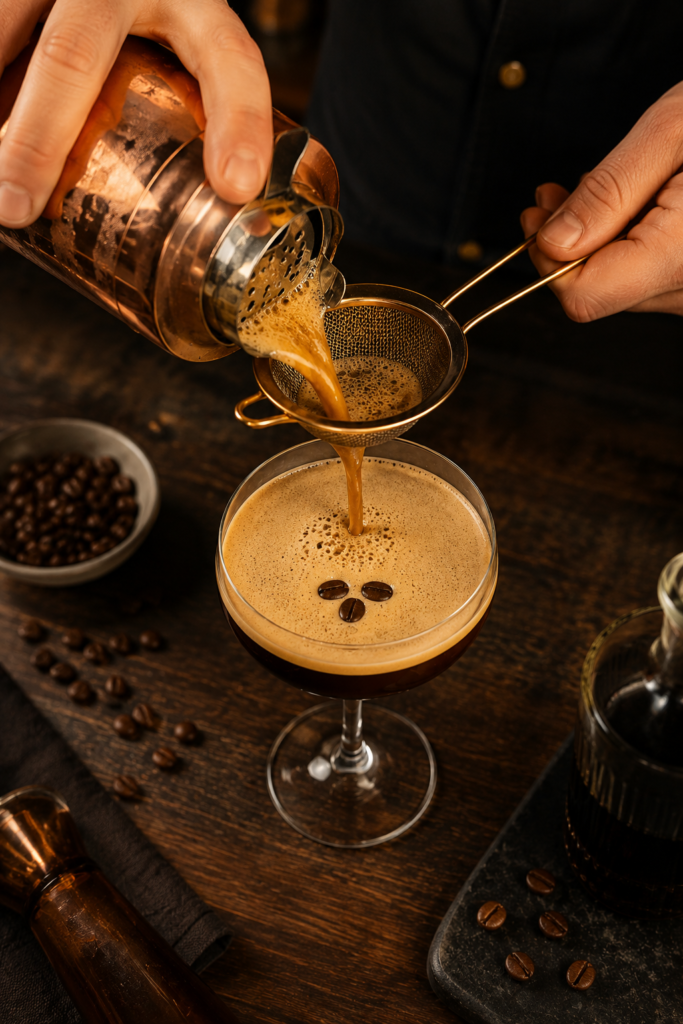
- Shake hard for a full 15-20 seconds. This isn’t a gentle stir: you want the ice to really agitate the mix and build that foam.
- Strain into a chilled coupe or martini glass. Garnish with three coffee beans on top of the foam.
For more detail on getting the foam and balance right, Espresso Martini at Home: How to Actually Get It Right walks through the common mistakes people make with this one.
☘️ Classic Irish Coffee
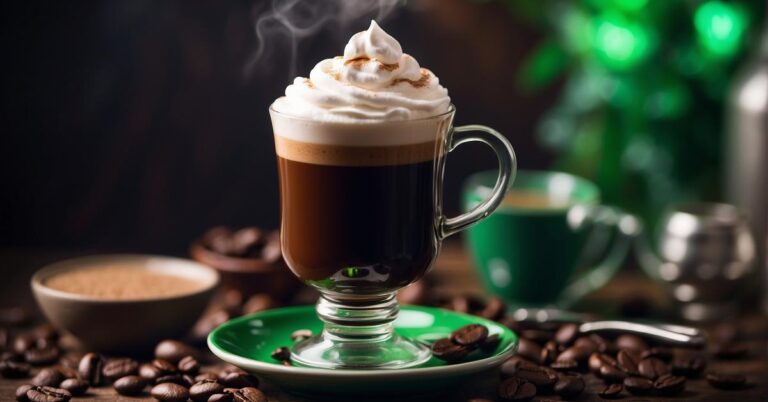
What it is: Hot coffee, whiskey, a spoonful of brown sugar, topped with lightly whipped cream that floats rather than mixes in.
Ingredients
- Hot filter or brewed coffee (150ml): strong, but not espresso. Irish Coffee wants volume, not concentration.
- Irish whiskey (25-35ml): adjust to taste.
- Brown sugar (1-2 tsp): stirred in while the coffee is hot so it dissolves properly.
- Double cream, lightly whipped (a few tablespoons): whipped just enough to thicken slightly, not stiff.
Method
- Warm your glass with hot water first, then tip it out. A cold glass will cool the coffee too fast.
- Stir the sugar into the hot coffee until fully dissolved, then add the whiskey.
- Whip the cream lightly with a fork or small whisk until it’s just thickened but still pourable.
- Pour the cream over the back of a spoon held just above the surface of the coffee, so it floats on top rather than sinking in.
The float is the fiddly part. Cream that’s whipped too far will sit like a solid cap instead of a light float, so aim for “just thickened.”
🎃 Pumpkin Spice Irish Coffee (Autumn Variation)
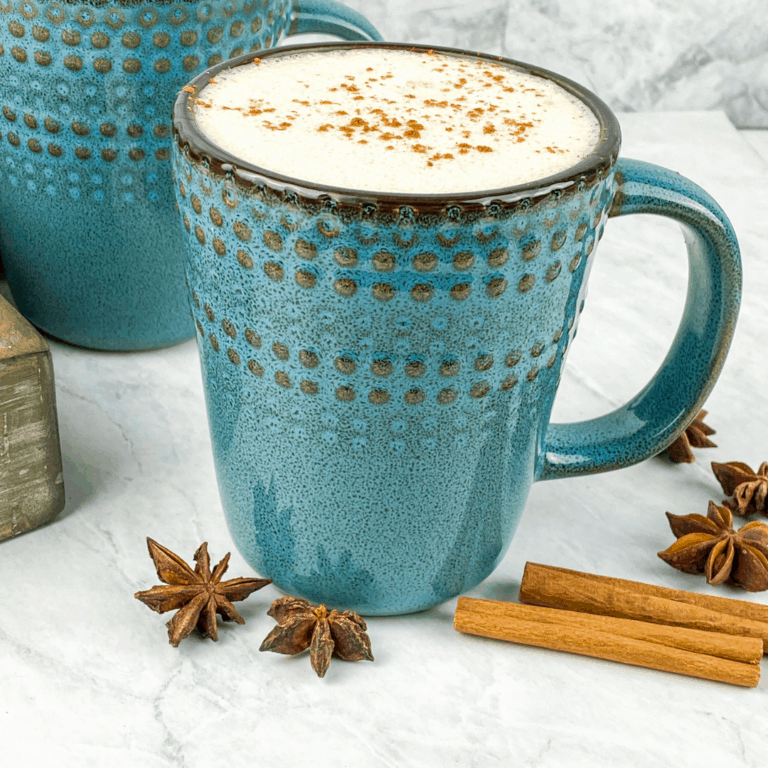
What it is: The classic Irish Coffee above, with pumpkin spice syrup and warming spices stirred in. Pumpkin spice layered into an already-loved format is exactly the kind of pairing that keeps turning up on cocktail menus every autumn.
Ingredients
- Everything from the Classic Irish Coffee recipe above
- Pumpkin spice syrup (15-20ml): shop-bought or homemade with cinnamon, ginger, nutmeg and clove
- A pinch of extra cinnamon, for the cream topping
Method
- Follow the Classic Irish Coffee method above, stirring the pumpkin spice syrup in along with the sugar.
- Float the whipped cream the same way, then finish with a light dusting of cinnamon on top.
For the full recipe with exact seasonal ratios and make-ahead syrup instructions, see Boozy Pumpkin Spice Irish Coffee Recipe with Whipped Cream.
Common Mistakes to Avoid
Using instant coffee in an Espresso Martini. The whole drink relies on the crema from a real espresso shot for its foam and body. Instant coffee will taste flat and won’t shake up into that signature layer on top, so it’s worth pulling a proper shot even if that means a quick trip to a pod machine.
Shaking too gently. People often treat cocktail shaking like a gentle mix rather than a genuine full-arm shake. For an Espresso Martini specifically, you want the ice hitting the sides hard enough to really aerate the mix. A half-hearted shake gives you a thin, foamless drink.
Over-whipping the cream for Irish Coffee. Cream whipped until stiff will sit as a solid, unpleasant cap rather than floating properly. You’re aiming for cream that’s thickened just enough to pour slowly off a spoon, not cream you could pipe onto a cake.
Skipping the sugar-in-hot-coffee step. Sugar dissolves far more easily in hot liquid than in a finished, cooling drink. Always stir it into the coffee before adding whiskey or floating the cream, not after.
Serving and Hosting Tips
- Batching: For a dinner party, brew a larger pot of strong coffee and keep whiskey, sugar and cream measured out separately so guests can build their own Irish Coffee.
- Make-ahead: Pumpkin spice syrup keeps in the fridge for up to two weeks, so make a batch ahead of the season’s first cold snap.
- Garnish: A few coffee beans or a light dusting of cocoa or cinnamon go a long way for presentation without any extra effort.
Recipe FAQs
Can I make these coffee cocktails without an espresso machine? Yes. For the Espresso Martini, a strong stovetop moka pot shot works in a pinch, though you’ll get less crema than with a proper espresso or pod machine. For Irish Coffee, any strong brewed coffee is fine.
Can I make a non-alcoholic version? Yes. For the Espresso Martini, swap the vodka and coffee liqueur for a 0% coffee liqueur alternative or extra chilled espresso with a touch of syrup. For Irish Coffee, skip the whiskey for a coffee-and-cream “mocktail” version.
What’s the difference between Kahlúa and Tia Maria? Kahlúa is Mexican and sweeter with a bolder, buttery coffee flavour. Tia Maria is Jamaican-rum-based, less sweet, and has more pronounced vanilla notes. Both sit around 20% ABV and both work well in an Espresso Martini.
Do I need a specific glass for these drinks? A coupe or martini glass suits the Espresso Martini best because it keeps the foam visible. Irish Coffee traditionally goes in a footed heatproof glass, but any mug will do at home.
How strong is an Espresso Martini compared to Irish Coffee? Both are moderately strong, but the Espresso Martini is shaken and served cold with no dilution from hot liquid, so it can taste stronger sip for sip. Pace accordingly.
Which one should I make if I’m new to coffee cocktails? Start with Irish Coffee. It’s more forgiving on measurements, doesn’t require a shaker, and the technique (float the cream, don’t stir it in) is the only real skill to learn. The Espresso Martini rewards a bit more practice with the shake.