You’ve had a proper espresso martini in a bar — the one with the thick, tan-coloured foam that holds three perfect coffee beans without sinking, the one that tastes like pudding and a wake-up call in the same sip. Then you’ve tried to make one yourself, and it’s come out thin, watery, and separating in the glass before you’ve even taken a photo of it for Instagram.
As an Amazon Associate, I earn from qualifying purchases and sometimes recommend products from other sellers at no extra cost to you. For more details see my disclosure policy and privacy policy.
You’re not doing anything wrong, exactly. You’re just missing a couple of details that bars don’t bother explaining, because it’s easier to just make the drink for you. The espresso martini isn’t a difficult cocktail. It’s a fussy one, and fussy just means the details matter more than the ingredient list.
Right now feels like a good time to actually nail it. Nearly half of Gen Z drinkers in the UK say they’d choose an espresso martini over a coffee to finish a meal, and it’s currently ranked joint second among the nation’s most-ordered cocktails, just behind the Aperol spritz.

The Coffee Chef Planner
Daily planning, journalling, and a proper coffee tasting log with a flavour wheel — 20 pages in one printable bundle.
Shop the planner →
Brewforge
A growing edit of coffee bar gear we’d genuinely want on our own counter, added to as we find things worth having.
Shop Brewforge →This isn’t a fading 2010s trend — coffee cocktails as a whole are having a genuine moment, with layered versions using foams, creams, and flavoured syrups pushing well beyond the classic recipe. Which means it’s a good time to get the basics properly sorted before you start experimenting.
Why Your Homemade Espresso Martini Tastes Watery
Nine times out of ten, it’s the shake. An espresso martini needs a hard, fast shake — 15 to 20 seconds — because that’s what builds the signature foam layer. A gentle shake just chills and dilutes the drink without emulsifying it, which is exactly the thin, separated result you’re getting.
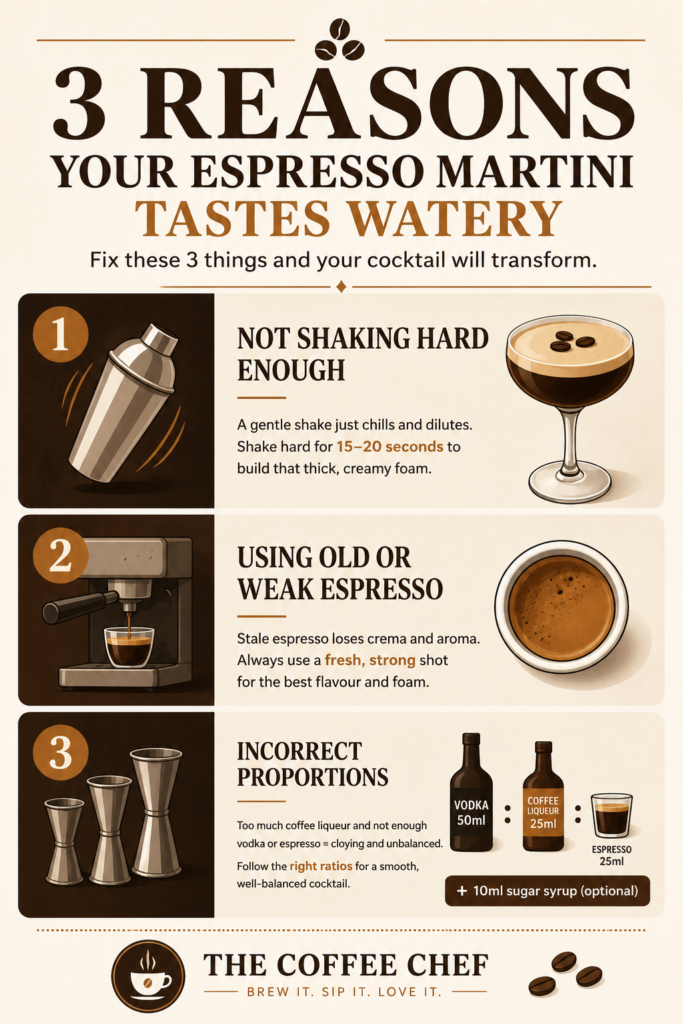
The second most common issue is using an old or weak espresso shot rather than a fresh one. Espresso that’s sat around loses the crema and a good chunk of its aroma, and crema is a big part of what gives the drink its texture and that lovely tan foam on top.
The third issue is proportions. Too much coffee liqueur and not enough vodka or espresso, and you get something cloying rather than balanced. Get these three things right and you’ve solved almost every home version’s biggest complaint.
The Recipe
Makes 1 cocktail
- 50ml vodka
- 25ml coffee liqueur (see below for which one to use)
- 25ml freshly pulled espresso, cooled slightly
- 10ml sugar syrup (optional, adjust to taste depending on your liqueur)
- 3 coffee beans, to garnish
Method:
- Pull your espresso first and let it cool for a couple of minutes while you get everything else ready — pouring hot espresso straight into a shaker full of ice will melt the ice too fast and water the drink down.
- Fill a cocktail shaker with ice, then add the vodka, coffee liqueur, cooled espresso, and sugar syrup if using.
- Shake hard for 15–20 seconds. You want your arm properly tired — this is what builds the foam.
- Double-strain into a chilled coupe or martini glass to catch any ice shards.
- Garnish with three coffee beans on top of the foam, and serve immediately.
If you don’t have an espresso machine, a strong shot from a stovetop moka pot or a couple of tablespoons of good instant espresso powder dissolved in a small amount of hot water will both work — just make sure whatever you use is strong and fresh rather than diluted.
Which Coffee Liqueur Should You Use?
This is the detail that changes the drink the most, and the three most common options behave quite differently:
- Kahlúa is the classic choice — rum-based, sweeter, with a rounded coffee-and-vanilla flavour and a lower ABV of around 20%. It’s the safest option if you want the espresso martini most people expect.
- Tia Maria is more coffee-forward and slightly less sweet than Kahlúa, with a caramelised sugar note from its rum base and Jamaican coffee origins.
- Mr Black is an Australian cold-brew coffee liqueur that’s considerably less sweet than either, with actual coffee flavour front and centre rather than a coffee-flavoured sweetener. At around 25% ABV, it’s also a bit stronger, and it’s increasingly considered the modern standard for a more grown-up, less-dessert-like version of the drink.
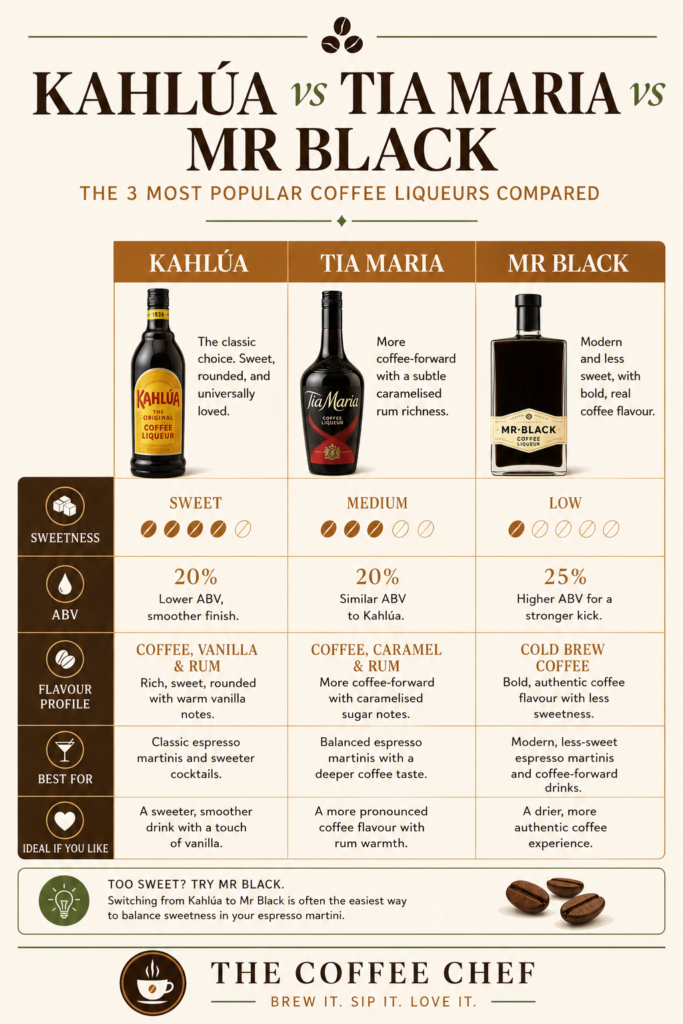
If your usual homemade version tastes too sweet, swapping Kahlúa for Mr Black is often the single easiest fix — you may not even need the sugar syrup at all.
For more on how different coffee-based spirits and liqueurs compare, our guide to coffee alcohol types breaks down the full range beyond just these three.
Getting the Espresso Right
You don’t need barista-level skill, but you do need a proper shot rather than a weak one. If you’re not sure what to look for, our guide on which coffee beans are best for espresso is a good place to start — a medium-dark roast with some body tends to hold up better against the vodka and liqueur than a light, delicate one.
A Few Variations Worth Trying
Once you’ve got the base recipe down, the current café and cocktail scene is leaning into flavoured versions rather than sticking rigidly to the classic. A dash of vanilla, hazelnut, or caramel syrup shaken in alongside the usual ingredients is a simple way to riff on it without throwing off the balance — our guide to the best coffee syrups has options and brand recommendations if you want to experiment. A pinch of sea salt on the foam, or a dust of cocoa powder instead of coffee beans, are two other easy ways to make it your own.
The Bottom Line
A good homemade espresso martini comes down to three things: a hard shake, fresh espresso, and a coffee liqueur that suits your taste. Get those right and you’ve got a bar-quality drink for a fraction of the price — and, going by how much the UK currently can’t get enough of this cocktail, plenty of chances to make it again.