If you’ve ever seen one of those octagonal silver pots on a café counter or a friend’s hob and wondered what on earth it was doing there, you’ve spotted a moka pot. It’s one of the most satisfying ways to make a seriously strong cup of coffee at home — and once you’ve got the hang of it, it’s hard to go back to anything else.
As an Amazon Associate, I earn from qualifying purchases and sometimes recommend products from other sellers at no extra cost to you. For more details see my disclosure policy and privacy policy.
This guide covers everything you need to know: what a moka pot actually is, how to use one properly, what grind and coffee to go for in the UK, and all the drinks you can make with the brew once it’s ready.
What Is a Moka Pot?
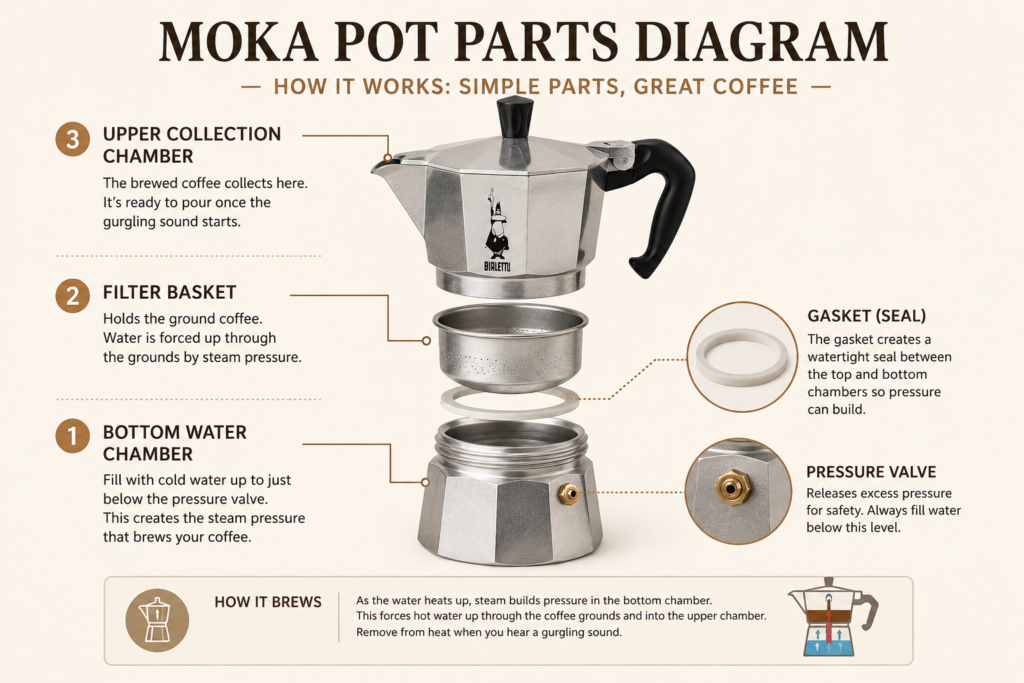
The moka pot is a stovetop coffee maker that brews strong, espresso-style coffee by pushing boiling water up through a basket of ground coffee using steam pressure. The result collects in the upper chamber of the pot, ready to pour. It’s a different beast from a drip machine or a cafetière — closer in spirit to an espresso machine, but much simpler to use.

The Coffee Chef Planner
Daily planning, journalling, and a proper coffee tasting log with a flavour wheel — 20 pages in one printable bundle.
Shop the planner →
Brewforge
A growing edit of coffee bar gear we’d genuinely want on our own counter, added to as we find things worth having.
Shop Brewforge →
It was invented in 1933 by Italian engineer Alfonso Bialetti, and the Bialetti brand name has become so synonymous with the design that plenty of people just call them “Bialettis” regardless of the brand. You’ll find moka pots in most UK kitchenware shops — John Lewis, Lakeland, and Amazon UK all stock a good range, typically from around £15 for a basic aluminium model up to £50+ for stainless steel versions.
They come in different sizes measured in “cups” — a moka pot cup is smaller than a standard mug, roughly 60ml per cup. A 3-cup moka pot makes enough for one large serving or two small ones, while a 6-cup is better if you’re making coffee for two or wanting to scale up for recipes.
Does a Moka Pot Make Espresso?
This is the most common question about moka pots, and the honest answer is: not quite, but close enough for most purposes.
A traditional espresso machine pushes water through finely ground coffee at around 9 bars of pressure. A moka pot only reaches 1 to 3 bars, which means the extraction is different — you get a similarly bold, concentrated flavour, but without the crema (that golden foam you see on top of a proper espresso shot). The texture is thinner and the brew is slightly more like very strong drip coffee than true espresso.
That said, moka pot coffee is perfectly suited as a substitute for espresso in most drinks. It works brilliantly in lattes, mochas, and especially an espresso martini — where the slightly longer liquid actually suits the cocktail nicely. If you’re not pulling shots from a dedicated machine, a moka pot is the next best thing.
What Coffee and Grind Size to Use
Getting the grind right makes a noticeable difference to your moka pot brew. You want a medium-fine grind — finer than what you’d use for a cafetière, but not as fine as proper espresso grind. If the grind is too fine, water struggles to push through and you’ll get a slow, bitter brew. Too coarse and it’ll be weak and watery.
Most good UK supermarkets sell pre-ground coffee labelled specifically for moka pot or stovetop brewing, which takes the guesswork out of it. Lavazza, Illy, and Bialetti all sell ready-ground options that are widely available in the UK. If you’re grinding your own, a medium-fine setting on a burr grinder is ideal — something like a coffee grinder for French press will usually give you enough adjustment range to dial in a moka pot grind as well.
As for the roast, moka pots tend to suit darker roasts well. The bold, chocolatey flavours of a dark roast hold up nicely to the strong extraction method. Medium roasts work too and can bring out more fruity or floral notes depending on the origin. Understanding coffee roast types can help you figure out which direction you want to go.
How to Make Coffee with a Moka Pot
The whole process takes less than 10 minutes once you know what you’re doing. Here’s how to do it:
What You’ll Need
- A moka pot (stovetop or electric hob-compatible)
- Medium-fine ground coffee
- Cold, fresh water
- A hob or stovetop
Step-by-Step Instructions
Step 1: Fill the bottom chamber with cold water up to just below the pressure valve on the inside. Don’t cover the valve or fill above it — this is important for the pressure to build correctly.
Step 2: Add your ground coffee to the filter basket. Fill it to the top but don’t pack or tamp it down. The grounds should sit level and loose. Give the basket a gentle shake if needed to distribute evenly, then drop it into the bottom chamber.
Step 3: Screw the top and bottom together firmly but without overtightening. Finger tight is fine — you just need a good seal. Use a cloth if the pot is slippery or if you’ve brewed with it before and it’s still warm.
Step 4: Place on the hob over medium-low heat. If you’re using a gas hob, make sure the flame is no wider than the base of the pot. Excess flame curling up the sides doesn’t speed things up and can damage the handle. For induction hobs, you’ll need a stainless steel moka pot or a stovetop-compatible disc — aluminium pots won’t work on induction directly.
Step 5: Leave the lid open and watch. After a few minutes you’ll start to hear a gentle gurgling as coffee begins to fill the upper chamber. Once the gurgling gets louder and more aggressive — almost sputtering — the pot is nearly done. At this point, take it off the heat.
Step 6: Run cold water over the base of the pot (not the lid or spout) for a few seconds. This stops the extraction and prevents the coffee from getting bitter from residual heat.
Step 7: Pour and serve immediately. Moka pot coffee doesn’t improve with sitting — pour it straight away.
Common Moka Pot Mistakes (and How to Fix Them)
The coffee tastes bitter
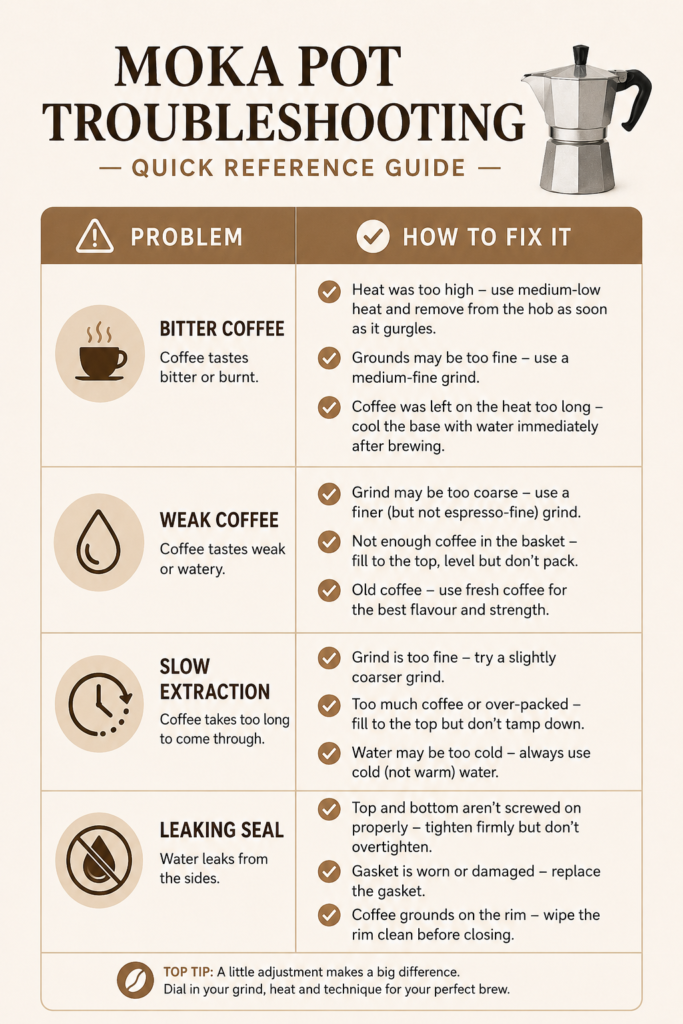
This usually means the heat was too high or you left it on the hob too long. The fix is to brew on medium-low heat and take the pot off as soon as the gurgling changes tone. Running cold water over the base helps here too.
The coffee is weak or watery
The grind is probably too coarse, or you didn’t fill the filter basket enough. Use a finer grind and make sure the basket is filled right to the top (without packing it down).
The coffee is coming out slowly or spluttering badly
This points to a grind that’s too fine or a basket that’s been tamped. Loosen the grind slightly and remember — never press the coffee down in a moka pot.
The pot is leaking around the seal
The rubber gasket inside the lid wears out over time and needs replacing. Replacement gaskets and filters are cheap and widely available for most moka pot sizes — worth picking up a spare set so you always have one ready.
Cleaning and Caring for Your Moka Pot
Moka pots are easy to look after, but there are a few things worth knowing. Rinse all three parts (bottom chamber, filter basket, and top) with warm water after every use. You don’t need washing-up liquid every time — in fact, many people avoid it entirely, arguing that a slight build-up of coffee oils actually improves the flavour over time. If you do use soap, rinse thoroughly.
Never put an aluminium moka pot in the dishwasher. The heat and detergents will damage the finish and can affect the flavour of future brews. Stainless steel versions are generally dishwasher safe, but hand washing is still recommended for longevity.
Every few weeks, give the inside a more thorough clean using a soft brush and warm water, paying attention to the filter plate and gasket area. If you notice any discolouration or a stale smell, a rinse with a diluted solution of white vinegar and water (then thoroughly rinsed again with clean water) will sort it out.
What to Make with Moka Pot Coffee
One of the best things about a moka pot is how versatile the brew is. Because it’s strong and concentrated, it works well in lots of different drinks — not just as a straight black coffee.
- Straight black coffee: Pour into a small cup and drink as is, like a short, strong lungo. Add a splash of hot water if you want to stretch it into a longer Americano-style drink.
- Latte or flat white: Add the moka pot brew to a cup and top with steamed or frothed milk. It’ll be slightly more liquid than a traditional espresso-based latte, but the flavour holds up well.
- Mocha: Stir in a teaspoon of good quality cocoa powder or chocolate syrup before adding milk. The moka pot’s bold flavour pairs brilliantly with chocolate.
- Iced coffee: Brew a full pot, let it cool, then pour over ice with milk or your preferred dairy alternative. It makes a great base for iced coffee recipes — strong enough that it won’t get diluted by the ice quickly.
- Café au lait: Half moka pot coffee, half warm milk — simple and genuinely lovely.
- Espresso martini: Use 50ml of moka pot brew in place of espresso. Because moka coffee is slightly less concentrated than a true espresso shot, you might want to brew a smaller amount than usual, but it works a treat. Check out the guide to making an espresso martini at home for the full recipe.
- Affogato: Cool the brew down and pour it over a scoop of vanilla ice cream. One of the easiest desserts you’ll ever make.
Which Moka Pot Should You Buy?
If you’re new to moka pots, the classic Bialetti Moka Express in a 3- or 6-cup size is the obvious starting point. It’s the design that all others are based on, it’s widely available in the UK, and the replacement parts are easy to find. Aluminium models are cheaper and heat up faster; stainless steel ones are more durable, induction-compatible, and easier to clean.
For induction hobs specifically, look at the Bialetti Moka Induction or the Bialetti Venus — both are designed to work on all hob types. Lakeland and John Lewis stock a good selection of both, usually from around £25 upwards.
If you’re looking to expand your home coffee setup beyond a moka pot, there’s more guidance on choosing the right equipment in the home coffee bar setup guide and the roundup of coffee bar accessories worth having.
Final Thoughts
A moka pot is one of those pieces of kit that genuinely earns its place on the worktop. It’s inexpensive, incredibly satisfying to use, and produces coffee that punches well above its price point. Once you’ve nailed the heat level and grind size for your particular pot, the process becomes second nature — and there’s something oddly meditative about hearing that familiar gurgle build up while you wait.
Whether you’re drinking it straight, building a home café setup, or using it as the base for a whole range of drinks, a moka pot is a solid investment for anyone who takes their coffee seriously.
Continue Your Journey
- Coffee Brewing Methods Explained — Which Is Right for You? — See how the moka pot stacks up against other brewing methods
- Coffee Grind Sizes: A Complete Guide — Get the grind right for every brewing method
- Iced Coffee at Home — The Complete UK Guide — Summer drinks that work brilliantly with moka pot brew
- Best Coffee Bar Accessories UK — What else belongs on a well-stocked home coffee station
- Types of Coffee Roasts Explained — Find the right roast for your moka pot
Do you have a favourite thing to make with your moka pot? Drop it in the comments — always keen to hear what’s brewing.
Want more UK coffee guides and recipes? Sign up for The Coffee Chef newsletter and we’ll send the good stuff straight to your inbox.