Switching to a dairy-free milk is easy. Finding one that actually behaves like milk in your coffee, that froths properly, holds latte art, and doesn’t fight with your espresso, is the harder part.
As an Amazon Associate, I earn from qualifying purchases and sometimes recommend products from other sellers at no extra cost to you. For more details see my disclosure policy and privacy policy.
Most “best dairy-free milk” round-ups treat this as a health question. This one doesn’t. We’re looking at how oat, almond, soy, and coconut milk actually perform in a cup of coffee: how they froth, how they taste against different roasts, and which UK brands are worth reaching for.
☕ Why Milk Alternatives Behave Differently in Coffee
Dairy milk froths well because of its protein and fat structure, both of which trap air into stable microfoam. Plant milks don’t have the same natural structure, which is why some alternatives froth beautifully and others split, curdle, or produce a foam that collapses in seconds.

The Coffee Chef Planner
Daily planning, journalling, and a proper coffee tasting log with a flavour wheel — 20 pages in one printable bundle.
Shop the planner →
Brewforge
A growing edit of coffee bar gear we’d genuinely want on our own counter, added to as we find things worth having.
Shop Brewforge →This is also why “barista edition” versions of oat, almond, and soy milk exist. They’re reformulated with added stabilisers, oils, and sometimes small amounts of acidity regulators specifically to mimic dairy’s frothing behaviour. Standard, everyday cartons of the same brand are made for cereal and tea, not steamed milk, so they often perform noticeably worse in coffee.
💰 Barista-Blend vs Standard: Why It Costs More
Pick up a standard carton of oat milk next to a “barista edition” from the same brand and the barista version is almost always fifty pence to a pound more expensive per litre. That gap comes down to formulation, not marketing.
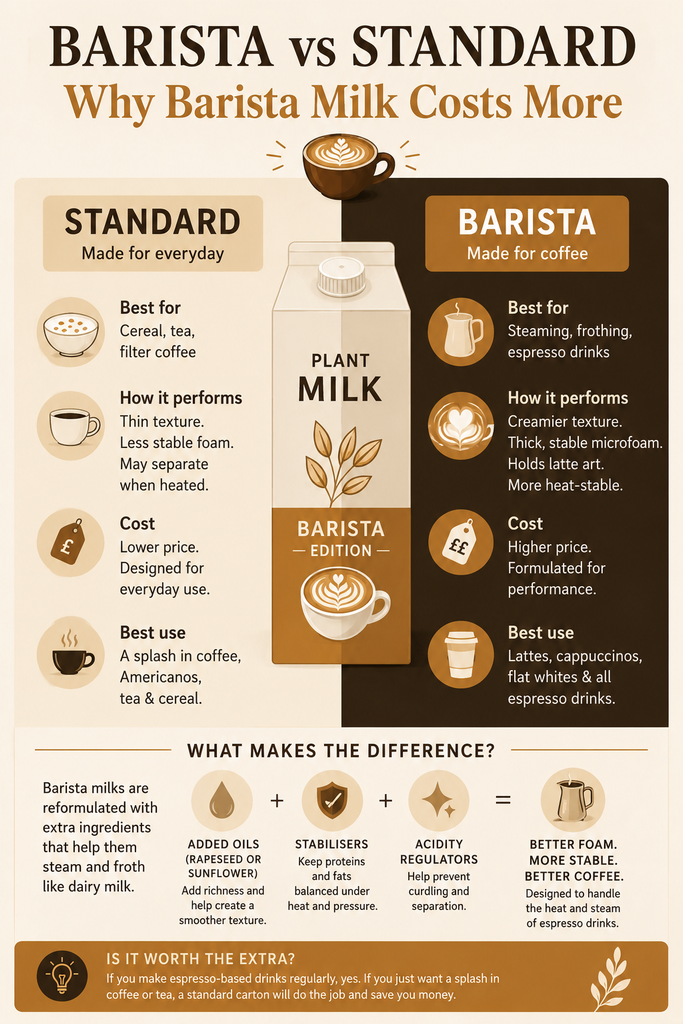
Standard plant milk is designed to taste good poured over cereal or stirred into tea, where a bit of separation or a thin foam doesn’t matter. Barista blends add extra oil (usually rapeseed or sunflower) and sometimes a small amount of acidity regulator, both of which help the proteins and fats bind together under heat and steam pressure instead of splitting apart.
It’s a genuine functional difference, not just a premium label. If you’re making espresso-based drinks regularly, the barista version is worth the extra cost. If you mostly want a splash in filter coffee or an Americano, a standard carton will do the job fine and save you the difference.
🌾 Oat Milk
Oat milk is the closest thing to a safe default for coffee right now. It has a naturally creamy texture and a mild, slightly sweet flavour that doesn’t compete with the coffee itself.
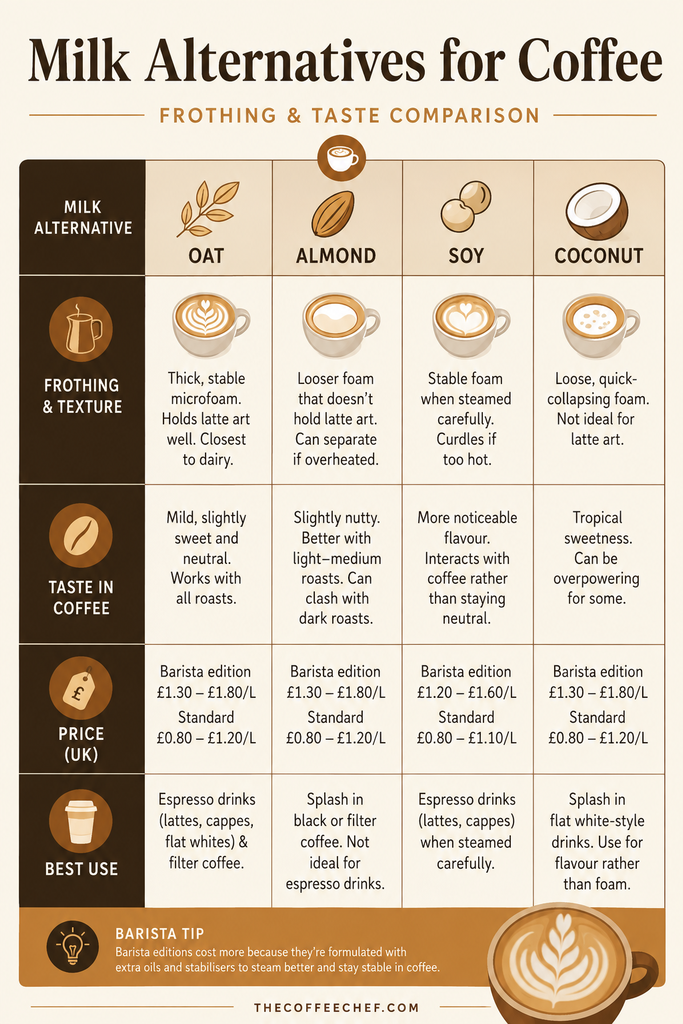
Barista-edition oat milks froth into a thick, stable microfoam that holds latte art reasonably well, closer to dairy than any other alternative on this list. It also tends to hold up fine against both light, acidic roasts and darker, more bitter ones without curdling or splitting.
If you only try one alternative milk, make it a barista-edition oat milk. For frothing technique itself, our guide on frothing milk for coffee applies just as well to oat milk as it does to dairy, the temperature and pouring principles are the same.
🌰 Almond Milk
Almond milk is thinner and lower in fat than oat milk, which makes it harder to steam into a thick, stable foam. You’ll get froth, but it’s usually looser and doesn’t hold latte art well, and it can separate slightly if overheated.
Where almond milk does work is in black or filter coffee with a splash added, rather than espresso-based drinks that rely on steamed milk. Its slightly nutty flavour can also clash with darker, more bitter roasts, so it tends to pair better with lighter or medium roasts.
🫘 Soy Milk
Soy milk is protein-rich, which actually makes it one of the easier plant milks to froth, protein is what helps trap air, much like dairy. The catch is temperature control. Soy milk curdles if steamed too hot, so keep it well below boiling and don’t rush the steaming process.
Get the temperature right and soy milk froths into a reasonably stable foam that works well in lattes and cappuccinos. It has a more noticeable flavour than oat milk though, so it interacts more with the coffee rather than staying neutral.
🥥 Coconut Milk
Coconut milk brings a distinct tropical sweetness that some people love in coffee and others find overpowering. From a frothing perspective, it’s similar to almond milk: thin, low in the right kind of fat structure, and prone to a loose, quick-collapsing foam rather than thick microfoam.
It’s best treated as a flavour choice rather than a functional dairy replacement, better suited to a splash in a flat white-style drink than to anything relying on steamed, poured latte art.
🎨 Taste Interaction: Acidic vs. Dark Roasts
The milk you choose changes how a roast tastes, sometimes more than the roast itself does.
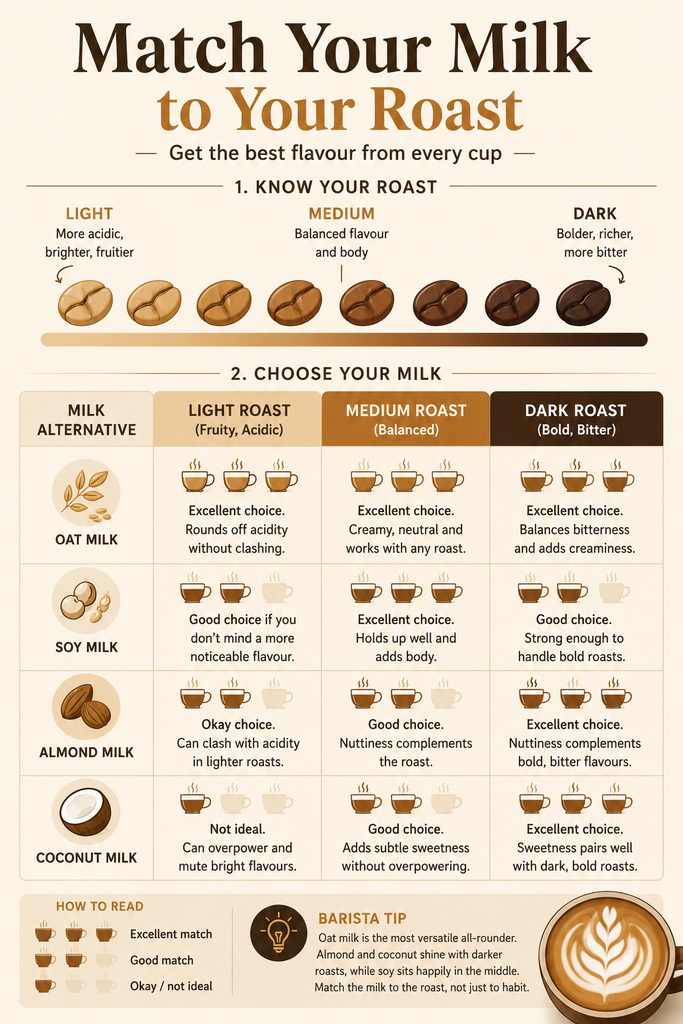
Lighter, more acidic roasts (think fruity single-origin filter coffee) pair best with neutral, creamy milks like oat, since anything with its own strong flavour, almond or coconut in particular, can clash with or mute the coffee’s natural brightness. Oat milk’s mild sweetness tends to round off acidity rather than fight it.
Darker, more bitter roasts have more room to carry flavour without being overwhelmed, which is where almond and coconut milk tend to work better than they do with lighter coffee. The nuttiness of almond or the sweetness of coconut can actually complement a bold, bitter espresso rather than compete with it. Soy sits in the middle and works reasonably well across the board, provided the temperature is right.
If you’re experimenting, start with oat milk regardless of roast, it’s the safest, most neutral option, then branch out to almond or coconut specifically with darker roasts once you know what you like.
💷 UK Brands Worth Trying (With Pricing)
Barista-edition oat milk is where most of the useful competition is happening in UK supermarkets right now. Three names come up again and again:
- Oatly Barista Edition tends to sit around £1.50 to £2.20 for a 1-litre carton, depending on retailer and ongoing loyalty-card promotions. It’s the most widely stocked and the one most UK coffee shops use, which makes it a safe, familiar starting point.
- Minor Figures Barista Oat is priced similarly, roughly £1.50 to £2.15 a litre, and is popular in independent coffee shops for its slightly thicker texture and clean, neutral taste.
- Alpro Barista Oat usually comes in as the more budget-friendly option, often £1.40 to £1.60 a litre with a loyalty card, without giving up much in frothing performance.
Supermarket own-brand barista oat milks (Tesco, Sainsbury’s, and Asda all stock one) tend to undercut all three of the above on price and are worth trying if you’re just testing whether oat milk suits your coffee before committing to a specific brand.
Quick Comparison Table
| Milk Type | Texture When Frothed | Taste with Coffee | Typical UK Price (1L) | Best Use |
|---|---|---|---|---|
| Oat (barista) | Thick, stable microfoam | Neutral, mildly sweet | £1.40–£2.20 | Lattes, cappuccinos, everyday use |
| Almond | Thin, loose foam | Nutty, can clash with dark roast | £1.20–£1.80 | Black coffee, filter with a splash |
| Soy | Stable if not overheated | More noticeable, beany | £1.00–£1.60 | Lattes, cappuccinos (careful with heat) |
| Coconut | Thin, quick-collapsing foam | Sweet, tropical | £1.30–£2.00 | Flavour splash, not latte art |
🎯 Best Pick by Brew Method
For espresso-based drinks (lattes, cappuccinos, flat whites), a barista-edition oat milk is the most reliable choice across the board. If you want to get serious about the froth itself, a home machine with a proper steam wand, like the Sage Bambino Plus, gives you far more control over microfoam than a basic frother, which matters more with plant milk than it does with dairy.
For filter coffee or black coffee with a splash, almond or coconut milk are both fine choices since you’re not relying on steaming or foam stability, just flavour. Soy sits in between and works for either, provided you’re careful with temperature when steaming it.
If you’re switching from dairy creamer rather than milk, it’s worth reading our guide on using coffee creamer in place of milk too, since the swap logic (thickness, sweetness, how much to use) carries over to plant-based creamers as well.
❓ Frequently Asked Questions
Which milk alternative froths best for latte art? Barista-edition oat milk consistently produces the thickest, most stable microfoam of the plant milks, making it the closest to dairy for latte art.
Why does my alternative milk curdle in coffee? Curdling usually happens when the milk is too hot, or when it reacts with the acidity of the coffee. Soy and almond milk are the most prone to this, so steam gently and avoid boiling.
Is barista-edition milk worth the extra cost? For espresso-based drinks, yes. It’s specifically formulated to froth and hold up against coffee’s acidity, so you’ll get noticeably better results than with a standard carton of the same brand.
Can I use supermarket own-brand oat milk instead of Oatly or Minor Figures? Own-brand barista oat milks have improved a lot and are worth trying, especially if you’re deciding whether oat milk suits you before spending more on a named brand.
Do I need a “barista edition” milk if I only drink filter coffee or Americanos? No, not really. Barista blends earn their keep with steaming and frothing performance, which matters far less if you’re just adding a splash of cold or warmed milk to filter coffee or an Americano. A standard carton is usually fine there.